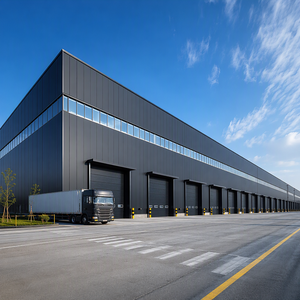
Custom Large Prefabricated Steel Structure Warehouse Industrial Workshop Building With Insulated Sandwich Panels
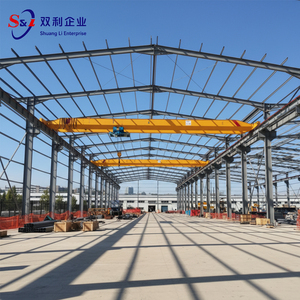
- Clear spans up to 60m column-free
- Q355B / ASTM A572 Grade 50 steel
- Overhead crane brackets (5T - 50T)

Direct structural engineering and containerized exports from China to Port of Colombo & Hambantota. Optimized for quick bolt-together installation, maximum clear span, and corrosion protection.
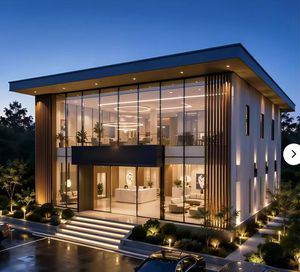
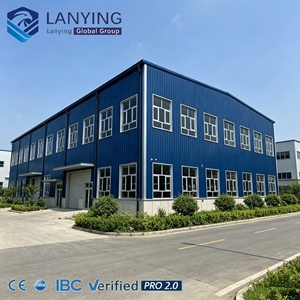
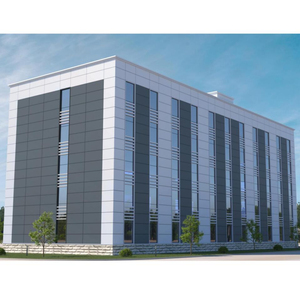
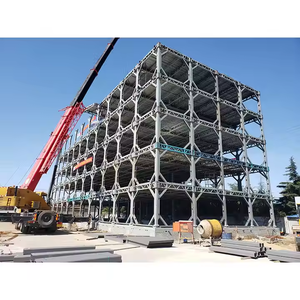
PEB Projects Completed Globally
Years Engineering Excellence (Since 2010)
In-House Structural & Civil Engineers
Days Direct Shipping: China to Colombo
Designing commercial pre-engineered buildings (PEBs) for the Indian Ocean island demands severe departure from standard continental specifications. We tailor every load case, metallurgy profile, and cladding formula to withstand saline moisture, thermal cycling, and tropical squalls.
Sri Lanka’s coastal perimeters—including Colombo Harbour, Katunayake, and Hambantota—feature relative humidity above 85% with intense airborne chloride aerosols. Standard alkyd shop primers fail in less than 24 months in these zones.
Our steel structural systems utilize hot-dip galvanization conforming to ISO 1461 (minimum 85 µm to 120 µm coating thickness) or advanced multi-tier protective paint regimes: inorganic zinc silicate primer (75 µm), intermediate epoxy micaceous iron oxide (100 µm), and a durable aliphatic polyurethane topcoat (50 µm) guaranteed for 25+ years design life.
ISO 12944-5 C5-M Spec CompliantEngineering commercial structures in Sri Lanka requires dual-monsoon aerodynamic consideration. Tropical low-pressure depressions frequently produce gust winds reaching 180 km/h to 240 km/h along coastal lowlands.
Every building model calculated using CP3 Chapter V Part 2 / BS 6399-2 / Eurocode 1 (EN 1991-1-4) incorporates high-tensile anchor bolts (Grade 8.8 and 10.9), reinforced portal frame knee connections, and cold-formed continuous Z/C section roof purlins with sag rods and flange bracing to eliminate uplift failure during monsoonal downpours.
Up to 240 km/h Dynamic Wind LoadWith year-round solar irradiation and high ambient temperatures across Western and Southern provinces, poorly insulated metal buildings create severe greenhouse heating, driving HVAC electricity consumption to extreme levels.
We supply engineered building envelopes pairing PIR (polyisocyanurate) and high-density Rockwool continuous sandwich panels with thermal transmittance U-values down to 0.21 W/m²K. Coupled with high-solar-reflectance Aluzinc AZ150 PVDF exterior coatings, indoor temperatures drop by 6°C to 10°C without mechanical cooling.
PIR / Rockwool U-Value ≤ 0.22 W/m²KAll structural shop drawings are detailed in Tekla Structures with complete 3D BIM coordination, eliminating onsite cut-and-weld modifications. Every beam, purlin, girt, and connection bracket is CNC-punched, numbered, and barcoded matching the erection assembly manual for frictionless installation by local Sri Lankan contracting teams.
Balancing thermal performance, capital expenditure, acoustic damping, and fire authority compliance for industrial warehouses, cold chains, and commercial offices.
| Insulation Core Type | Density Range | Thermal Cond. (λ) | Fire Resistance Rating | Moisture Absorption | Recommended Sri Lankan Application |
|---|---|---|---|---|---|
| PIR (Polyisocyanurate) | 40 - 45 kg/m³ | 0.020 - 0.023 W/m·K | B-s1, d0 (Self-extinguish) | < 1.0% by volume | Temperature-controlled pharma, cold chain logistcs, seafood export processing (Negombo/Galle) |
| Rockwool (Mineral Wool) | 100 - 140 kg/m³ | 0.038 - 0.044 W/m·K | Class A1 Non-combustible (4hr) | < 2.0% (water-repellent) | BOI Garment factories, tea packaging facilities, chemical storages, power plant auxiliary buildings |
| EPS (Expanded Polystyrene) | 14 - 20 kg/m³ | 0.037 - 0.041 W/m·K | B2 Flame-retardant | 2.0 - 4.0% | Cost-effective dry goods storage, construction site offices, rooftop conversions in urban Colombo |
| PU (Polyurethane Foam) | 38 - 42 kg/m³ | 0.022 - 0.025 W/m·K | B2 / B1 Optional | < 1.5% | Commercial supermarkets, modular cold stores, distribution hubs along Southern Expressway |
From Free Trade Zones to highland plantations and coastal tourist enclaves, our customized steel structures solve complex spatial and regulatory requirements.
Sri Lanka’s premier apparel sector requires sprawling uninterrupted clear spans for automated fabric cutting tables, sewing lines, and precision lighting. Our PEB solutions incorporate wide portal frames (up to 48m without central columns), roof monitor daylighting strips, and non-combustible Rockwool wall panels meeting strict buyer social compliance (WRAP / SMETA) fire safety norms.
With Colombo ranking among the world's top container transshipment ports, logistics operators require high eave heights (12m - 16m) accommodating heavy multi-tier racking systems and wide automated docking levelers. Heavy-duty H-section built-up framing supports heavy bridge cranes while resisting salt fog from the adjacent Indian Ocean.
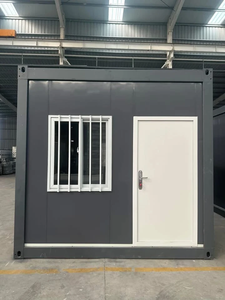
Tourism developers in Bentota, Mirissa, and the Central Highlands demand zero environmental disruption and quick return on investment. Our flat-pack modular structures and light-steel hybrid pavilions blend seamlessly into coastal beaches or cliffside tea estates, requiring minimal concrete foundation footprint and rapid setup in 3-4 days.
Ceylon tea demands precise humidity and airflow during the withering process. We manufacture custom steel withering troughs and two-story prefab tea processing units fitted with louvers, moisture-barrier ceiling panels, and suspended conveyor brackets that replace decaying century-old timber structures.
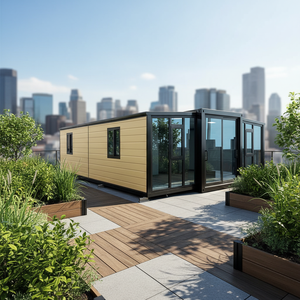
In dense urban municipalities with escalating land prices, businesses expand upward. Our ultra-lightweight structural steel framing and sandwich panel roofing system add extra office, gym, or restaurant space atop existing concrete slabs without exceeding permissible dead-load structural limits.
Supporting Sri Lanka's southern maritime economic corridor with high-strength structural frames capable of housing 20-ton overhead cranes, heavy equipment workshops, and expansive roll-up industrial shutter doors engineered for gale-force ocean squalls.
Strategic shifts driving commercial builders, industrial developers, and institutional investors from conventional wet masonry toward factory-engineered prefabrication.
Volatile domestic cement pricing and acute shortages of skilled masonry labor across the Western Province have inflated traditional reinforced concrete building schedules by up to 200%. Developers face steep financing carrying costs during prolonged wet-trade execution.
Prefabricated steel structures compress site construction timelines by over 60%. While concrete foundations cure, China-based factory fabrication of beams, purlins, and sandwich panels proceeds in parallel, delivering immediate bolt-up readiness upon container clearance.
Under Board of Investment (BOI) of Sri Lanka Section 17 agreements, qualified export-oriented enterprises benefit from custom duty and VAT waivers on imported prefabricated building systems and construction machinery designated as project capital equipment.
We provide fully categorized commercial invoices, packing lists with explicit HS Code designations (such as HS 9406 for prefab buildings and HS 7308 for steel structures), and Mill Test Certificates (MTC 3.1) ensuring hassle-free processing through Sri Lanka Customs Automated Data System (ASYCUDA).
Corporate Sri Lanka is accelerating carbon neutrality targets. Institutional real estate projects in Colombo Port City and Kelani Valley are mandating GreenSL® rating accreditation, favoring 100% recyclable structural steel over high-embodied-carbon concrete.
Our insulated building envelopes drastically lower operating thermal loads, allow integrated photovoltaic (PV) solar panel roof loading (calculated at 15 to 25 kg/m² extra live load), and eliminate onsite construction water pollution.
Originating in 2010 with more than 352 successful industrial installations worldwide, we operate comprehensive steel fabrication workshops and high-speed automated sandwich panel continuous production lines.
Heavy H-beams, box columns, portal frames, Z/C purlins, EPS/PIR/Rockwool sandwich panels, and color-coated steel sheets fabricated in-house under unified ISO quality control.
Beyond structural steel supply, our 100+ technical team provides foundation anchor layout plans, civil RCC coordination, 3D erection drawings, and video construction guidance.
Automated submerged arc welding, multi-head CNC plasma cutting, shot blasting to Sa 2.5 cleanliness standard, ensuring dimensional accuracy within 1mm for zero site re-drilling.
Strategic port proximity enables fast container loading and regular direct liner sailings to Colombo Port (14-21 days transit), complete with bundled maritime-grade export packaging.
Clear, practical answers covering import compliance, customs procedures, structural durability, and onsite assembly.
Prefabricated steel buildings generally fall under HS Code 9406.90.90 (Prefabricated Buildings of Iron or Steel) or HS Code 7308.90 (Structures and parts of structures). Under regular commercial imports, general duties, PAL (Ports and Airports Development Levy), and VAT apply.
However, enterprises registered under BOI (Board of Investment) of Sri Lanka Section 17 or projects operating within Strategic Development Projects (SDP) frequently qualify for complete exemptions or concessions on customs duties and import levies on construction capital goods. We provide complete ASYCUDA-ready documentation, packing lists separated by structural member, and certified Certificate of Origin (Form B or CO) to ensure clean clearance at Colombo or Hambantota ports.
For buildings situated within 15 km of the ocean coast, standard atmospheric corrosion corresponds to ISO 12944 categories C4 (High) to C5-M (Very High Marine). We provide two premium options: (1) Hot-Dip Galvanizing with minimum 85-120 microns conforming to ISO 1461 / ASTM A123, which provides metallurgical cathodic protection even if scratched; or (2) A 3-Coat Marine Epoxy-Polyurethane system applied over automated Sa 2.5 shot-blasted surfaces (75µm zinc-rich primer + 100µm epoxy MIO intermediate coat + 50µm aliphatic polyurethane finish). For cladding, we strictly specify 55% Aluminum-Zinc alloy coated steel (Aluzinc AZ150) with 25µm PVDF architectural fluorocarbon paint to resist salty sea spray and UV oxidation.
Yes. The majority of Sri Lankan chartered consulting structural engineers and municipal councils require structural designs certified under BS 5950 (Structural Use of Steelwork in Building), CP3 Chapter V Part 2 (wind load calculations), or equivalent Eurocode 3 (EN 1993). Our 100+ engineering department provides full structural calculation reports with 3D finite-element modeling (STAAD.Pro / PKPM / Tekla Structures), complete anchor bolt reaction diagrams, and foundation load schedules that can be directly submitted to your local Sri Lankan chartered structural engineer for municipal approval and stamp sign-off.
Your choice depends strictly on your building’s functional classification and insurance requirements:
In most instances, no. Every building fabricated at our plant is 100% pre-engineered, prefabricated, and test-assembled before dispatch. Every primary column, rafter, and secondary purlin has a distinctive steel-stamped serial code matching the high-resolution 3D step-by-step erection drawing book. Local Sri Lankan steel erectors and mobile crane operators can execute the assembly with high efficiency.
For complex large-span commercial spaces exceeding 40 meters or multi-story buildings, we offer two levels of technical supervision: (1) Real-time remote video engineering assistance with dedicated structural project engineers; or (2) Dispatching 1 to 2 experienced site supervisors to Sri Lanka to oversee foundation bolt alignment, torquing, framing erection, and weather-seal commissioning.
Export packaging complies with international ocean freight logistics standards. Primary beams and columns are bundled with steel strapping, cushioned with heavy rubber edge protectors, and wrapped in industrial moisture-barrier plastic film. Secondary cold-formed purlins are nested tightly to prevent flexing. Sandwich panels are bundled on wooden skids with protective corner guards and wrapped in waterproof stretch wrap. All connection hardware, high-strength bolts, self-tapping screws, and rubber flashing components are sealed in moisture-proof wooden crates containing industrial silica desiccant bags to prevent oxidation during sea transit.
Whether you require a custom 10,000 m² BOI garment warehouse, an insulated tea processing plant, or a modern commercial showroom in Colombo, our structural engineering team delivers optimized proposals, load calculations, and competitive FOB/CIF container quotes within 24 hours.
Contact Us