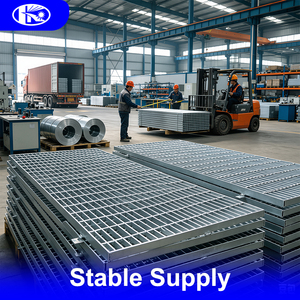
Direct from our manufacturing hubs: High-precision steel platforms, stair accessories, composite decks, and building envelope components customized for European civil and industrial applications.
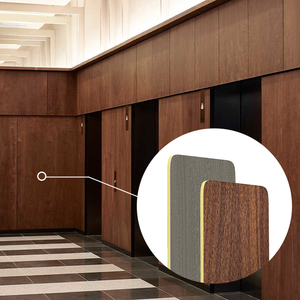 Interior Cladding
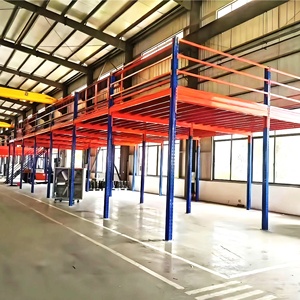 Structural Mezzanine
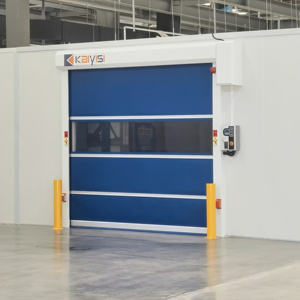 Industrial Access
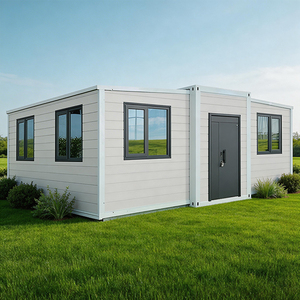 Modular Building
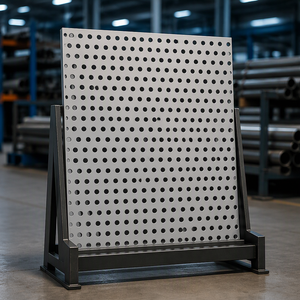 Safety Railings
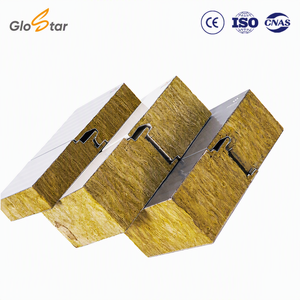 Thermal Envelope
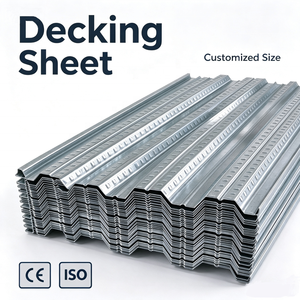 Floor Decking
A rigorous review of structural calculations, European quality certifications, CTE compliance, and metallurgical criteria required for cross-border industrial procurement.
Procuring structural steel stairways, industrial cat-ladders, mezzanine stair towers, and escape egress systems from top Chinese manufacturers requires far more than comparing per-metric-ton quotation rates. In the Spanish architectural and industrial engineering landscape, any metal staircase integrated into a warehouse, manufacturing plant, commercial space, or public building is subject to the stringent framework of the Código Técnico de la Edificación (CTE) alongside European harmonized norms (EN 1090-1 / EN 1090-2 Execution Class EXC2 and EXC3). Structural steel imports must demonstrate verifiable traceabilities under EN 10204 3.1 material test certificates, strict carbon equivalent values (CEV) for seismic and dynamic loading resilience, and calibrated welding procedures governed by ISO 3834.
For Spanish structural engineers (Ingenieros Industriales and Arquitectos Técnicos), failure to harmonize fabrication geometries with CTE requirements leads to non-conformity during technical building inspections (Inspección Técnica de Edificios - ITE) or refusal of decennial insurance coverage (Seguro Decenal). By pairing state-of-the-art Chinese laser cutting, automated submerged arc welding (SAW), and robotic bending platforms with strict European Eurocode 3 (EN 1993-1-1) design methodologies, tier-one manufacturers provide Spanish contractors with unprecedented structural reliability, shortened lead times, and substantial financial efficiencies.
Under CTE Documento Básico SUA (Seguridad de Utilización y Accesibilidad), general-use stairs (Escaleras de uso general) require strict tread depth (Huella) between 280 mm and 350 mm, with risers (Contrahuella) strictly calibrated between 130 mm and 185 mm, complying with $540\text{ mm} \le 2C + H \le 700\text{ mm}$. In industrial or restricted access configurations (Escaleras de uso restringido), risers can extend to a maximum of 200 mm with tread depth minimums of 220 mm. Ensuring shop drawing calibration before CNC plate cutting is an absolute mandate for European compliance.
Engineering customized structural stair solutions mapped specifically to regional industrial typologies, environmental corrosion classes, and regional seismic zonation.
In strategic logistics nodes such as PLAZA (Zaragoza), Illescas (Toledo), and the Corredor del Henares (Madrid), high-throughput fulfillment centers operate multi-tier picking platforms. We engineer high-load capacity UPE/UPN channel stringer stairs, integrated with heavy-duty anti-slip serrated steel bar grating treads ($q_k = 5.0\text{ kN/m}^2$, point load $Q_k = 4.0\text{ kN}$ per Eurocode 1) and kickplates to withstand extreme continuous foot and pallet traffic.
Coastal and chemical hubs such as Valencia Port, Barcelona Zona Franca, Tarragona's petrochemical complex, and Algeciras experience severe ISO 12944 C4 to C5-M marine atmospheric corrosivity. Stair systems for these sites require heavy-duty hot-dip galvanizing (HDG ≥ 85 μm coating thickness under UNE-EN ISO 1461) or marine-grade 316L stainless steel balustrades with passivated finishes to resist airborne chloride assault.
Advanced manufacturing ecosystems in the Basque Country (Bilbao, Vitoria), Martorell (SEAT clusters), and Almussafes (Ford logistics) demand modular crossover stairs and robot cell service platforms. Structures feature structural hollow section (SHS/RHS) framework, high-strength bolted connections (Class 8.8 and 10.9 HV bolts according to EN 14399), and vibration-damped floor transitions verified under modal dynamic analysis.
Key drivers modernizing stairway engineering: Digital twins, decarbonization directives, and rapid offsite erection.
Spanish EPC contractors now mandate Industry Foundation Classes (IFC) and native Tekla Structures BIM models with Level of Development 400. Stair strings, handrails, baseplate connections, and anchor bolts are clash-detected virtually against HVAC conduits and overhead cranes before high-speed CNC plasma cutting, eliminating 99% of field modification errors.
Fire safety requirements under CTE Documento Básico SI (Seguridad en caso de Incendio) demand fire resistance ratings ranging from R30 to R120 for primary evacuation routes. Prefabricated stair modules are engineered either with fire-stop barrier housings, intumescent coating provisions applied under shop-controlled temperature and humidity, or concrete-filled composite pans.
Shortages of certified site welders across Spain's construction sector have accelerated the adoption of 100% bolted field assemblies. Complete multi-flight stair towers are fabricated, pre-assembled in shop jigs for QA verification, disassembled into flat-pack maritime transport bundles, and erected on Spanish jobsites with standard crane operations in mere hours.
Direct comparison of stringer types, tread configurations, structural tolerances, and compliance standards used in European export projects.
| Structural System | Member Profiles | Live Load Capacity | Spanish Normative Match | Standard Anti-Corrosion |
|---|---|---|---|---|
| Heavy Logistics Stair Tower | UPN 240 / UPN 300 or HEB 160 Columns | $5.0\text{ kN/m}^2$ (CTE Cat. E / C3) | CTE DB-SUA 1 / DB-SI | Hot Dip Galvanized ISO 1461 (>85 μm) |
| Industrial Platform Access Stair | PFC 200 or 10 mm Laser-Cut Web Plate | $3.0\text{ kN/m}^2$ (Industrial Cat.) | UNE-EN ISO 14122-3 | Epoxy Primer + Polyurethane (C3 High) |
| Architectural Mono-Stringer Stair | Box Girder 250 × 150 × 8 RHS | $3.0 - 4.0\text{ kN/m}^2$ (Commercial Cat.) | CTE DB-SUA 2 / DB-SE-A | Architectural Powder Coating (RAL custom) |
| Emergency Exterior Fire Escape | Double PFC Stringer + Integrated Cage | $4.0\text{ kN/m}^2$ (Continuous Egress) | CTE DB-SI Evacuación | Duplex Coating (HDG + Polyester C5-I) |
| Spiral Compact Service Stair | Center Pipe ∅ 168 - 219 mm × 10 mm | $2.0 - 3.0\text{ kN/m}^2$ (Maintenance) | UNE-EN ISO 14122-3 | Hot Dip Galvanized + Serrated R12 Treads |
Eliminating middleman margins through single-source accountability: In-house structural calculation, certified workshop fabrication, and global project staging.
Founded in 2010, Joint Star Steel integrates steel structure design, multi-axis profile fabrication, civil integration coordination, and erection guidance under one contract. This eliminates structural handover mismatches between sub-trades.
Our dedicated engineering department optimizes member sizing (S275JR, S355JR, S355J2) using modern FEM software. We safely lower tonnage by 12% to 18% without sacrificing structural deflection limits ($L/300$ or $L/500$ as requested).
Fabrication operations maintain visual, magnetic particle (MT), and ultrasonic testing (UT) for critical weld seams. Our welders hold ISO 9606-1 qualification records matching execution class standards across all structural assemblies.
Stairs and platforms are trial-assembled in our facility, tagged with barcoded galvanized steel plates, and packed into steel cassettes for standard 40ft HQ container shipping to Valencia, Barcelona, or Bilbao without maritime transit damage.
Direct answers addressing technical approvals, logistics, customs tariffs, installation tolerances, and code compliances.
Planning an industrial warehouse, mezzanine expansion, or architectural project in Spain? Submit your architectural elevations, structural loads, or BIM models for a fast, CTE-compliant engineering proposal and direct manufacturer quotation.