From heavy zinc coating PPGI substrates (Z275/AZ150) to high-precision light steel profiles and fire-rated composite cladding, our factory delivers verified quality compliant with international and SASO standards.
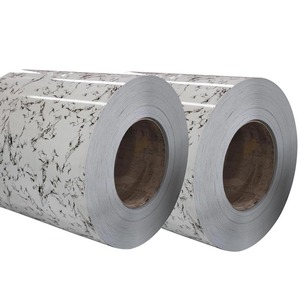
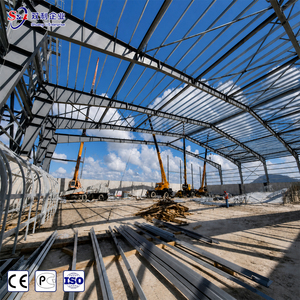
Procurement of Prepainted Galvanized Iron (PPGI) steel coils for installations in Riyadh demands strict technical adaptation. Located within the Arabian Peninsula's arid interior plateau, Riyadh experiences extreme climatic conditions characterized by summer ambient peak temperatures exceeding 50°C, solar ultraviolet indices reaching 12+, extreme diurnal swings (up to 25°C temperature differentials between afternoon apex and midnight trough), and highly abrasive airborne particulate matter transported by severe Haboob sandstorms.
Standard commercial-grade polyester (PE) coatings deployed in temperate European or East Asian conditions undergo rapid photochemical degradation when exposed to Riyadh's high UV irradiance. Photons in the UV-A and UV-B spectrum possess sufficient energy to cleave standard polymer chemical bonds, leading to polymer matrix embrittlement, chalking (ASTM D4214), micro-cracking, and rapid chromatic shifting (Delta E > 5.0 within 24 months). To counteract these physical degradation pathways, our manufacturing facility engineers custom High-Durability Polyester (HDP), Silicon-Modified Polyester (SMP), and Polyvinylidene Fluoride (PVDF / Kynar 500) coating systems applied directly over heavy zinc galvanized substrates (Z180 to Z275 g/m²) and Galvalume substrates (Al-Zn AZ150).
Engineering Recommendation for Riyadh Contractors: For standard warehousing and industrial eaves in MODON Industrial Zones 1, 2, and 3, we mandate an SMP topcoat of minimum 20µm over 5µm polyurethane primer on a Z275 substrate. For iconic exterior envelopes, giga-project logistic distribution centers, and architectural façades in King Salman International Airport zones, 70/30 PVDF topcoats with high Solar Reflectance Index (SRI > 78) are imperative to prevent premature thermal fatigue and lower building air conditioning loads by up to 28%.
| Coating Formulation | Polymer Architecture | Zinc Mass (Substrate) | UV Resistance (QUV-A) | Abrasion & Dust Sand Resistance | Solar Reflectance (SRI) | Riyadh Recommended Zone |
|---|---|---|---|---|---|---|
| Standard PE (Polyester) | Linear Polycondensate | Z100 - Z120 g/m² | Fair (500 hrs) | Moderate (10L falling sand) | 45 - 55 | Temporary Site Enclosures & Interior Walls |
| High-Durable PE (HDP) | Isophthalic / Neopentyl Glycol | Z180 - Z220 g/m² | Very Good (1,500 hrs) | High (20L falling sand) | 65 - 72 | Riyadh Logistics Yards & Dry Warehouses |
| Silicon-Modified Polyester (SMP) | Silicone-Crosslinked Polyester | Z275 / AZ150 g/m² | Superior (2,000 hrs) | Maximum Hardness (3H pencil test) | 70 - 80 | MODON Industrial Plants, Sudair & Al-Kharj |
| PVDF (70/30 Fluoropolymer) | Polyvinylidene Difluoride Resin | Z275 / AZ150 g/m² | Immune to UV (3,000+ hrs) | Excellent Flexible Barrier | 78 - 92 (Cool Roof) | Vision 2030 Flagship Pavilions, Data Centers |
Additionally, our production lines utilize continuous tension-leveling and multi-stage chromate-free passivation pretreatment baths. This chemical mechanical conversion process guarantees optimal inter-coat adhesion, certified via cross-hatch tape adhesion (ASTM D3359 Method B, Class 5B) and Zero-T to 1-T flexibility tests without micro-fracturing along continuous cold roll-forming profiles.
Our exported PPGI steel coils, pre-engineered structural frames, and composite panels serve the diverse micro-climates and stringent building codes of Saudi Arabia’s central economic belt.
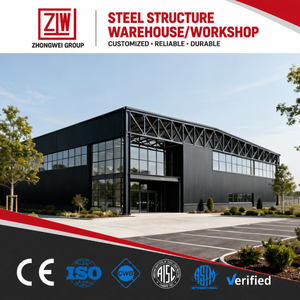
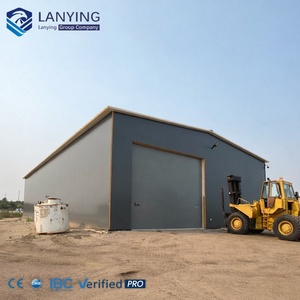
In Riyadh 2nd and 3rd Industrial Cities, manufacturing plants face dual atmospheric stresses: corrosive industrial airborne sulfur/particulates combined with extreme sand abrasion. Our heavy-coated Z275 PPGI coils and pre-engineered steel frames supply rigid exterior cladding and primary framing, resisting micro-pitting and structural fatigue.
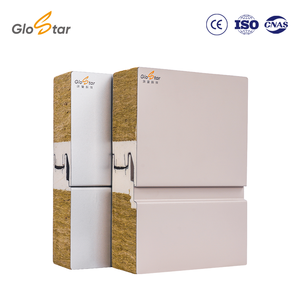
The rapid expansion of e-commerce logistics around King Khalid International Airport and Sulay district requires massive thermal-efficient envelope construction. Our continuous PU and rock-wool sandwich panels, faced with high-emissivity pre-painted steel, maintain stable internal temperatures down to -25°C while optimizing refrigeration energy usage.
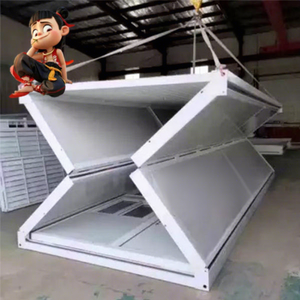
Mega infrastructure expansions—including Qiddiya, New Murabba, and King Salman Park—demand rapid, scalable worker accommodations. Our modular flat-pack container systems and lightweight light steel profiles provide rapid erection, non-combustible A1 rock-wool fire safety, and resilient weather barriers suited to desert wind loads.
Saudi authorities require comprehensive digital traceability via the SABER platform. Every master coil manufactured in our mill comes equipped with dual-heat Mill Test Certificates (MTC 3.1) and pre-inspected SASO compliance documentation.
Pharmaceutical warehouses in Diriyah and centralized food processing hubs in Al-Kharj now mandate food-grade, anti-bacterial polyvinyl topcoats that actively inhibit fungal and microbial growth in closed atmospheres.
Developers are eliminating low-zinc (Z60/Z80) coils due to short failure lifespans in desert sands. The current standard is anchored firmly on Z275 (275g/m² zinc) and AZ150 (55% Aluminum-Zinc alloy) for minimum 25-year structural integrity.
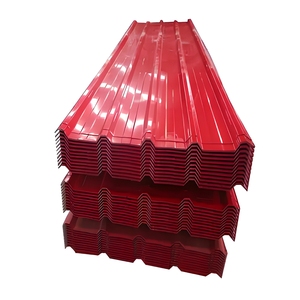
Industrial rooftops across Riyadh’s logistics clusters are being retrofitted with solar PV arrays. Our long-span trapezoidal roofing profiles are engineered with standing-seam interlocks that carry solar racking loads without puncture.
Combining over 15 years of precision metallurgical manufacturing with complete downstream structural engineering, fabrication, and export logistics under one accountable manufacturer.
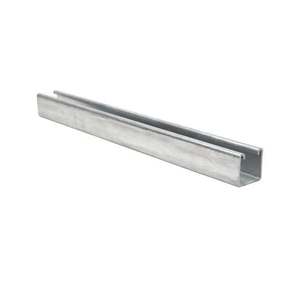
From prime prepainted galvanized (PPGI) and Galvalume (PPGL) steel coils to light steel U/C beams, roll-formed profile sheets, and complete PEB building packages—our integrated lines eliminate intermediary markups.
Operating since 2010 with complete fabrication workshops, we combine coil coating with CNC cutting, submerged arc welding, shot-blasting, and automated sandwich panel laminating under single-point contractual responsibility.
Every export batch undergoes rigorous quality validation: MEK double-rub tests (>100 cycles), cross-hatch adhesion, T-bend verification (0T-2T), digital gloss/color delta-E spectrophotometry, and accelerated salt-spray simulations.
Heavy-duty export packaging utilizing waterproof anti-rust paper, galvanized iron inner/outer protective rings, steel strapping, and custom timber cradles prevents moisture condensation and coil ovality during shipping to Riyadh via Dammam.

Clear, technically rigorous answers addressing customs clearance, SASO/SABER compliance, logistical corridors, coating specifications, and commercial minimums for Saudi purchasers.
Importing prepainted galvanized steel coils (HS Code 7210.70.00 / 7210.49.00) into Saudi Arabia requires mandatory registration on the SABER electronic platform. Procurement teams must obtain two electronic certificates: the Product Certificate of Conformity (PCoC) issued by a SASO-accredited third-party certification body (e.g., SGS, Intertek, or TUV) verifying compliance with standard SASO ASTM A755/A755M and SASO ISO 12944, followed by the Shipment Certificate of Conformity (SCoC) generated for each commercial invoice. Our factory coordinates directly with client-appointed inspection agencies to perform container loading inspections, laboratory coating verification, and instant SABER upload, ensuring hassle-free clearance at Saudi customs.
Because Riyadh is landlocked in central Saudi Arabia, ocean shipments from our factory typically discharge at King Abdulaziz Port in Dammam on the Arabian Gulf (approx. 20–24 days transit from major Chinese steel export ports). From Dammam, cargo is moved to Riyadh via two primary logistical channels: bonded direct rail transit directly into the Riyadh Dry Port (RDP) for customs release in the capital city, or bonded flatbed trucking via Highway 40 directly to project staging yards or MODON industrial plants. Alternatively, for southern or western projects, Red Sea entry via Jeddah Islamic Port followed by overland transport can be arranged based on sea freight economics.
The decision hinges on building typology, exposure parameters, and expected lifecycle. For high-volume warehousing, logistics facilities, and industrial sheds in MODON, Silicon-Modified Polyester (SMP) represents the most cost-effective balance: the silicone cross-linking provides high surface hardness (3H pencil hardness) that resists scratch abrasion from high-velocity windblown desert sand. For architectural facades, corporate headquarters, airport hangars, or facilities exposed to chemical vapors, PVDF (70/30 resin ratio) remains superior due to the inert carbon-fluorine bond, which resists chalking, fading, and chemical breakdown under UV irradiance exceeding 2,200 kWh/m² annually.
Our standard Minimum Order Quantity (MOQ) is 25 metric tons (equivalent to one full 20ft containerload, typically housing 4 to 5 master coils). Thickness ranges from 0.15mm to 1.50mm with tight precision tolerances of ±0.02mm; standard slit widths are 914mm, 1000mm, 1200mm, 1219mm, and 1250mm. Coil weights are fully customizable from 3.0 to 6.5 metric tons per coil to match our Riyadh clients' uncoiler and crane payload limitations. Inner diameter (ID) is standard at 508mm (20 inches) or 610mm with rubber sleeve adapters upon request.
Cross-equatorial sea freight through tropical routes introduces severe "container rain" risks due to high relative humidity. To ensure zero-defect delivery, our factory utilizes heavy-duty tropicalized sea packing (Sea-Worthy Export Packing): coils receive an oil-passivated or dry chromate-free protective treatment, followed by vapor-corrosion-inhibiting (VCI) anti-rust paper wrapping, continuous polyethylene barrier film, inner and outer galvanized steel edge protectors, and corrugated steel outer protective shells secured by 3 radial and 3 circumferential high-tensile steel straps. Silica gel desiccant bags are installed inside every container, which are strictly inspected for water-tight integrity prior to dispatch.
Yes. We maintain a computer-controlled spectrophotometric color-matching laboratory capable of duplicating standard RAL shades, Pantone standards, or physical customer swatches. Popular GCC shades include RAL 9002 (Grey White), RAL 9003 (Signal White), RAL 1001 (Beige/Sand Desert), RAL 5012 (Light Blue), and RAL 7016 (Anthracite Grey). We guarantee batch-to-batch color repeatability with a Delta E tolerance of less than 0.5 under D65 artificial daylight illumination.
Whether you require master PPGI coils for continuous roll-forming lines, fireproof A1 sandwich panels, or full pre-engineered warehouse structures, our technical export team provides comprehensive structural calculations, coating recommendations, and CIF Dammam/Riyadh quotations within 24 hours.
Contact Us