Direct factory-engineered systems manufactured to BS EN 14509, ISO 9001, and KEBS standard tolerances, ready for export packaging and East African site erection.
Analyzing thermal conductivity, thermal mass displacement, and marine-grade corrosion mitigation across Kenyan regional microclimates.
Kenya’s industrial architecture is undergoing an unprecedented structural transition. For decades, commercial developers across Nairobi, Mombasa, Kisumu, and the central agricultural valleys relied heavily on single-skin corrugated metal sheets (locally known as mabati). While historically low in initial material procurement costs, single-skin profiles suffer from catastrophic thermodynamic inefficiencies: extreme solar radiation transfer during peak daylight hours, severe nighttime thermal drops, rampant underside condensation ("internal sweating"), and premature thermal fatigue caused by equatorial UV radiation. As Kenya accelerates industrialization under Vision 2030 and modernizes cold chain hubs across Special Economic Zones (SEZs), insulated metal panels (IMPs) have emerged as the foundational building envelope technology demanded by top-tier consulting structural engineers and project developers.
When engineering insulated sandwich panels for the East African Rift system and coastal coastal zones, thermal core selection is not merely an architectural preference—it dictates the operational lifespan and net energy profile of the facility. An insulated metal panel functions as an integrated structural composite: two pre-painted galvanized iron (PPGI) or Aluzinc (55% Al, 43.4% Zn, 1.6% Si) outer skins bonded to an insulated core through continuous high-pressure injection or automated lamella bonding. Understanding how these cores behave in Kenya’s unique geographic environments requires deep technical scrutiny.
Polyisocyanurate (PIR) formulations utilize closed-cell matrices (>92% closed cells) blown with low-GWP cyclopentane. Delivering a thermal conductivity as low as λ = 0.020–0.022 W/m·K, PIR provides the world's most compact thermal boundary, achieving B1 fire retardant classifications under DIN 4102 and BS EN 13501-1.
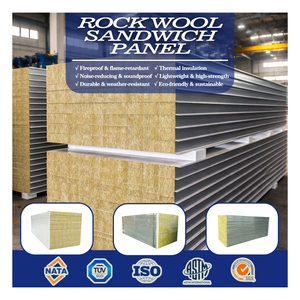
Engineered from non-combustible basalt rock fibers rotated 90 degrees into vertical lamellae, our rock wool panels deliver Euroclass A1 / A2 fire containment for up to 240 minutes (EI 240). Essential for chemical processing, power infrastructure, and shared-wall logistics centers complying with Kenyan urban fire codes.
Providing the most economical cost-per-square-meter ratio, high-density (16–20 kg/m³) EPS panels are lightweight, completely non-hygroscopic, and rapid to erect. Ideal for site temporary offices, cold distribution ante-rooms, rooftop residential additions, and agricultural post-harvest packaging sheds across rural counties.
From the saline breezes of Kilindini Harbour to the cool, seismic highlands of Nakuru, our insulated panels are customized to distinct regional geotechnical and atmospheric demands.
Marine atmospheric classifications (C4 to C5-M under ISO 12944) near the Indian Ocean require aggressive corrosion shielding. We supply Aluzinc AZ150 substrates with 25-micron fluorocarbon (PVDF) exterior paint coatings to prevent salt-mist pitting in Dongo Kundu SEZ and Port Reitz bonded warehousing.
In Naivasha, Nakuru, and Mount Kenya regions, preserving freshly cut flowers (roses, carnations), avocados, and dairy products requires rigid climate stabilization. PIR tongue-and-groove cam-lock panels maintain precise +2°C to +4°C cold store chambers, preventing condensation droplets that cause floral mold.
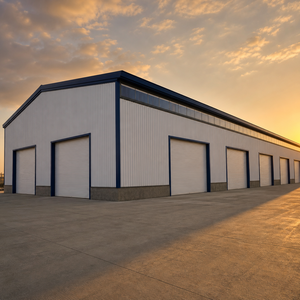
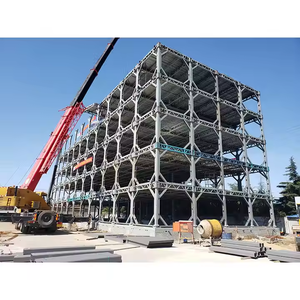
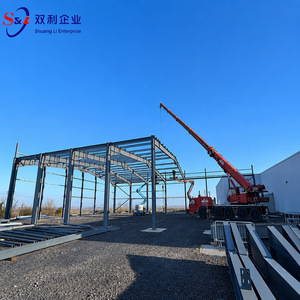
Industrial developments along the Eastern Bypass, Athi River, Tilisi, and Tatu City demand rapid structural installation with sleek modern aesthetics. Pre-engineered steel building frames paired with architectural micro-ribbed concealed-fastener panels enable factory enclosures within weeks rather than months.
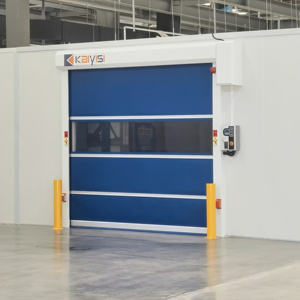
Data centers, telecommunications hubs, and pharmaceutical production units at Konza Technopolis require dust-tight envelopes with zero electrostatic discharge. Our anti-static coated panels and automated cleanroom roll-up doors maintain positive air pressure and strict particulate separation.
Comparative structural and thermal parameters utilized by structural specifiers for Kenyan industrial tenders.
| Insulation Core Type | Nominal Core Density | Thermal Conductivity (λ) | Fire Resistance Rating | Acoustic Attenuation (Rw) | Recommended Kenyan Application |
|---|---|---|---|---|---|
| Continuous PIR (Polyisocyanurate) | 40 – 42 kg/m³ | 0.020 – 0.022 W/m·K | B1 (DIN 4102) / B-s1, d0 | ~26 – 28 dB | Perishable Cold Stores, Naivasha Flower Cold Chain, Athi River FMCG Distribution |
| Structural Basalt Rock Wool | 100 – 120 kg/m³ | 0.038 – 0.042 W/m·K | A1 Non-combustible (up to 4 hrs) | ~31 – 35 dB | Power Stations, Chemical Warehouses, Partition Firewalls, Heavy Workshops |
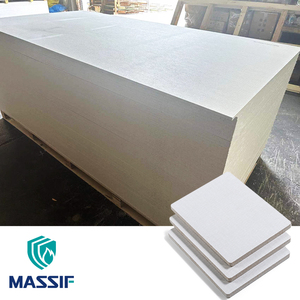
| MGO Composite Board (Fireproof) | 950 – 1100 kg/m³ | 0.14 – 0.18 W/m·K | Class A1 Flame Spread 0 | ~38 – 44 dB | Cleanrooms, Hospital Modular Wards, High-Security Processing Facilities |
| EPS (Expanded Polystyrene) | 16 – 20 kg/m³ | 0.036 – 0.039 W/m·K | B2 Normal Flammability (FR treated) | ~24 – 26 dB | Dry Bulk Storage, Site Accommodation Units, Poultry & Livestock Sheds |
| OSB Structural Insulated Panel (SIP) | Core dependent + OSB/3 | 0.032 – 0.038 W/m·K | Class B / Class C | ~32 – 36 dB | Eco-Lodges, Modular Commercial Outlets, Remote Safari Camp Housing |
Note for Civil Consultants: All panels can be fabricated with skin thicknesses ranging from 0.40 mm to 0.80 mm in G550 or G300 structural grade steel, with surface profiles including Micro-Rib, Flat architectural, Deep Corrugated (for roofing water evacuation during Kenyan tropical torrential rains), or Stucco embossed.
Navigating standards modernization, statutory compliance, and infrastructure expansion in East Africa.
Kenya Bureau of Standards (KEBS) mandates that all imported construction envelopes adhere to KS EAS and KS 02-1065 codes. Our direct-factory supply includes full laboratory testing records, mill certificates, and mandatory Pre-Export Verification of Conformity (PVoC) inspection via approved international agencies (SGS, Bureau Veritas, Intertek) to ensure rapid issuance of the Certificate of Conformity (CoC) before vessel departure from China.
With the operational maturity of the Standard Gauge Railway (SGR) connecting the Port of Mombasa directly to the Nairobi Inland Container Depot (ICD Embakasi) and the Naivasha Dry Port, shipping logistics have stabilized. We optimize container stuffing diagrams (using 40ft High Cube containers) with moisture-barrier packaging to ensure zero cargo abrasion during marine transit and rapid transfer onto SGR rolling stock.
Under Kenya’s Special Economic Zones Act, developers operating inside designated zones enjoy duty remissions and streamlined clearance on capital machinery and specialized construction materials. We work with Kenyan customs brokers to provide clear, harmonized HS-code documentation (HS 7308.90 for fabricated building components; HS 9406 for prefab buildings) to facilitate tax exemption processing.
Authoritative technical and logistical clarifications for quantity surveyors, project managers, and lead contractors.
Every shipment bound for the Port of Mombasa undergoes mandatory Pre-Export Verification of Conformity (PVoC). Prior to container sealing at our manufacturing plant, an accredited inspection agency (such as SGS, Intertek, or CCIC) conducts physical sampling, core density verification, steel gauge measurement, and coating adhesion checks. The resulting Certificate of Conformity (CoC) is uploaded directly into Kenya TradeNet for fast customs release.
For installations in Mombasa, Kwale, and Kilifi within 10 km of the coastline, standard polyester paint coatings will suffer premature blistering due to airborne chlorides. We recommend a 55% Aluzinc substrate (AZ150, 150 g/m² total coating mass) topped with a 25-micron Polyvinylidene Fluoride (PVDF) or High-Durability Polyester (HDP) finish, providing over 25 years of corrosion-free performance under marine exposure.
Yes. Kenya is partitioned into distinct wind and seismic hazard zones under the National Construction Authority (NCA) building code. Our structural engineers design panel profiles, gauge selections, and purlin span tables to withstand gust wind speeds up to 140 km/h (typical in open plateaus like Kajiado and Machakos) and seismic horizontal load requirements for East African Rift Valley Zone II/III.
Panel bundles are laminated with protective peel-off UV-resistant film, interleaved with corner-edge guards, wrapped in heavy-duty polyethylene shrink wrap, and packed onto customized wooden/steel pallets. Bundles are sized to slide smoothly into 40ft High Cube containers with specialized dunnage airbags and heavy ratchet strapping, ensuring zero shifting during oceanic pitching and rolling.
We work extensively with Kenyan commercial banks (including KCB, Equity Bank, Standard Chartered Kenya, and NCBA). Standard procurement terms include irrevocable, confirmed Letters of Credit (L/C at sight) or flexible T/T milestones (deposit against technical drawing approval, balance against bill of lading copy). We quote under standard Incoterms 2020 including FOB China ports, CIF Mombasa, or CFR Kilindini.
Every commercial order includes a comprehensive installation package: shop drawings with marked components, detailed joint interface blueprints (flashing, drip trims, ridge caps, corner trims), self-drilling fasteners with EPDM washers, butyl sealant mastic, and expandable polyurethane foam. We also provide remote video engineering support or dispatch installation supervisors for major industrial erect projects.
Eliminating subcontracting fragmentation through fully integrated steel fabrication and automated continuous panel production.
Operating continuously since 2010, our manufacturing enterprise has delivered over 352+ major structural steel and insulated envelope projects for more than 120 industrial and commercial clients globally. Our engineering division comprises over 100 certified structural engineers, fabrication specialists, and quality assurance inspectors working under rigorous IATF 16949, ISO 9001, and CE certification frameworks.
Unlike regional brokers or trading intermediaries, we control every critical phase of manufacturing internally:
Our double-belt continuous foaming lines operate with precision temperature control and multi-component high-pressure dosing units. This ensures uniform density distribution, zero voids, and exceptional peel strength between steel faces and the insulation core.
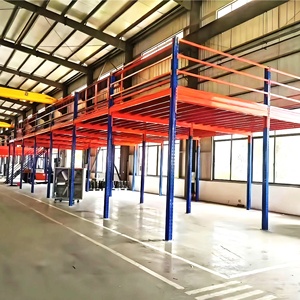
We supply the complete structural ecosystem: built-up welded H-sections, cold-formed Z/C purlins, crane runways, mezzanine platforms, and architectural flashing tailored precisely to panel interlocking joints, ensuring zero on-site cutting or dimensional clashes.
By providing structural steel engineering, insulated metal panels, fast roll-up doors, and custom accessories under a single contract, we remove interface disputes between structural steel fabricators and cladding installers, saving project timelines by weeks.
Planning an industrial warehouse in Athi River, a cold-storage sorting facility in Naivasha, a logistics terminal in Mombasa, or a multi-storey commercial development? Submit your architectural elevations or general arrangement drawings. Our technical engineering division will generate a structural concept proposal, panel optimization layout, and CIF Mombasa freight schedule.