Precision-fabricated components manufactured under rigorous factory production control (FPC), optimized for direct shipping to Incheon Port and rapid installation across the Seoul Metropolitan Area.
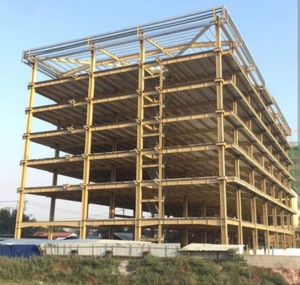
An authoritative technical inquiry into how European CE EN 1090-2 Execution Class 3/4 standards align seamlessly with South Korea's Korean Design Standard (KDS 41) for major metropolitan projects.
The urban fabric of Seoul—spanning from high-density commercial corridors in Gangnam and Yeouido to massive high-tech research centers in Magok—demands structural steel solutions that combine unprecedented span capacities with uncompromising safety tolerances. As general contractors and EPC engineering firms in South Korea evaluate structural steel tube truss fabricators, CE Certification under EN 1090-1 and EN 1090-2 (Execution Class EXC3 & EXC4) serves as the benchmark of metallurgical pedigree and factory quality verification.
Tubular space trusses constructed from Circular Hollow Sections (CHS), Square Hollow Sections (SHS), and Rectangular Hollow Sections (RHS) exhibit distinct structural efficiencies over conventional H-beam or built-up I-plate girders. By providing uniform torsional resistance ($I_t$) and identical buckling curves across principal axes, hollow structural sections maximize the radius of gyration ($r$). This geometric advantage yields weight reductions of up to 28% across clear spans exceeding 60 meters, drastically lowering seismic dead loads ($D$) while expanding architectural flexibility in line with the Korean Building Code (KBC) and KDS 41 30 00.
Navigating cross-border procurement for mega-projects in Seoul requires precise metallurgical and non-destructive examination (NDT) mapping between European norms and Korean Design Standards (KDS). Our CE-certified manufacturing framework adheres strictly to dual-qualification protocols, ensuring that material test reports (MTRs) according to EN 10204 Type 3.1 directly satisfy South Korea's Ministry of Land, Infrastructure and Transport (MOLIT) construction directives.
| Engineering Property / Test Domain | European Standard (CE EN Norms) | Korean Standard (KDS / KS Equivalents) | Fabrication Compliance & Quality Control |
|---|---|---|---|
| Hollow Section Steel Grades | EN 10210 / EN 10219 S355J2H / S355NH | KS D 3568 / KS D 3566 SNT355 / POSTEN 355 | Impact testing Charpy V-notch guaranteed at -20°C (≥27J); full melt-heat traceability |
| Welding Quality Level | EN ISO 5817 Level B (Stringent) | KDS 41 30 00 / KS B 0845 Grade 1 | Visual (VT), Magnetic Particle (MT), and 100% Ultrasonic Testing (UT) on full-penetration nodes |
| Node Intersection Profiling | CIDECT Design Guides 1 & 3 / EN 1993-1-8 | AIK Guidelines / KDS 41 30 15 Tubular Joints | 6-Axis CNC Plasma Saddle Profiling; automated beveling ensuring smooth dihedral angle ($\psi$) transition |
| Atmospheric Corrosion Protection | EN ISO 12944 Corrosivity Category C3/C4 | KS M 6020 Heavy-Duty Protective Systems | Shot blasting to ISO 8501-1 Sa 2.5; inorganic zinc silicate + epoxy micaceous iron oxide + polyurethane topcoat |
| Factory Production Control (FPC) | EN 1090-1 Annex B (System 2+) | MOLIT Quality Inspection System Audit | Notified Body (NB) certified audit trail; qualified WPS/WPQR per EN ISO 15614-1 & AWS D1.1 |
Engineered to excel across the diverse operational terrains of the Seoul Metropolitan Area (SMA)—from maritime transit corridors in Incheon to ultra-dense inner-city architectural domes.
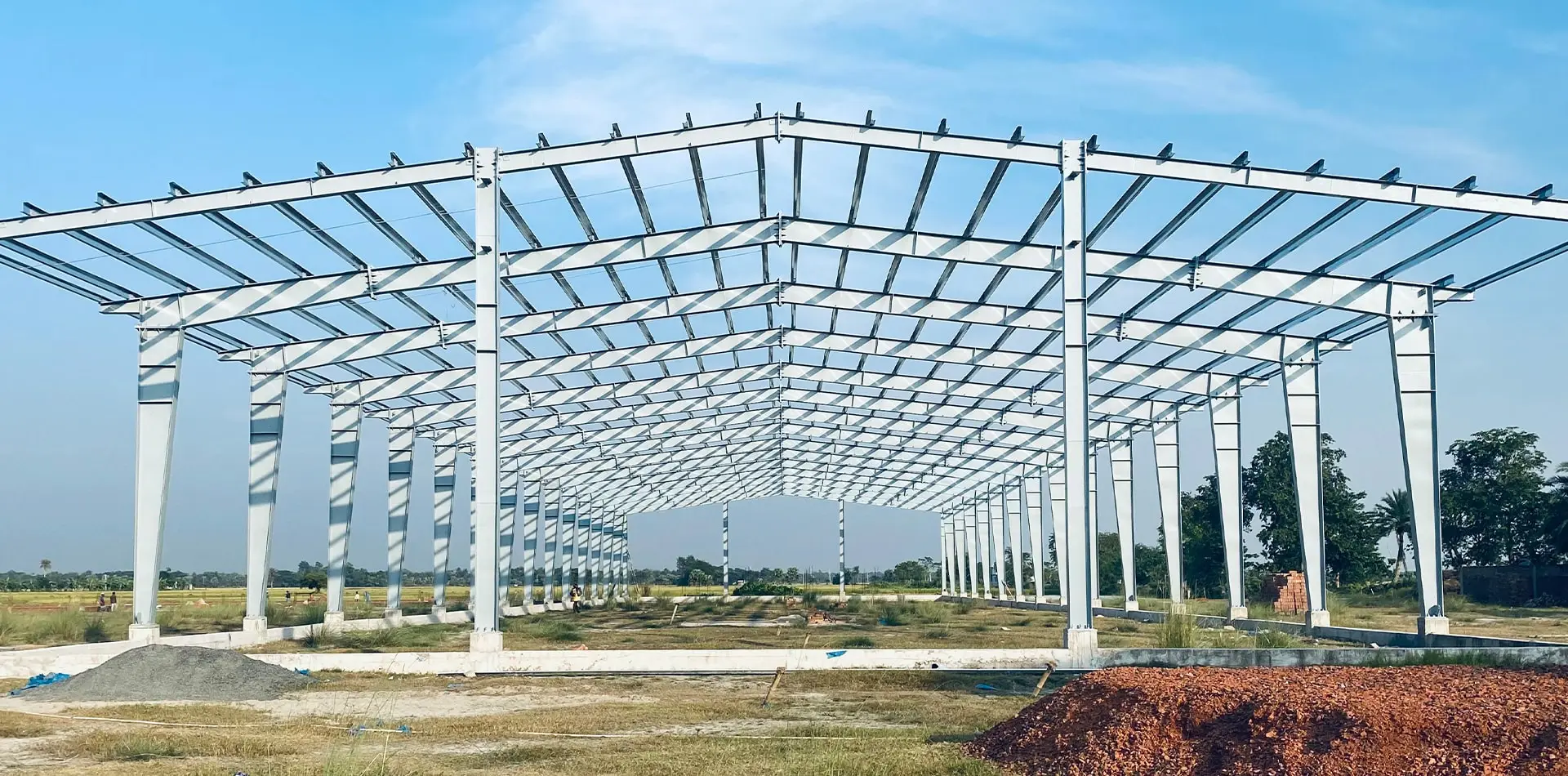
Long-span exposed tubular skylights and spatial canopies engineered for biotechnology and electronics headquarters. Clean intersecting nodes offer pristine aesthetic architectural value while accommodating massive HVAC loadings and high solar gain glazed curtain walls.
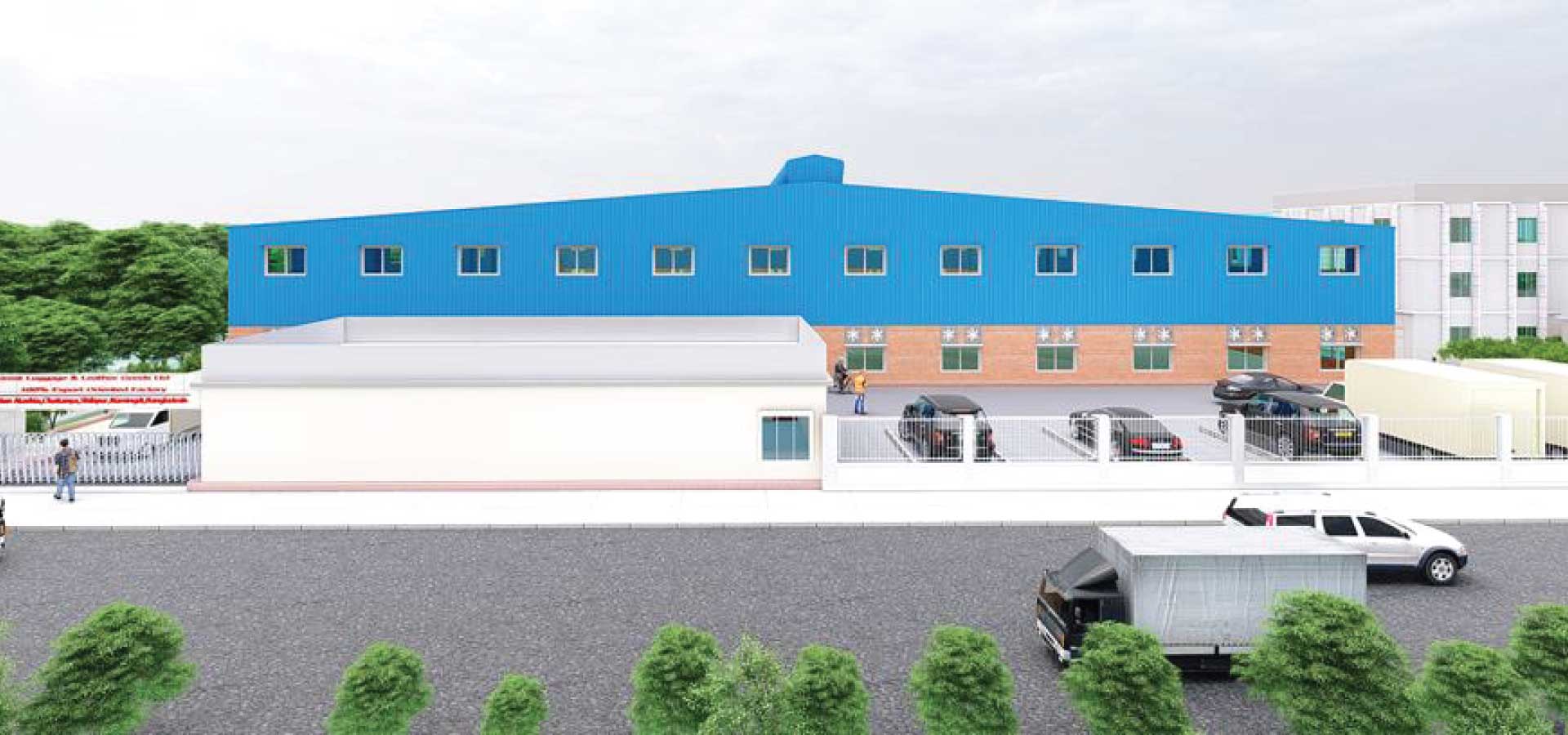
Clear-span 72-meter storage hubs and cantilevered aircraft hangar trusses. Manufactured to endure marine atmospheric conditions (ISO 12944 C4 environment) adjacent to Incheon Port, with optimized column-free layouts facilitating automated automated storage and retrieval systems (ASRS).
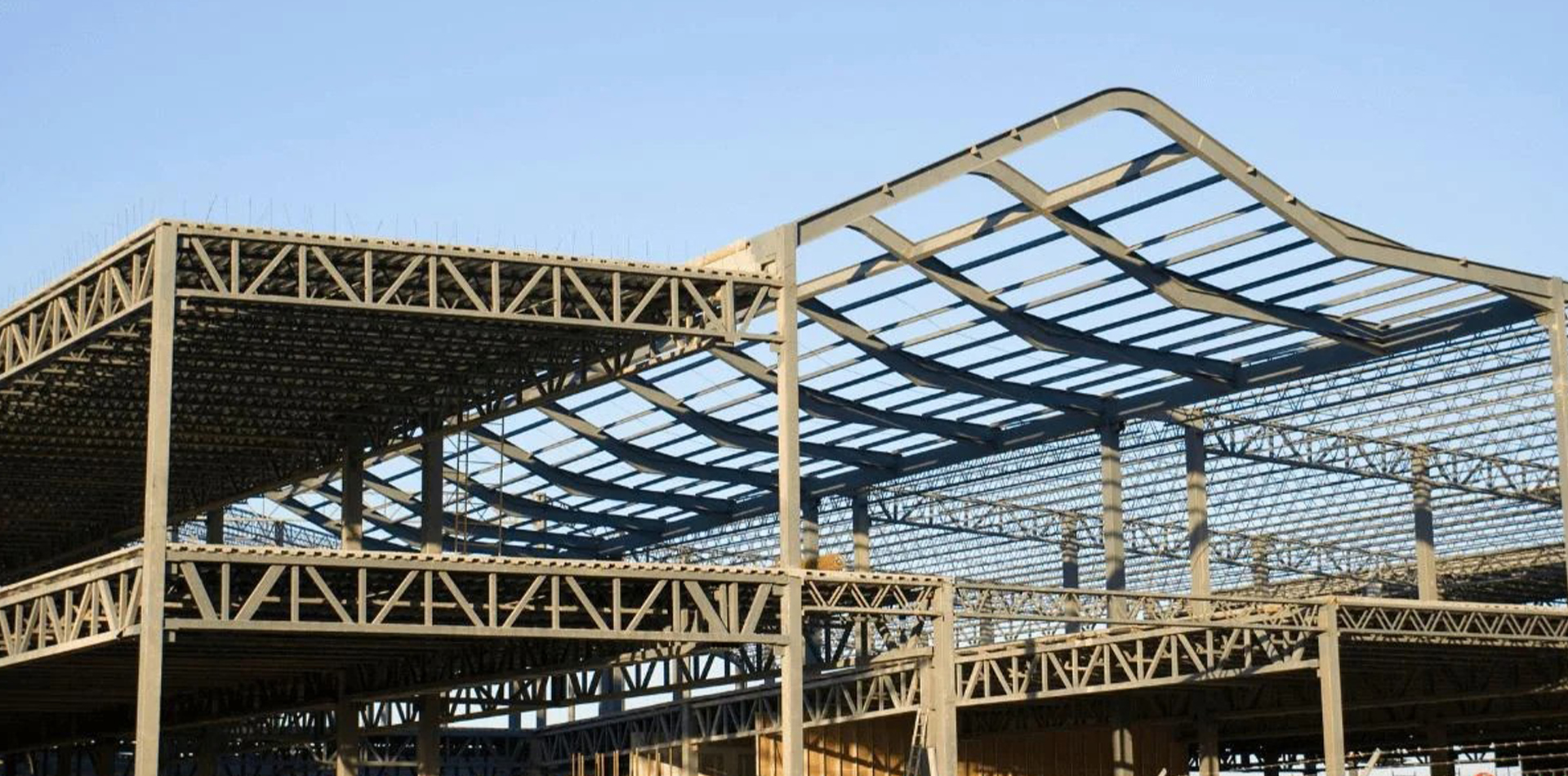
Tri-chord and quad-chord curved spatial tubular trusses for indoor entertainment complexes, K-pop venues, and municipal sports pavilions across Gyeonggi-do. Dynamic acoustics, integrated catwalk trusses, and massive rigging capacities for lighting grids.
Underground concourses and above-ground intermodal hub canopies for Seoul's Great Train eXpress (GTX). Segmented pipe trusses engineered for rapid overnight crane assembly, minimizing traffic disruption in densely populated transit nodes.
How Korean building code updates, digital fabrication technologies, and seismic resilience mandates are reshaping the procurement of steel pipe trusses.
Traditional manual contour cutting of saddle joints has been replaced across Seoul projects by automated multi-axis robotic thermal cutting. Variable bevel angles ensure complete root penetration welds on complex K, T, and Y intersection nodes, eliminating fatigue concentration hot-spots.
Following the Gyeongju and Pohang seismic events, structural regulations in South Korea mandate elevated response modification factors ($R$). Our tubular trusses integrate ductile connection fuses and thick-walled chord reinforcement to withstand cyclic plastic deformation without local buckling.
Congested metropolitan construction sites in Seoul restrict wide-load transport and prolonged crane setups. Modern procurement favors pre-assembled spatial mega-modules, trial-fitted via 3D laser scanning at our production facility before shipping, enabling rapid single-lift positioning.
Operating since 2010 under the philosophy of unwavering craftsmanship, delivering over 352 structural milestones for leading international general contractors.
From preliminary Tekla structural modeling and joint calculation reports to automated pipe cutting, submerged arc welding (SAW), non-destructive testing, and turnkey civil foundation interface packages—our clients interact with a single, completely accountable partner.
Every structural pipe truss member leaves our production lines with full chemical, mechanical, and radiographic inspection records. Complete trace-number stamping ensures frictionless acceptance by South Korean municipal inspectors and independent inspection bodies.
Experienced in handling specialized open-top (OT) and flat-rack (FR) shipping configurations, we coordinate direct maritime logistics from production yards to Incheon and Pyeongtaek ports, providing barcoded erection kits for instantaneous site sequencing.
In-depth technical answers addressing regulatory compliance, joint mechanics, logistics, and localized engineering considerations across the Seoul Metropolitan Area.
Under the regulations administered by the Ministry of Land, Infrastructure and Transport (MOLIT) and the Seoul Metropolitan Government, structural steel fabrications supplied from overseas must exhibit an accredited Quality Management System and certified Factory Production Control (FPC). CE Marking under EN 1090-1/2 Execution Class 3 (EXC3) exceeds the typical testing frequencies specified in standard Korean building guidelines. We deliver a complete compliance dossier comprising EN 10204 Type 3.1 mill test certificates, certified Welder Performance Qualifications (WPQ) per EN ISO 9606-1, Welding Procedure Specifications (WPS), and full NDT reports calibrated directly to KS B 0845 and KS D 3568 standards.
The Seoul region experiences continental winter extremes with design temperatures routinely dropping to -15°C to -20°C. Standard commercial structural tubing without certified low-temperature toughness presents significant risks of brittle fracture. We specify European standard S355J2H or S355NH (harmonized with Korean SNT355), guaranteeing a minimum Charpy V-notch absorbed impact energy of 27 Joules at -20°C. For critical roof tension chords and airport structures subject to dynamic shock or fatigue, S355NL (impact tested down to -50°C) is incorporated to ensure absolute metallurgical reliability.
Intersection nodes in tubular space trusses are susceptible to chord wall plastification, punching shear, and local brace member yielding under CIDECT guidelines and KDS 41 30 15. Our engineering bureau conducts non-linear finite element modeling (FEM) using ANSYS and Tekla Structures to verify stress distribution across overlapping K and KT nodes. In high-stress concentrations, internal circular stiffener rings, diaphragms, or external doubler plates are precision-welded into the main chord prior to assembly, fully safeguarding joint efficiency ($N_j / N_{pl,Rd} \ge 1.0$) without altering the streamlined exterior profile.
For installations within 25 kilometers of the Yellow Sea (Gyeonggi Bay / Incheon Port), structures face high airborne chloride salinity combined with urban industrial sulfur dioxide emissions. We apply heavy-duty multi-tier coating systems conforming to ISO 12944 Category C4 or C5 High. This involves centrifugal shot-blasting to ISO 8501-1 Sa 2.5, application of an 80μm zinc-rich epoxy primer, a 100μm high-build micaceous iron oxide (MIO) epoxy intermediate coat, and a 60μm aliphatic polyurethane topcoat (total dry film thickness ≥ 240μm). Alternatively, duplex systems (hot-dip galvanization per EN ISO 1461 plus powder/polyurethane topcoat) provide 30+ years of zero-maintenance lifecycle performance.
Production lead times depend on total structural tonnage, typically ranging between 4 and 8 weeks for projects from 200 to 2,000 metric tons. Maritime transit from our deep-water loading berths to Incheon Port or Pyeongtaek Port generally takes 12 to 18 days. We handle end-to-end CIF/DDP logistics, preparing all commercial invoices, Korea Customs Service clearance documents, preferential trade certificates of origin, and certified container packing manifests marked according to erection erection sequences.
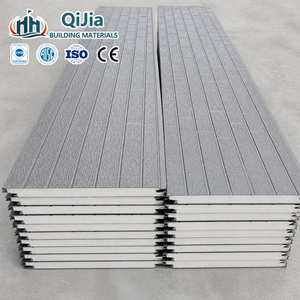
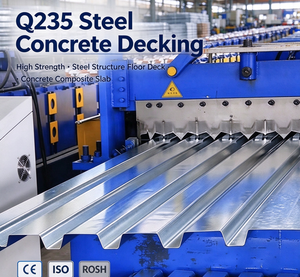
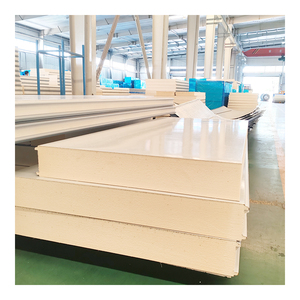
Yes. Pre-engineered steel buildings achieve maximum economic and thermodynamic efficiency when tubular pipe trusses are integrated directly with high-performance envelope systems. We engineer custom cold-formed Z/C purlins and galvanized shear connectors directly onto the truss top chords. This facilitates the rapid, weather-tight installation of polyurethane (PU), polyisocyanurate (PIR), or fire-rated rock wool sandwich panels, as well as composite floor decking sheets, delivering a unified building envelope under a single manufacturing contract.