Engineered to withstand the maritime salinity of Tangier Med, the harsh convective heat of Ouarzazate, and the strict cleanroom bio-standards of Moroccan pharmaceutical facilities.
Morocco's geographical positioning at the crossroads of Atlantic maritime humidity, Mediterranean microclimates, and Saharan thermal radiation creates one of the world's most demanding exterior envelope environments. For commercial developers, industrial plant operators, and cold-chain logistics engineers, selecting architectural sandwich panels is not merely an aesthetic choice—it is a critical calculation of thermal transmittance values ($U$-values), vapor diffusion resistance, cyclical wind shear capacity, and fire containment compliance under Moroccan Construction Regulations (Règlement Thermique de Construction au Maroc - RTCM).
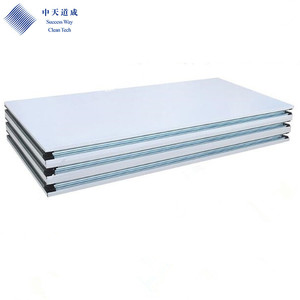
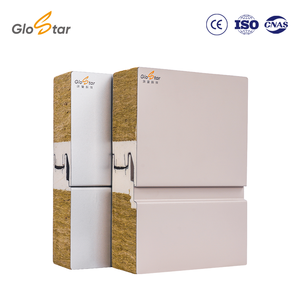
Continuous double-belt lamination technology allows our automated manufacturing lines to inject micro-cellular polyisocyanurate (PIR), rigid polyurethane (PUR), or lamella-oriented basalt mineral rockwool between high-yield structural steel skins. Below is the empirical engineering matrix used by our technical consultancy department when sizing projects for Casablanca, Kenitra, Tangier, and Agadir:
| Insulating Core Type | Density (kg/m³) | Thermal Conductivity (λ in W/m·K) | Reaction to Fire (EN 13501-1) | Acoustic Attenuation (Rw) | Optimum Moroccan Zone Application |
|---|---|---|---|---|---|
| Continuous PIR (Polyisocyanurate) | 40 – 42 kg/m³ | 0.020 – 0.022 | B-s1, d0 (Self-Extinguishing) | 25 – 27 dB | Cold Storage (Agadir), Logistics Hubs (Casablanca, Settat) |
| Rigid PUR (Polyurethane) | 38 – 40 kg/m³ | 0.023 – 0.025 | B-s2, d0 | 24 – 26 dB | Standard Agro-food Processing & Controlled Depots |
| High-Density Rockwool (Basalt) | 100 – 120 kg/m³ | 0.038 – 0.042 | A1 / A2-s1, d0 (Non-Combustible) | 32 – 35 dB | Automotive Factories (TAC), Chemical Plants (Jorf Lasfar) |
| Expanded Polystyrene (EPS) | 16 – 20 kg/m³ | 0.036 – 0.039 | E (Combustible) | 22 – 24 dB | Low-Cost Temporary Accommodation & Modular Site Cabins |
Along Morocco's 3,500 kilometers of coastline, including maritime industrial hubs such as the Tanger Med Special Economic Zone, Jorf Lasfar, and Casablanca Port Zone, standard galvanized coatings experience accelerated zinc sacrificial oxidation due to airborne chloride ions combined with high UV indices.
Our export panels utilize high-performance substrate metallurgy: hot-dipped zinc-aluminum-magnesium coatings ($ZnAlMg$ alloy layer of minimum 180 g/m²) and Aluzinc (ASTM A792 AZ150/AZ180). For critical applications, external skins receive a 50-micron thick high-durability Polyvinylidene Fluoride (PVDF 70/30) or super-durable polyurethane finish. This architecture guarantees 25 to 30 years of functional longevity without color fading (ΔE ≤ 2) or chalking under intense North African solar irradiation.
Wind load resistance across the Rif and Atlas mountain corridors and high-velocity wind zones near the Strait of Gibraltar necessitates engineered joint dynamics. Our architectural wall panels integrate double-tongue-and-groove labyrinths featuring factory-injected open-cell EPDM gaskets. This creates a capillary barrier that completely prevents the infiltration of wind-driven sand and storm water during Atlantic squalls, while concealed screw brackets (hidden fasteners) protect the structural fixings from atmospheric corrosion and preserve visual facade purity.
Custom-tailored envelope assemblies supporting the Kingdom of Morocco’s industrial acceleration plan, foreign direct investment clusters, and cold-chain logistics security.
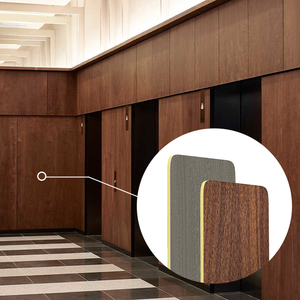
Supplying Tanger Automotive City (TAC), Kenitra Atlantic Free Zone, and Nouaceur Aerospace Cluster with Class A1 non-combustible rockwool partition panels and external wall cladding tailored to cleanroom and precision assembly standards.
PIR insulated cold storage panels (thicknesses 100mm to 200mm) engineered for citrus, berry, and seafood processing facilities in Agadir, Ait Melloul, and Dakhla, maintaining -25°C to +4°C temperatures with zero thermal drift.
Modular GMP-compliant partition systems for pharmaceutical hubs in Benslimane, Bouskoura, and Casablanca. Seamless joint finishes, chemical-wash resistant skins, and flush ceiling integrations eliminate microbial aggregation.
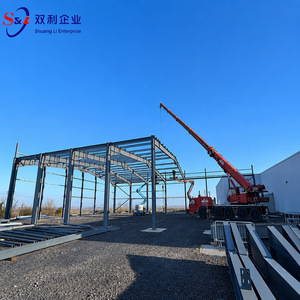
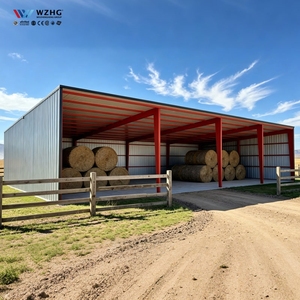
Heavy-duty structural PEB frames and corrosion-shielded cladding deployed across OCP industrial complexes in Khouribga, Benguerir, and Safi, engineered for extreme dust loading, sulfur vapors, and diurnal temperature fluctuations of 35°C.
Fast-track envelope installations for dry goods warehousing along the Casablanca-Rabat-Tanger highway corridor (CFCIM and SNTL dry ports), utilizing high-span lightweight panels that allow purlin spacing up to 3.5 meters.
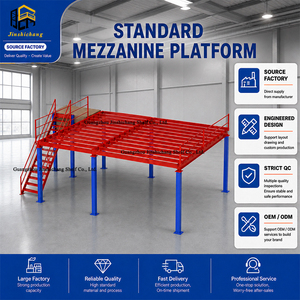
High-aesthetic 3D architectural facade panels, acoustic rockwool barriers, and structural mezzanine floor systems supporting stadium auxiliary facilities, high-speed rail stations (Al Boraq line extensions), and regional sports centers.
The modernization of Morocco's industrial real estate is driven by two main catalysts: industrial decarbonization for export to the European Union (CBAM compliance) and the national transition to renewable-ready, thermally efficient infrastructure.
As Moroccan manufacturers export high volumes of automotive parts, textiles, and chemicals to the EU, building operational emissions must be reduced. High-performance PIR continuous panels slash indoor HVAC cooling loads by up to 42% compared to traditional single-skin sheets or uninsulated masonry blocks. This reduction translates directly into lower factory Scope 1 and Scope 2 carbon emissions, protecting Moroccan exporters from emerging EU border carbon tariffs.
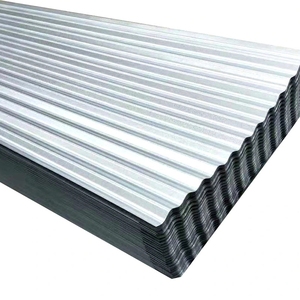
Under Law 13-09 and Law 82-21 on self-generation of electrical energy, Moroccan industrial roofs are rapidly transforming into rooftop solar power stations. Our continuous 5-rib trapezoidal roofing sandwich panels are structurally calculated with high crest ribs to receive solar panel clamps directly without roof-sheet piercing. This prevents water ingress while supporting added static solar loads of 18–25 kg/m² across spans of 2.5 meters.
Moroccan seismic design rules (Règlement de Construction Parasismique - RPS 2011) demand ductile structural frames and non-structural envelope systems that decouple during seismic ground acceleration. Our prefabricated steel structures and light-gauge C-channel framing assemblies are engineered using Tekla and SAP2000 software to ensure structural node ductility, providing full engineering calculations, load deflection reports, and erection mark drawings for rapid local municipal approval.
Backed by over a decade of structural engineering expertise, 352+ delivered installations globally, and a rigorous ISO 9001 certified continuous manufacturing facility.
Double-caterpillar 40-meter laminators ensure uniform core density, void-free foam distribution, and peel resistance exceeding 0.12 MPa under EN 14509 testing.
We integrate primary structural PEB columns, secondary C/Z purlins, roof and wall sandwich panels, trims, gutters, and fasteners under one turnkey engineering contract.
Full experience with Moroccan Portnet import documentation: DUM preparation, Certificate of Conformity (CoC), EUR.1 origin declarations, and bill of lading optimization.
Every order includes 3D installation layouts, color-coded panel piece numbering, flashing detail drawings, and structural load calculations ready for local Moroccan bureau de contrôle inspection.
Key technical, customs, and logistical guidance for procurement directors, quantity surveyors, and project developers in Morocco.
Our continuous panel products are tested in accredited laboratories according to EN 14509 / NM EN 14509 standards. We provide complete technical dossiers including factory production control certificates, flame spread and reaction to fire test reports (A1 for Rockwool, B-s1,d0 for PIR under EN 13501-1), thermal conductivity certificates, and structural span-load tables required by technical inspection bureaus such as Socotec Morocco, Bureau Veritas, or Dekra.
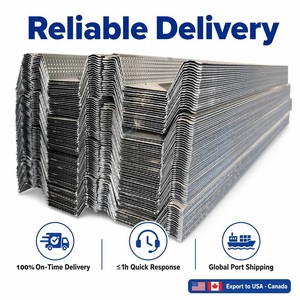
We export containerized shipments (utilizing 40ft High Cube containers with protective end-cushioning and moisture desiccants) and breakbulk break-charters for long spans up to 13.5 meters. Direct maritime connections to Tanger Med Commercial Port typically have transit times of 12 to 16 days, and to Casablanca Commercial Port 14 to 18 days. We accommodate CIF, CFR, and DAP delivery terms.
For chilled fruit and vegetable storage (0°C to +4°C) in the Souss-Massa region, we recommend 100mm to 120mm PIR panels ($U$-values of 0.20 to 0.17 W/m²·K). For deep-freeze seafood facilities in Dakhla or Agadir maintaining -18°C to -25°C, 150mm to 200mm PIR panels with double stepped overlapping joints and vapor barrier sealing are specified to prevent ice formation at joints and lower compressor duty cycles.
Yes. For facilities situated within 1 to 5 km of the Atlantic Ocean or Mediterranean Sea, standard polyester paint (25μm) is upgraded to Super Durable Polyester (HDP) or 50μm Polyvinylidene Fluoride (PVDF 70/30) over a hot-dipped Aluzinc or Zinc-Alu-Magnesium substrate. This coating resists salt fog exposure exceeding 1,500 hours according to ISO 9227 salt spray testing, preventing blistering and edge creep corrosion.
All our structural buildings are calculated according to the Moroccan Wind and Snow Rules (Règles NV65 Maroc) and Seismic Standards (RPS 2011). We compute the specific dynamic pressure coefficients ($q_{10}$) for your region—whether Region I (interior plains), Region II (coastal strips like Tangier/Casablanca), or Region III (Atlas mountain ridges)—providing verifiable calculation notes for client engineering sign-off.
Upon agreement of architectural drawings, shop details, and material specifications, we produce an official Proforma Invoice with HS Codes. Your Moroccan customs broker registers the import intention via the Portnet electronic platform. During production, we prepare certified Packing Lists, Commercial Invoices, and Certificates of Origin. Container shipments are loaded with detailed labels matching the assembly drawings for efficient site unloading.