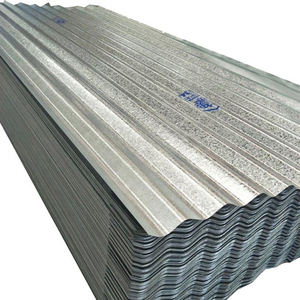
Explore our integrated structural building elements, continuous polyurethane and mineral wool composite panels, and specialty architectural envelopes engineered for rigorous commercial, cold-chain, and heavy industrial facilities.
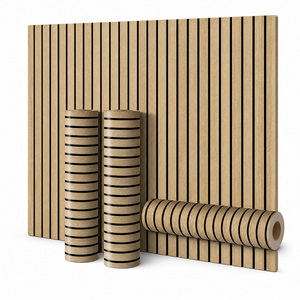
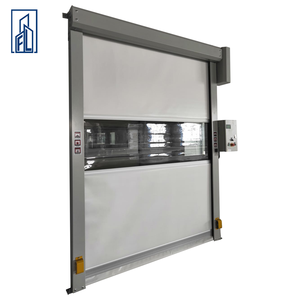
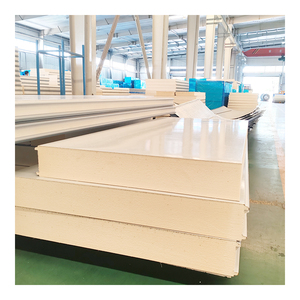
In modern industrial architectural engineering, selecting an appropriate envelope system is no longer simply a matter of structural enclosure. It has evolved into an exact science governed by the coupled mechanics of heat transfer, vibrational resonance, and airborne sound attenuation. Specifiers, MEP consultants, and structural engineers face stringent environmental standards (such as ASHRAE 90.1, EN ISO 13789, and LEED v4.1 acoustics prerequisites) that require complete elimination of thermal bridging alongside high Sound Transmission Class (STC) ratings.
Thermal resistance ($R$-value) and overall heat transfer coefficients ($U$-values) determine the energy expenditure of climate-controlled facilities, pharmaceuticals, and cold-storage distribution hubs. Composite sandwich panels with continuous rigid cores achieve superior insulation compared to traditional field-assembled cavity walls:
Polyisocyanurate (PIR) and Polyurethane (PUR): Closed-cell thermoset foams blown with advanced hydrofluoroolefins (HFOs) feature typical thermal conductivity ($\lambda$) ratings between 0.020 and 0.024 W/m·K. The extremely high closed-cell volume (>95%) prevents vapor migration, allowing thinner wall profiles while maintaining thermal envelopes that reduce mechanical cooling loads by up to 38% compared to single-skin configurations.
Mineral / Rock Wool Cores: Spun basalt fibers formed with a thermosetting resin oriented vertically (lamella structure) achieve a thermal conductivity of 0.038 to 0.044 W/m·K. While slightly lower in absolute thermal resistance per millimeter than polyurethanes, their true value lies in non-combustibility and exceptional dimensional stability under high temperature differentials.
Acoustic performance inside manufacturing facilities is governed by two complementary metrics: airborne sound insulation, measured by the Sound Reduction Index ($R_w$) or Sound Transmission Class (STC), and surface sound absorption, defined by the Noise Reduction Coefficient (NRC). Industrial steel structures frequently suffer from airborne mechanical noise transmission and rainfall impact vibrations transmitted across metallic purlins.
When rock wool core panels are engineered with micro-perforated facing sheets and non-woven acoustic scrims, sound waves enter the fibrous matrix where kinetic air molecule energy is converted into low-grade thermal energy through viscous friction. This configuration routinely yields an NRC rating of 0.75 to 0.85, dramatically attenuating indoor reverberation times ($RT_{60}$) and ensuring health and safety code compliance without requiring post-installation acoustic baffles.
The matrix below summarizes verified engineering test values used by structural estimators and envelope designers when calculating building thermal loads and acoustic partitions:
| Core Insulation Type | Thermal Conductivity (λ) | Density Range | Fire Reaction (EN 13501-1) | Acoustic Damping (STC) | Primary Application Environment |
|---|---|---|---|---|---|
| Rigid PIR (Polyisocyanurate) | 0.022 – 0.024 W/m·K | 38 – 45 kg/m³ | B-s1, d0 / Class 1 | 26 – 29 dB | Automated Cold Storage, Deep Freezers, Logistics |
| Rigid PUR (Polyurethane) | 0.024 – 0.028 W/m·K | 35 – 40 kg/m³ | B-s2, d0 / Class 2 | 25 – 28 dB | Food Processing Facilities, Modular Offices |
| Basalt Rock / Stone Wool | 0.038 – 0.044 W/m·K | 100 – 140 kg/m³ | A1 / Non-combustible | 32 – 36 dB | Firewalls, Power Plants, Acoustic Enclosures |
| EPS (Expanded Polystyrene) | 0.036 – 0.041 W/m·K | 15 – 20 kg/m³ | E / Self-extinguishing | 23 – 25 dB | Agricultural Warehouses, Temporary Field Camps |
| Cross-Linked XPE Foam | 0.033 – 0.037 W/m·K | 28 – 35 kg/m³ | Class B2 / Damped | 28 – 32 dB (Impact) | Architectural Interior Walls, Duct Lining, Under-floor |
Insulation panels do not act in isolation. As an integrated manufacturer of both pre-engineered steel frames (PEB) and insulated composite panels, our engineering designs solve the critical challenge of differential thermal movement. External steel skins experience solar-induced surface temperatures exceeding 75°C, while interior environments remain conditioned at 18°C. This 57°C temperature gradient induces bowing moments and shear forces at fastener penetrations.
By employing concealed-fastener side lap tongue-and-groove joinery with integrated EPDM factory-applied vapor gaskets, thermal shorts are systematically avoided. This eliminates dew point condensation along steel column flanges and prevents premature corrosion of secondary structural purlins and girts.
How global decarbonization mandates, building life cycle analysis (LCA), and prefabricated digital workflows are reshaping thermal acoustic material specifications.
International procurement frameworks increasingly mandate third-party verified Environmental Product Declarations (EPDs). Forward-looking industrial projects specify composite panels manufactured with scrap-recycled electric arc furnace (EAF) steel and bio-circular polyurethane polyols to minimize Scope 3 embodied carbon without sacrificing structural load capability.
Driven by industrial insurance requirements (such as FM Global approval standards), procurement teams are phasing out standard EPS and PUR formulations in favor of high-index Polyisocyanurate (PIR-B1) and stone mineral wool cores. Facilities prioritize long-term risk reduction, achieving high fire ratings that lower operational insurance premiums over a 30-year asset life cycle.
Shortages of specialized site labor are accelerating the adoption of fully off-site pre-cut modular panels. Integrated male-female interlocking systems with factory-embedded conduits and concealed fasteners reduce exterior envelope erection schedules by 45%, providing immediate dry-in weather protection for sensitive interior electro-mechanical installations.
Operating since 2010 from Dhaka, Bangladesh, Joint Star Steel Structure Ltd. delivers integrated pre-engineered structural steel and insulated sandwich panel manufacturing under a unified quality contract.
From architectural and structural concept design (utilizing advanced STAAD.Pro and Tekla modeling) through shop fabrication, panel continuous lamination, and on-site crane erection, our in-house control guarantees zero interface discrepancies between primary frames and wall envelopes.
As one of Bangladesh's pioneer automated continuous sandwich panel producers, we have accumulated deep technical expertise across 352+ delivered installations. We formulate custom solutions for severe tropical monsoons, high-humidity coastal zones, and seismic considerations.
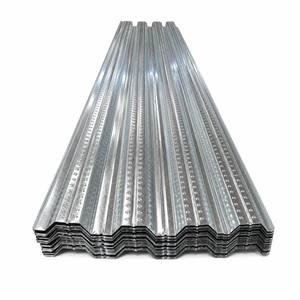
Unlike standard panel distributors or standalone brokers, we contract complete turnkey scopes including RCC foundation work, structural steel column fabrication, floor decking installation, and high-performance insulated building envelope commissioning.
All facings utilize verified high-grade aluminum-zinc coated steel (Aluzinc AZ150) conforming to ASTM A792 standards, bonded with two-component polyurethane adhesives under high pressure to ensure zero blistering, delamination, or panel sagging over decades of use.
Our dedicated shipping division manufactures heavy-duty protective crating, protective adhesive surface films, and standardized container packing plans with detailed piece-marked assembly drawings for prompt domestic deployment or overseas seaport delivery.
With an engineering and field installation team of more than 100 specialists, our site engineers provide continuous on-site supervision, verifying tightening torque on anchor bolts, testing joint air-tightness, and confirming seamless panel seal installation.
Direct technical answers to the most common queries raised by procurement managers, QS consultants, and civil engineering directors.
Whether you are designing a high-capacity cold storage warehouse, an acoustic manufacturing shed, or a specialized pre-engineered commercial facility, our engineering department provides preliminary structural layout designs, thermal R-value load calculations, and comprehensive commercial quotations tailored to your operational specifications.