Manufactured to ISO 9001, ASTM, and EN standards. Our production lines integrate custom mezzanine stairs, primary framing, insulated sandwich cladding, and heavy industrial architectural profiles for overseas turnkey projects.
In high-density industrial plants, offshore installations, multi-tier mezzanine logistics centers, and petrochemical processing facilities, vertical circulation is governed by space optimization, torsional rigidity, and worker life safety.
Modern industrial architects and facility planners face a continuous challenge: maximizing usable floor area while guaranteeing rapid, unhindered emergency egress and heavy equipment maintenance access. Conventional dog-leg structural stair towers require extensive horizontal footprints—frequently devouring 20 to 35 square meters of prime shop floor area per elevation tier. Industrial heavy-duty spiral staircases solve this architectural bottleneck by condensing vertical circulation into an axial cylindrical envelope, recapturing up to 72% of structural footprint without compromising live load capacity.
As a premier industrial steel manufacturing and export facility established in 2010, our engineering division has designed, detailed, and fabricated over 352 structural steel installations worldwide. We supply fully engineered spiral stairs fabricated from high-yield structural steel grades (GB/T Q235B, Q355B, ASTM A36, and ASTM A500 Grade B/C). Every structural assembly is subjected to finite element analysis (FEA) to confirm torsional stability, dynamic harmonic damping under heavy foot traffic, and seismic resilience.
Examine how pre-engineered industrial spiral stairs compare to straight-run stairways and vertical caged ladders under industrial operational parameters.
| Access System Type | Footprint Efficiency | Uniform Live Load Rating | Standard Egress Compliance | Throughput Speed | Structural Maintenance Life |
|---|---|---|---|---|---|
| Industrial Heavy Spiral Stair (Our Standard) | Superior (1.8m – 3.2m Diam. Cylinder) | 5.0 kN/m² (100 psf) standard / up to 7.5 kN/m² custom | IBC 1011.10, OSHA 1910.25, EN ISO 14122-3 | High (Bidirectional pedestrian flow enabled) | 30–50+ Years (Hot-Dip Galvanized ISO 1461) |
| Conventional Straight Flight with Landings | Low (Demands extensive horizontal length) | 5.0 kN/m² (100 psf) | IBC Chapter 10, OSHA 1910.25 | High (Continuous travel) | 25–40 Years (Subject to structural joint fatigue) |
| Vertical Caged Ship Ladder / Fixed Ladder | Maximum (Extremely compact) | 1.5 kN concentrated rung point load | Maintenance only; strictly prohibited as primary egress | Very Low (Single worker, mandatory 3-point contact) | 15–25 Years (Subject to localized fastener rust) |
| Modular Alternating Tread Stair | Medium (Saves 40% vs. straight flight) | 3.0 kN/m² – 5.0 kN/m² | OSHA restricted access / Non-standard egress | Moderate (Requires deliberate footstep orientation) | 20–30 Years |
Discover how our automated fabrication workflows, CNC 5-axis tube laser processing, and protective metallurgy ensure zero-tolerance assembly on international project sites.
Rather than utilizing segmented tubes spliced on site, we fabricate the central structural mast from large-diameter circular hollow sections (CHS 168mm – 457mm OD, wall thickness 8mm – 20mm). This continuous torque-tube design absorbs rotational forces and dampens dynamic resonance when multi-person work crews ascend concurrently.
Treads are precision-cut using 20kW high-capacity CNC fiber laser systems. Depending on the environment, we supply self-draining serrated bar grating (ideal for offshore and petrochemical oil drainage), diamond checker plate with aggressive traction patterns, or abrasive mineral grit inserts for indoor cleanrooms.
To survive humid, acidic, or coastal marine atmospheres, all steel members receive hot-dip galvanizing per ISO 1461 / ASTM A123 with a minimum zinc coating thickness of 85–120 microns. For harsh offshore applications, we apply a duplex polyurethane / epoxy coating tested for 3,000+ hours in salt spray chambers.
Stringers and cantilevered tread collar brackets are welded using robotic multi-axis welding stations. Every critical weld undergoes 100% Non-Destructive Testing (NDT), including Ultrasonic Testing (UT) and Magnetic Particle Testing (MT), adhering strictly to AWS D1.1 and EN 1090-2 Execution Class 3 (EXC3).
Smooth helical continuous handrails are roll-bent using hydraulic mandrel tube benders to ensure zero crimping or flat spots along the hand path. Handrails and intermediate guardrails withstand a 0.89 kN (200 lbf) concentrated load and 0.73 kN/m (50 plf) uniform lateral force per OSHA and IBC codes.
Industrial spiral stairs often incur punitive volumetric shipping rates if poorly configured. Our design engineers package treads, column segments, and prefabricated balustrade modules into compact steel cradles that maximize 40ft High-Cube container fill factors, reducing international freight costs by up to 45%.
How engineering directors, EPC contractors, and global supply chain managers are revolutionizing vertical circulation procurement across heavy industry.
Procurement is shifting away from 2D approval drawings. Global project buyers now mandate native 3D IFC / Tekla model integration. Our engineering hub exports native 3D geometry directly into your building information model, verifying anchor rod clashes against underground MEP utilities prior to steel fabrication.
Environmental Product Declarations (EPD) and CBAM (Carbon Border Adjustment Mechanism) carbon tracing are quickly becoming procurement prerequisites in the EU and North America. We provide third-party verified mill certificates utilizing electric arc furnace (EAF) low-carbon steel, slashing project embodied emissions.
Operating petrochemical refineries, food production facilities, and logistics centers cannot tolerate open flames or field welding during stair erection. Modern procurement prioritizes 100% pre-machined, high-strength friction grip (HSFG Grade 8.8/10.9) bolt-together spiral stair solutions that assemble rapidly with simple mechanical tools.
Smart warehousing and automated plants are increasingly outfitting vertical access structures with explosion-proof LED path markers, vibration telemetry sensors, and automated gate interlocks. Our factory provides conduit-integrated structural sleeves ready for immediate digital wiring.
From structural mezzanine floor integration to high-volume pre-engineered steel buildings, we bring total accountability, certified welding standards, and direct factory pricing to overseas buyers.
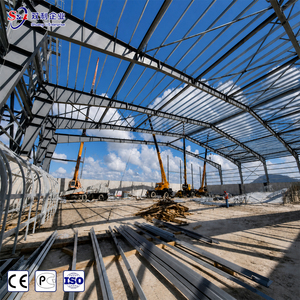
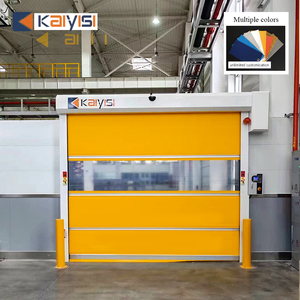
We eliminate the disconnect between architects, separate stair vendors, and pre-engineered building fabricators. Our factory manufactures the main warehouse frames, intermediate steel mezzanines, high-speed industrial doors, and access spiral stairs under a unified engineering protocol.
Our engineering office in Dhaka and heavy manufacturing workshops employ over 100 dedicated structural professionals. All welders are certified to AWS D1.1 and EN ISO 9606-1 standards, ensuring full-penetration butt welds that stand up to third-party inspections by SGS, Bureau Veritas, or TÜV.
Located adjacent to premier deep-water container shipping ports, our plant offers unmatched logistics speed and freight rates. Direct sourcing of raw materials at volume combined with automated CNC lines cuts lead times by 30% compared to Western regional steel fabricators.
Detailed technical answers to help purchasing managers, structural engineers, and safety auditors select the ideal spiral stair configuration.
Under OSHA 1910.25 and IBC Section 1011.10, spiral stairs are permitted for industrial egress and equipment access under specific dimensional criteria:
Our standard heavy-duty industrial spiral stair models are engineered to support a uniform live load of 5.0 kN/m² (100 lbf/ft²) across all treads and intermediate landings. Furthermore, every individual tread is engineered to sustain a concentrated point load of 1.33 kN (300 lbf) applied at any location on a 4-square-inch area, meeting and exceeding IBC 1607 and OSHA 1910 criteria. For heavy mechanical access (such as battery room platforms or valve maintenance towers), we can engineer custom structural steel assemblies rated up to 7.5 kN/m² with reinforced structural bracket gussets.
Taller spiral stair towers can be susceptible to lateral sway or rotational harmonic resonance when multiple workers ascend simultaneously or during elevated wind events. We mitigate this through four primary structural techniques:
We provide multiple coating systems tailored to atmospheric corrosivity categories defined by ISO 12944:
Export logistics is a core strength of our factory. Spiral stair components are pre-assembled in our facility to verify exact fit-up tolerances, then dismounted and packed in heavy-duty modular steel transport cradles:
To produce an exact structural design and commercial quotation within 24–48 hours, our engineering department requests:
Connect directly with our senior structural engineering team. Receive detailed 3D Tekla concepts, accurate load calculations, and competitive direct-factory pricing for your upcoming industrial project.