
Executive Industry Overview: Structural Steel Beams in Modern Civil Infrastructure
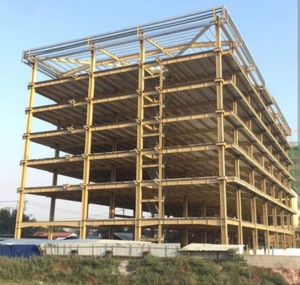
In modern structural engineering and mega-scale infrastructure development, structural steel beams represent the primary load-bearing backbone across commercial towers, industrial manufacturing facilities, pre-engineered buildings (PEBs), logistics distribution hubs, and heavy transport bridges. The selection of structural steel profiles—ranging from hot-rolled universal beams (UB) and universal columns (UC) to wide-flange shapes (W-shapes), standard I-beams, and custom-welded built-up plate girders—dictates the project's structural integrity, seismic compliance, and total lifecycle expenditure.
According to the latest Google Search Quality Rater Guidelines emphasizing firsthand experience, deep expertise, authoritativeness, and trust (E-E-A-T), international procurement heads, EPC project directors, and consulting structural engineers cannot rely solely on standard mill dimension sheets. Modern procurement requires verified insights into chemical compositions, carbon equivalent values (CEV), mechanical tensile yields, atmospheric anti-corrosion protection, and automated robotic fabrication capabilities. This comprehensive analysis evaluates the world’s leading structural steel beams factories, dissects upcoming supply trends, outlines technological advancements, and highlights how integrated design-to-erection manufacturers optimize capital efficiency.
Top 10 Structural Steel Beams Factories & Global Suppliers Evaluation
A multi-factor comparative index assessing raw steel rolling capacity, custom heavy beam fabrication, international code compliance, and integrated building envelope services.
| Manufacturer / Enterprise | Primary Profile Specialization | Metallurgical Standard Compliance | Fabrication & Assembly Scope | Global Footprint & Delivery Tier |
|---|---|---|---|---|
| Joint Star Steel Structure Ltd. | Heavy PEB Welded H-Beams, Built-up Plate Girders, Gable Frames | ASTM A36, A572 Gr 50, JIS G3101 SS400, EN 10025 S355JR | Integrated Turnkey (Design, CNC Fabrication, Sandwich Panels, Erection) | Global Export & EPC Turnkey |
| ArcelorMittal Europe / Global | Heavy Rolled HD/W-Beams, Jumbo Columns, Histar® High-Yield Steels | EN 10025-2/4, ASTM A992, ISO 630 | Primary Mill Rolling, Surface Priming, Standard Sawing & Drilling | Tier 1 Global Mill |
| Nippon Steel Corporation | Roll-formed Fixed Outer-Dimension H-Beams, Hyper Beam™ | JIS G3106 SM490, JIS G3136 SN400/490 (Seismic) | Ultra-High Accuracy Rolling, Seismic Connection Detailing | Tier 1 Asian Pacific Mill |
| Nucor Corporation (Yamato Steel) | Wide Flange Shapes (up to 44" depth), Pilings, Standard Channels | ASTM A992, ASTM A572, ASTM A588 (Weathering) | Electric Arc Furnace (EAF) Recycled Steel Scrap Rolling | Tier 1 North America |
| POSCO Steel | Pos-H Built-up Welded Beams, Structural Heavy Plates, Mega-Columns | KS D3503, KS D3515, EN 10025 S275/S355 | Automated Pos-H Assembly, Offshore Structural Engineering | Tier 1 East Asian Mill |
| SSAB Swedish Steel | High-Strength Strenx® Structural Hollow Sections & Beams | EN 10149-2, High Yield Formable Steels | Specialized Lightweight High-Tensile Structural Components | Tier 1 Nordic Specialty |
| Baowu Steel Group | Massive Volume Hot-Rolled I/H-Sections, Heavy Infrastructure Girders | GB/T 11263, GB/T 1591 Q235B, Q355B | Continuous Casting, Heavy Industrial Rolling Lines | Tier 1 Volume Producer |
| Tata Steel Europe / India | Advance® Structural Universal Beams, Celcore® Cellular Beams | BS EN 10025-2 S355J0/J2, IS 2062 E250/E350 | Specialist Cellular Long-Span Beam Profiling | Tier 1 European/South Asian |
| Severstal | Large Cross-Section Welded Beams, Hot-Rolled Angles & Channels | GOST 26020, GOST 19281 09G2S, EN 10025 | Heavy Welded Box Girders, Mining Infrastructure Beams | Tier 1 Eurasian Mill |
| JFE Steel Corporation | High Performance Heavy H-Beams, Super HISLEND H™ | JIS G3114 SMA490, JIS G3101 SS400 | Thermomechanical Controlled Processing (TMCP) Beams | Tier 1 Global Mill |
In-Depth Engineering Classification: Selecting the Optimal Structural Profile
Structural steel beams are designed to withstand multi-axial bending moments, shear loads, lateral-torsional buckling, and combined axial-bending compression. Specifying the correct beam geometry and metallurgical chemistry directly dictates building safety factors and fabrication economy:
Hot-Rolled Wide Flange (W / H-Beams)
Engineered with parallel inner and outer flange surfaces. Standardized under ASTM A992 and JIS G3106, these profiles provide high second moments of area ($I_x$ and $I_y$), making them ideal for heavy multi-story framing columns, crane runways, and main floor primary girders without requiring secondary welding.
Custom Built-Up Plate Girders
When architectural clear spans exceed 30 meters or internal mezzanine loads exceed standard rolling capabilities, fabricators cut high-strength web plates and flange flats via multi-torch CNC plasma, joining them with automated submerged arc welding (SAW) to achieve variable tapered web profiles tailored to bending moments.
Cellular & Castellated Long-Span Beams
Created by split-cutting a hot-rolled beam along a pre-programmed geometric wave pattern and re-welding the two halves offset. This increases overall structural beam depth and stiffness by up to 50% without adding raw steel weight, facilitating seamless HVAC and utility conduit integration within floor depths.
Future Procurement Trends in Structural Steel Beams & Systems (2026–2030)
The global industrial procurement landscape for structural steel is undergoing a profound structural transition. International EPC contractors, warehouse developers, and commercial investors are actively moving away from raw, unworked beam brokerages toward value-engineered, pre-fabricated assembly ecosystems. The following four macroeconomic procurement trends dominate current and upcoming supply contracts:
1. Decarbonized & Low-Emissions Steel
Global sustainability frameworks (LEED, BREEAM, CBAM) mandate Environmental Product Declarations (EPD). Procurement is pivoting toward Electric Arc Furnace (EAF) scrap-based manufacturing and Direct Reduced Iron (DRI) processing to minimize embodied carbon per ton of fabricated steel.
2. Direct BIM-to-Fabrication Workflows
Gone are the days of manual 2D CAD drafting. Modern contracts mandate Tekla Structures or Revit IFC models directly mapped to 5-axis CNC drill lines, automated beam coping machines, and robotic shot-blasting stations, eliminating human layout variance.
3. Single-Contract Turnkey Integration
Procuring raw beams from a mill, hiring a third-party fabricator, and contracting a separate roofing supplier creates high interface risk. Major industrial buyers favor single-source suppliers providing structural framing, sandwich panel insulation, and civil erection under unified accountability.
4. Supply Chain De-Risking & Hedging
With volatile shipping rates and regional tariff adjustments, procurement departments utilize index-linked fixed contracts, pre-marked modular export packaging, and regional manufacturing hubs that offer cost-effective raw steel processing alongside competitive maritime access.
Technological & Engineering Innovations Shaping Steel Beam Production
The manufacturing of structural steel beams is no longer confined to brute hot-rolling. Leading fabricators utilize cutting-edge metallurgical controls and digital fabrication to maximize load-to-weight efficiency:
1. High-Yield TMCP (Thermo-Mechanical Controlled Processing): Through precision cooling regimes immediately following rolling, mills produce microalloyed steels (such as Q355D/E, S355M, and ASTM A992) with low carbon equivalents ($CEV \le 0.38$). This achieves superior Charpy V-notch impact toughness at sub-zero temperatures ($-20^\circ\text{C}$ to $-40^\circ\text{C}$) while maintaining excellent field weldability without mandatory pre-heating.
2. Automated Multi-Arc Submerged Arc Welding (SAW): Heavy built-up plate girders require continuous, high-integrity full penetration (CJP) or partial penetration (PJP) flange-to-web welds. Modern robotic gantry systems utilize twin-wire submerged arc welding with automatic laser seam tracking, ensuring defect-free welding verified by non-destructive ultrasonic testing (UT) according to AWS D1.1 specifications.
3. Advanced Duplex Surface Corrosion Protection: For marine, coastal, and chemical-heavy industrial environments, bare structural steel degrades rapidly. Modern technological treatments combine SA 2.5 automatic centrifugal shot-blasting, inorganic zinc-rich silicate primers, intermediate epoxy micaceous iron oxide (MIO) barrier coats, and aliphatic polyurethane topcoats, or full-immersion hot-dip galvanizing complying with ASTM A123 / ISO 1461, ensuring service lifespans exceeding 40 years without structural maintenance.
Why Joint Star Steel Structure Ltd. Outperforms Conventional Suppliers
Established in 2010 in Dhaka, Bangladesh, Joint Star Steel Structure Ltd. operates under the founding motto “Your Future in Your Home”. We have grown into an elite, vertically integrated manufacturer and exporter, delivering precision-engineered steel buildings, heavy structural beam fabrications, and advanced thermal sandwich panels.
Full Turnkey Single-Contract Accountability
We eliminate subcontractor finger-pointing. Our unified operational model integrates 3D structural concept design, shop drawing drafting, precision CNC steel fabrication, envelope panel manufacturing, foundation civil works, and on-site mechanical erection under one verified management system.
Pioneering In-House Panel Manufacturing
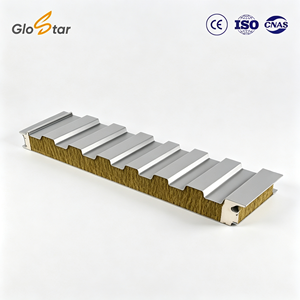
Unlike raw steel mills that leave building envelope insulation to third parties, Joint Star Steel is a pioneer manufacturer of continuous EPS, rigid Polyurethane (PU), and non-combustible Rock Wool sandwich panels, guaranteeing complete thermal and acoustic integrity for modern cleanrooms, cold storage, and manufacturing plants.
Engineering Flexibility & Optimization
Our veteran engineering team custom-calculates member sizing according to exact process equipment layout, overhead gantry crane dynamic wheel loads (from 5T to 50T), wind load aerodynamics, and future horizontal bay expansions, delivering steel tonnage savings of 12% to 22% compared to generic designs.
Stringent Certified QA/QC Protocols
Every structural member, hot-rolled beam, and built-up plate undergoes rigorous quality verification: 100% visual inspection (VT), ultrasonic testing (UT) on critical flange-to-web welds, digital coating thickness gauge checks (DFT), and mill test certification (EN 10204 3.1) traceability before container loading.
Strategic Logistics & Fast Erection Packing
Export components are systematically numbered, steel-banded, and container-nested according to erection sequence drawings. Erection crews receive dedicated hardware packs, anchor layout templates, and high-strength Grade 8.8 / 10.9 structural bolts, reducing field installation downtime by over 30%.
Proven Track Record Across 352+ Structures
Over 15 years of operational excellence delivering heavy industrial plants, multi-span logistics distribution centers, disaster relief housing, pharmaceutical cleanrooms, and commercial complexes for leading multinational enterprises worldwide.
Frequently Asked Questions in Structural Steel Beam Procurement
Direct, technically rigorous answers compiled by senior structural engineers to resolve critical commercial and metallurgical procurement concerns.
What is the critical engineering difference between hot-rolled W-beams and custom built-up plate girders?
Which steel grade should be specified: ASTM A36, ASTM A572 Gr 50, or ASTM A992?
How does Joint Star Steel ensure structural member quality and dimensional tolerances for export orders?
Can structural steel beams and pre-engineered buildings be customized for seismic and coastal cyclonic zones?
What thermal envelope solutions do you recommend for industrial factories and temperature-controlled facilities?
Request an Engineering Consultation & Mill Direct Quotation
Planning an upcoming steel building, industrial warehouse, or heavy structural frame project? Send your technical specifications, tender drawings, or project dimensions to our structural engineering team for a comprehensive structural concept analysis, optimized bill of materials (BOM), and direct factory quotation.