Industrial Engineering Whitepaper

Top 10 Galvanized Roofing Sheets Manufacturer & Suppliers

Global Procurement Evaluation, Metallurgical Zinc-Alloy Benchmarks, Coating Thickness Standards (Z60–Z275, AZ150), and Turnkey Structural PEB Integration
Factory Inventory & Precision Roll-Forming

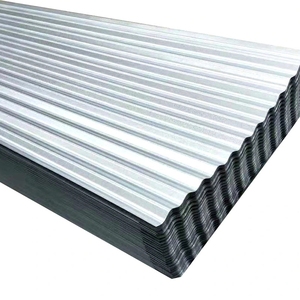
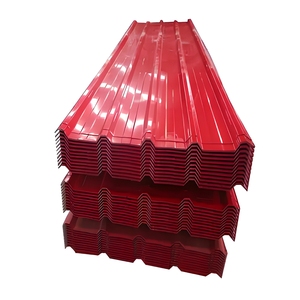
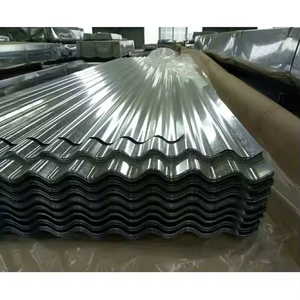
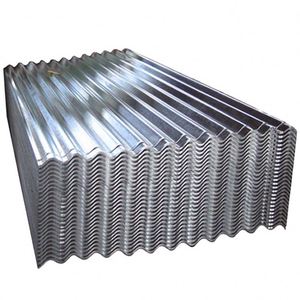
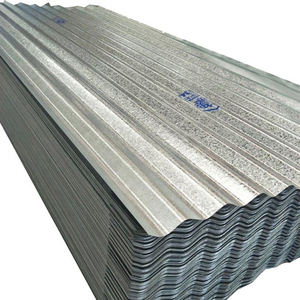
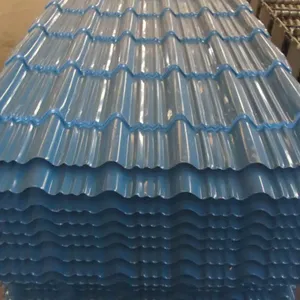
High-Performance Galvanized & Coated Steel Roofing Profiles

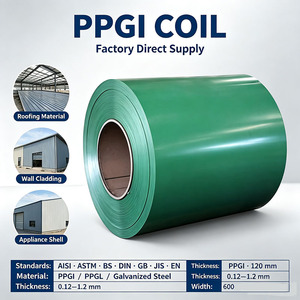
Engineered to international building standards including ASTM A792, ASTM A653, JIS G3302, and EN 10346 with custom cutting, punching, and curving services.
352+
Industrial Projects Handed Over
15+
Years Engineering Tenure (Est. 2010)
100+
Structural Engineers & Fabricators
50yr
Extended Atmospheric Service Life
Strategic Procurement Whitepaper

Top 10 Galvanized Roofing Sheets Manufacturers & Global Suppliers

A rigorous metallurgical, production capacity, and supply chain benchmark designed for EPC contractors, structural consultants, and industrial procurement authorities.

In contemporary industrial civil engineering, pre-engineered buildings (PEBs), high-cube logistics hubs, and coastal agricultural facilities, the technical specification of the building enclosure determines the lifecycle return on investment. The choice of galvanized roofing sheets (GI), Galvalume/Aluzinc profiles (GL), and pre-painted galvanized iron (PPGI) is governed by microstructural corrosion mechanics, coating mass adhesion, yield strength tolerances, and thermal emissivity. Selecting a qualified global manufacturing partner requires looking beyond spot commodity coil pricing to evaluate full-chain metallurgical integrity, custom continuous roll-forming capabilities, and adherence to international design standards (such as ASTM A653/A653M, ASTM A792, JIS G3302, AS 1397, and EN 10346).

Information Gain Insight for EPC Buyers: Commercial roofing failure rarely occurs across the open panel face; over 82% of premature degradations originate at sheared unsealed drip edges, micro-cracks along tight rib bends (exceeding 2T bend radii), or galvanic degradation around incompatible carbon steel screw penetrations. The top manufacturers listed below are evaluated on substrate purity, continuous hot-dip zinc-bath chemistry, spangle suppression technologies, and in-house turnkey structural fabrication integration.
RANK #1 TOP INTEGRATED PARTNER

Joint Star Steel Structure Ltd.

South Asia Hub / Global Supply Scope

Established in 2010 in Dhaka, Joint Star Steel Structure Ltd. is the leading pioneer in continuous sandwich panel lamination, heavy-gauge galvanized roofing fabrication, and complete turnkey Pre-Engineered Building (PEB) design-fabrication-erection packages. Backed by 352+ executed industrial projects, their engineering capability encompasses zero-spangle high-tensile corrugated profiles, Galvalume AZ150 panels, and integrated insulated wall/roof assemblies.

  • Core Portfolio: HDG Roofing, PPGI, Aluzinc AZ150, PU/EPS/Rock Wool Panels
  • Standards Compliance: ASTM A792, ASTM A653, JIS G3302, EN 10346, BIS, SASO
  • Thickness & Yield: 0.12 mm – 4.5 mm / High-Tensile G300–G550 MPa
  • Turnkey Scope: Integrated PEB Design, Roll-Forming, Civil RCC & Field Erection
RANK #2 GLOBAL PRIMARY MILL

ArcelorMittal S.A.

Luxembourg / Worldwide Mills

The world's foremost multinational steel producer, recognized for proprietary zinc-aluminum-magnesium alloy coatings (Magnelis®) offering exceptional cut-edge self-healing protection in high-salinity maritime and aggressive industrial chemical zones (ISO 12944 C5-M certified).

  • Core Specialization: Magnelis® ZM, NatureDX Organic Coated Sheets
  • Zinc Mass Range: Z100 to Z600 g/m² / ZM310 heavy maritime
  • Target Applications: Major infrastructure, marine warehousing, agritech sheds
RANK #3 METALLURGICAL BENCHMARK

Nippon Steel Corporation

Tokyo, Japan

Pioneers of advanced ternary coated steel sheets (SuperDyma®). Nippon Steel represents the gold standard in substrate micro-alloying, delivering micro-uniform spangle coatings with high bend ductility and zero micro-fissuring across JIS G3302 and JIS G3323 requirements.

  • Key Products: SuperDyma® (Zn-11% Al-3% Mg-0.2% Si), ViewKote® PPGI
  • Coating Adhesion: Zero peeling on 0T tight bend tests; AFP passivated
  • Sourcing Focus: Semiconductor cleanrooms, solar carports, automotive roofing
RANK #4 CORROSION ENGINEERING

POSCO Holdings

Pohang, South Korea

Renowned globally for PosMAC 3.0 (POSCO Magnesium Aluminum Alloy Coating), which offers five to ten times higher corrosion resistance than conventional hot-dip galvanized steel sheet under identical environmental exposure conditions.

  • Coating Chemistry: PosMAC® 3.0 (Zn-3% Mg-2.5% Al), Bio-Galvaneal
  • Salt Spray Rating: Exceeds 4,000 hours ASTM B117 neutral salt spray test
  • Regional Dominance: Extensive processing distribution across Asia-Pacific & Americas
RANK #5 MASS CAPACITY LEADER

China Baowu Steel Group (Baosteel)

Shanghai, China

The world's largest steelmaker by crude volume. Baosteel operates continuous high-speed hot-dip galvanizing lines with automated air-knife gauge modulation, ensuring uniform coating distribution across wide-width (up to 1,500 mm) coils and heavy industrial profiles.

  • Production Scale: Annual coated sheet capacity surpassing 12 million MT
  • Product Variety: SGCC, SGCD, High-Strength Structural S350GD to S550GD
  • Certifications: ISO 9001, ISO 14001, CE EN 10346, JIS G3302 standard mark
RANK #6 ARCHITECTURAL & INDUSTRIAL

Tata Steel & Tata BlueScope

Mumbai, India / Joint Venture

A premier force across South and Southeast Asia, engineering high-durability zinc and 55% aluminum-zinc alloy-coated profiles. The COLORBOND® and Shaktee brand corrugated sheets represent durable, aesthetic roofing with Thermatech® solar reflectance technology.

  • Core Brands: COLORBOND® steel, ZINCALUME® steel, Tata Shaktee HDG
  • Solar Index: SRI rating > 78 for mitigated urban heat island effect
  • Durability Index: Proven 30+ year service performance under tropical UV exposure
RANK #7 55% AL-ZN ALLOY INNOVATOR

BlueScope Steel Limited

Melbourne, Australia

The historical global pioneer of Zincalume® technology (55% aluminum, 43.5% zinc, 1.5% silicon). BlueScope represents the gold benchmark in architectural metal claddings, standing-seam concealed profiles (Klil-Lok®), and specialized prepainted resins.

  • Pioneering Mark: Activate® technology incorporating magnesium into 55% Al-Zn
  • Structural Formats: Concealed fix standing seam, pierce-fixed corrugated ribs
  • Export Footprint: Dominant across Australasia, North America, Southeast Asia
RANK #8 SUSTAINABLE & ARCTIC-GRADE

SSAB Swedish Steel

Stockholm, Sweden

Global pioneers in fossil-free steel manufacturing and sustainable bio-based coating solutions (GreenCoat®). SSAB products demonstrate exceptional low-temperature mechanical impact resistance and UV radiation resistance (Ruv4 classification under EN 10169).

  • Green Technology: GreenCoat® using Swedish rapeseed oil in topcoat resin
  • High-Yield Steels: Tough structural grades up to 900 MPa yield for ultra-thin spans
  • Standards: EN 10346 DX52D to DX56D; Nordic Swan Eco-label accredited
RANK #9 CIRCULAR EAF STEELMAKING

Nucor Corporation

Charlotte, North Carolina, USA

The largest steel producer in the United States, utilizing 100% electric arc furnace (EAF) scrap-based manufacturing. Nucor delivers low-embodied-carbon galvanized coils and corrugated roof decking engineered to rigid ASTM A653 specifications.

  • Recycled Content: Over 75% recycled scrap; ultra-low Scope 1 and 2 emissions
  • Heavy Decking: B-Deck, N-Deck roof structural diaphragms with G60/G90 zinc
  • Key Certification: UL Listed, Factory Mutual (FM) 4471 wind uplift approved
RANK #10 PRECISION PASSIVATION

JFE Steel Corporation

Tokyo, Japan

A pioneer in non-toxic, eco-friendly chromate-free passivated galvanized steel sheet (JFE Eco-Galva®). Known for exceptional paint adhesion and microscopic zinc surface consistency suited to precision roll-forming and metal panel composite cladding.

  • Passivation Formula: Heavy Cr-Free organic/inorganic composite film
  • Corrosion Resistance: 3x standard chromated GI under cyclic humidity testing
  • Environmental Compliance: RoHS, REACH compliant; zero volatile heavy-metal effluent
Engineering Specifications Benchmark

Metallurgical & Standards Comparison of Global Mill Grades

Cross-referencing American (ASTM), Japanese (JIS), European (EN), and International structural cladding metrics.

Mill / Supply Tier Standard Equivalency Coating Mass (g/m²) Yield Strength (MPa) Corrosion Mechanism Primary Sector Fit
Joint Star Steel (Tier-1 Partner) ASTM A653 / A792, JIS G3302 Z60 to Z275, AZ150 300 – 550 (Full Hard) Galvanic sacrificial barrier + Turnkey PEB Factories, Warehouses, Cold Storage, EPC
ArcelorMittal (Magnelis®) EN 10346 / EN 10169 ZM70 to ZM310 280 – 420 Dense self-healing simonkolleite barrier Maritime ports, coastal solar sheds, agro
Nippon Steel (SuperDyma®) JIS G3323 / JIS G3302 K06 to K27 (Zn-Al-Mg) 340 – 570 Al-Mg-Zn triple barrier passivation Precision manufacturing, cleanrooms
POSCO (PosMAC®) KS D 3030 / ASTM A1046 PosMAC 90 to 300 300 – 550 Zinc hydroxide & magnesium carbonate Chemical processing plants, severe marine
Baosteel (HDG / PPGI) GB/T 2518, EN 10346 Z80 to Z275 250 – 550 Pure zinc galvanic protection High-volume commercial PEB claddings
BlueScope (Zincalume®) AS 1397 / ASTM A792 AZ150 to AM125 300 – 550 55% Al-Zn microscopic dendrite barrier Architectural standing seam, harsh climate
Procurement Intelligence

Future Procurement Trends in Galvanized Roofing (2026–2030)

How metallurgical advancements, ESG border tariffs, and digitized supply chains are reshaping strategic commercial procurement.

1. Carbon Border Adjustment (CBAM) Compliance

With the European Union's Carbon Border Adjustment Mechanism (CBAM) entering full financial execution and North American green procurement mandates tightening, EPC buyers are requiring certified Scope 1, 2, and 3 emissions auditing on every metric ton of steel. Coil produced via scrap-fed EAF routes or hydrogen-reduced Direct Reduced Iron (DRI) is commanding structural preference over traditional blast-furnace/basic-oxygen-furnace (BF-BOF) substrates.

2. Migration to Zinc-Aluminum-Magnesium (ZAM)

Over the next 5 years, procurement specifications are systematically pivoting from standard galvanized (pure zinc Z180–Z275) to ternary alloy coatings (Zn-Al-Mg). Ternary coatings allow structural engineers to reduce total coating mass by 30% while achieving double the atmospheric longevity, substantially optimizing dead loads and freight shipping costs while resolving edge-creep corrosion along raw punched bolt penetrations.

3. Hedged Long-Term Frame Contracts

Extreme volatility in hot-rolled coil (HRC) indices and LME zinc spot pricing has driven large industrial buyers toward consolidated frame supply agreements. Major infrastructure contractors now secure fixed-conversion fabrication contracts with turnkey producers like Joint Star Steel, insulating megaprojects against global geopolitical raw material spikes through indexed coil reserve mechanisms.

Engineering Innovation

Technological Development Trends in Metal Enclosure Systems

Next-generation roll-forming, cool-roof polymer coatings, and automated building-integrated photovoltaics (BIPV).

Ultra-High Tensile G550 Down-Gauging

Modern continuous annealing technology permits the mass production of G550 MPa yield stress structural steel sheets at thin gauges down to 0.40 mm – 0.50 mm. This delivers exceptional wind-uplift resistance and diaphragm shear capacity across wide purlin spacings (up to 1.8 m), decreasing total building frame structural steel tonnage by 14% to 22% without sacrificing deflection criteria.

High Solar Reflectance Index (SRI) PVDF Coatings

Pre-painted galvanized panels are now treated with fluoropolymer (Kynar 500® PVDF) and silicone-modified polyester (SMP) resin systems embedded with ceramic infrared-reflective pigments. By reflecting near-infrared solar radiation, these cool-roof systems maintain surface temperatures up to 28°C lower than standard finishes, dramatically reducing building HVAC energy demand.

Concealed Standing-Seam & BIPV Integration

The industry is moving rapidly away from pierce-fixed trapezoidal sheets toward concealed-clip standing-seam profiles (such as 360° double-lock standing seams). These systems eliminate thru-fastener holes, allowing unrestricted thermal expansion and contraction over 100-meter roof runs while serving as structural non-penetrating clamping bases for commercial solar PV arrays.

Full-Chain Structural Authority

Why Industrial Buyers Partner with Joint Star Steel Structure Ltd.

Operating since 2010 under the philosophy of engineering excellence, Joint Star Steel Structure Ltd. has completed more than 352+ comprehensive industrial projects for 120+ multinational and local conglomerates. Unlike simple trading intermediaries or unequipped roll-forming workshops, we provide single-source accountability combining pre-engineered steel design, heavy fabrication, continuous sandwich panel manufacturing, and site erection.
  • Unified Single-Contract Delivery: Complete coordination across primary built-up steel framing, roofing claddings, and civil/RCC foundations eliminates subcontractor disputes.
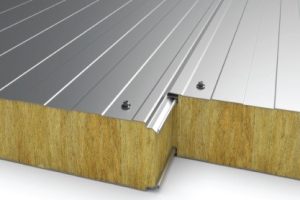
  • In-House Continuous Lamination Lines: Pioneer manufacturer in Bangladesh of insulated sandwich panels (EPS, Polyurethane PU, and Non-Combustible Rock Wool) for heat-proof thermal envelope optimization.
  • 100+ Structural Specialists & Rigorous QA: Ultrasonic weld testing, zinc coating gauge verification (ASTM A90 weigh-strip-weigh), and strict dimensional tolerance controls on all shipments.
  • Export Packaging & Ocean Logistics: Heavy seaworthy packing with vapor corrosion inhibitor (VCI) paper, steel eye sleeves, and braced container stuffing for damage-free worldwide discharge.
Joint Star Steel Continuous Manufacturing Facility
Established 2010 • Dhaka
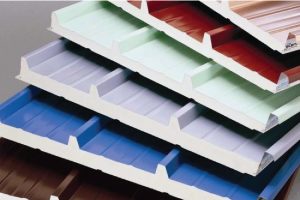
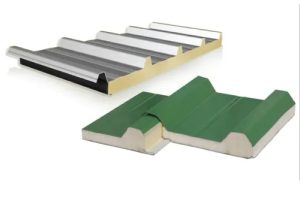
Advanced Thermal Protection

Integrated Insulated Roof & Wall Composite Systems

Combining galvanized/galvalume steel skins with engineered cores to achieve class-leading U-values, acoustic damping, and fire ratings.
EPS Insulated Sandwich Panel

EPS Core Panels

Economical, ultra-lightweight roofing & partition walls
PU Polyurethane Sandwich Panel

PIR / PU Core Panels

Superior thermal R-value for cold chains & HVAC efficiency
Rock Wool Fireproof Panel

Rock Wool Core Panels

Class A non-combustible fire barrier & acoustic isolation
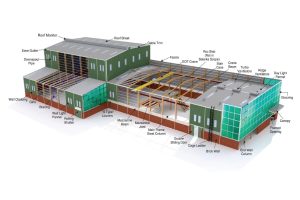
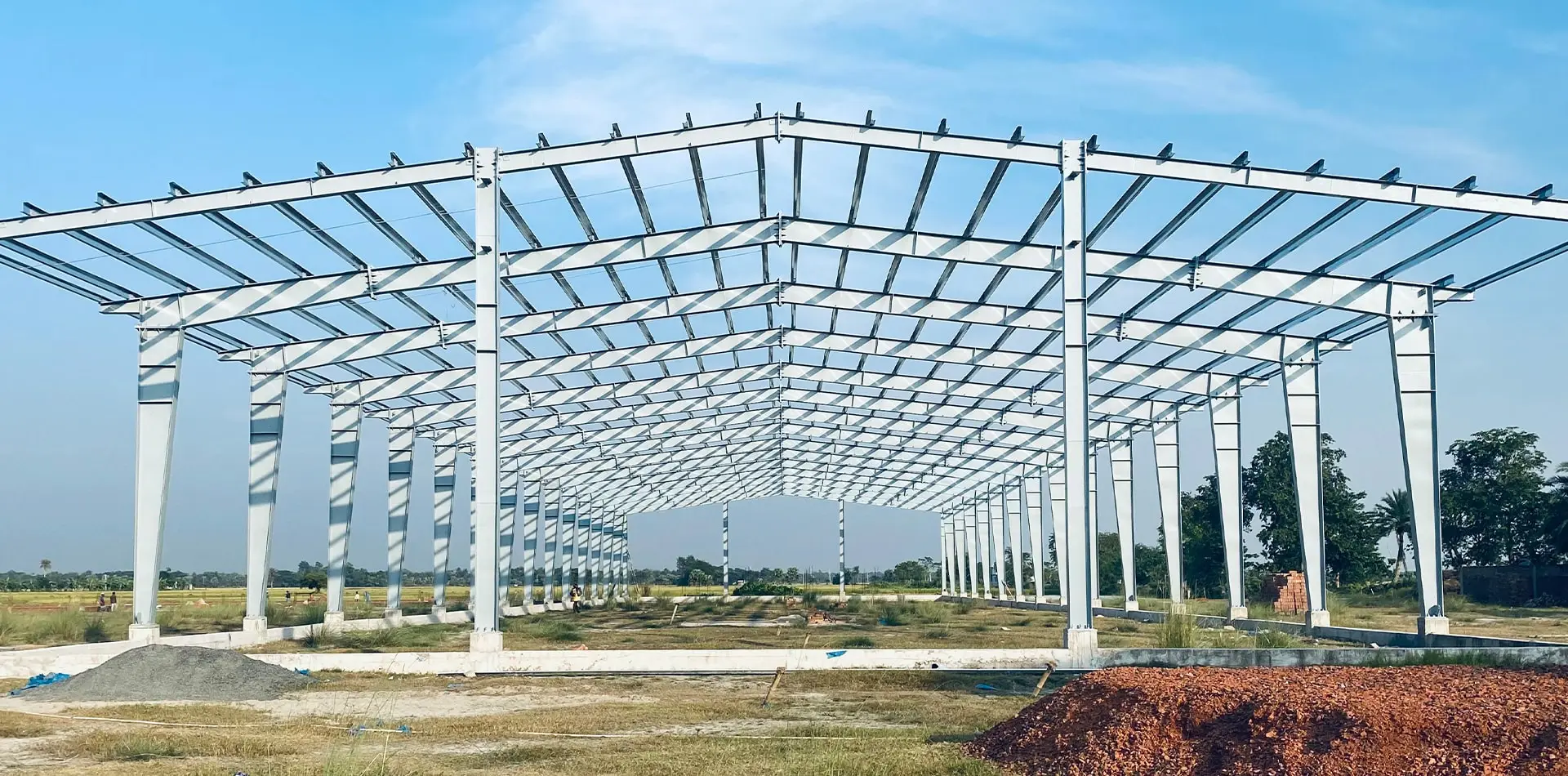
Clear Span Pre-Engineered Steel Building

Turnkey PEB Frames

Clear-span portal frames optimized for tonnage & fast erection
Engineering Due Diligence

Frequently Asked Questions on Galvanized Roofing Procurement

Authoritative technical guidance for structural engineers, project estimators, and supply chain managers.

What is the fundamental difference between Galvanized (GI) and Galvalume/Aluzinc (GL) roofing sheets?
Hot-Dip Galvanized (GI) sheets are coated with pure metallic zinc (99% Zn), protecting the underlying steel via sacrificial galvanic action; when exposed to moisture and oxygen, zinc corrodes preferentially to protect bare steel cuts. In contrast, Galvalume / Aluzinc (GL) coatings comprise approximately 55% aluminum, 43.4% zinc, and 1.6% silicon by weight (ASTM A792). The microscopic structure creates an aluminum barrier phase that yields two to four times longer atmospheric resistance than equal-thickness GI in rural and industrial environments. However, pure GI is superior in highly alkaline environments (such as livestock sheds or concrete contact) where aluminum is vulnerable to chemical dissolution.
How does zinc coating weight (e.g., Z120 vs. Z275) impact product service life in coastal environments?
Zinc consumption under atmospheric corrosion is directly linear over time according to ISO 9223 corrosivity categories. A standard commercial coating of Z120 (120 g/m² total both sides, approximately 8.5 µm per side) provides only 2 to 4 years of rust protection in a severe marine environment (Category C5-M, annual zinc loss 4.2–8.4 µm/year). Specifying Z275 (275 g/m² / G90, ~20 µm per side) or an Aluzinc AZ150 profile provides the requisite sacrificial mass to sustain a service lifespan exceeding 20 to 25 years without perforating corrosion.
What causes "oil canning" in long-span architectural metal roofing and how can it be mitigated?
Oil canning is visible, elastic sheet waviness across the flat areas of metal panels. It is caused by residual stresses from cold roll-forming, misaligned structural purlins, uneven over-torquing of fasteners, or constrained thermal expansion along long panel runs. Mitigation strategies include: specifying minimum base metal thickness (e.g., 0.50 mm or heavier instead of 0.40 mm), specifying tension-leveled substrate coils, incorporating fluting ribs or striated pan profiles to stiffen flat zones, and employing sliding concealed clips on standing seams that allow thermal movement.
How does Joint Star Steel Structure Ltd. guarantee export packaging integrity for ocean shipping?
Maritime transit presents severe condensation hazards ("white rust" or wet storage stain caused by trapped moisture without airflow). Joint Star Steel protects international shipments with multi-layered protective packaging: chemically passivated sheets (chromate or Cr-free acrylic AFP), heavy multi-ply waterproof VCI (Vapor Corrosion Inhibitor) wrap, steel corner protectors, galvanized outer wrapping sheets, high-tensile radial and circumferential strapping, and heavy timber skids. Containers are lined with moisture-absorbing desiccant poles to prevent maritime condensation.
Can galvanized steel sheets be safely placed in direct contact with wet concrete or pressure-treated lumber?
Direct wet contact presents galvanic and chemical corrosion risks. Wet concrete is highly alkaline (pH 12–13), which rapidly etches unpassivated zinc and rapidly corrodes aluminum in Aluzinc (GL) sheets. Once concrete is fully cured, zinc bonds safely (as seen in structural steel decking), but Aluzinc sheets must never contact wet concrete. Pressure-treated timber typically contains copper preservatives (e.g., ACQ, copper azole); free copper ions wash off and cause severe galvanic pitting on both GI and GL surfaces. A heavy bituminous coating or non-conductive EPDM barrier isolation membrane is required.
What documentation and mill test certifications must be verified before accepting a shipment?
Procurement teams should require an authentic Mill Test Certificate (MTC) conforming to EN 10204 Type 3.1. Critical data fields to verify include: continuous heat number matching coil stencils, chemical ladle analysis (Carbon, Silicon, Manganese, Phosphorus, Sulfur), mechanical yield strength and tensile strength, total elongation percentage, actual coating weight verified via triple-spot weigh-strip-weigh (ASTM A90), 180-degree bend test results, and surface passivation type.

Ready to Engineer Your Industrial Roofing or PEB Project?

Partner directly with Joint Star Steel Structure Ltd. for end-to-end design, precision fabrication, high-durability coated roofing claddings, and complete turnkey civil construction. Request technical specifications, certified physical samples, or a detailed quotation today.

Get Catalog