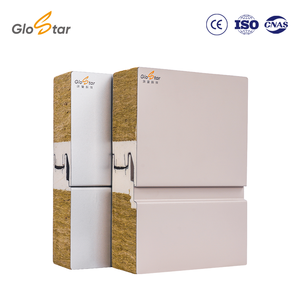
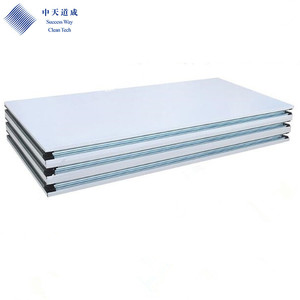
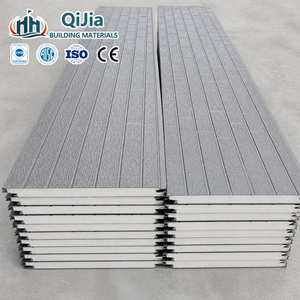
75mm PU Sealed Rock Wool Cladding Panel A1 Fireproof V-Groove 3D Effect External Wall System
- Core Material: Hydrophobic Rock Wool
- Fire Classification: Euroclass A1 / 4 Hours
- Density: 120 kg/m³
- Application: Hotels, High-Rise Enclosures

Tested under rigorous ASTM E119, UL 263, and EN 13501-1 fire exposure matrices to deliver uncompromising life safety, thermal envelope stability, and acoustic damping.
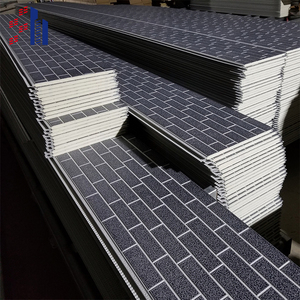
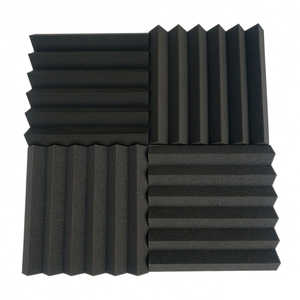
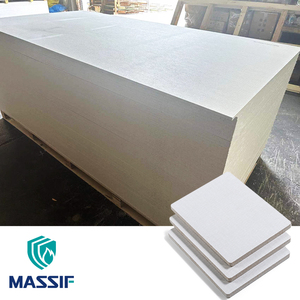
A rigorous inspection of thermal degradation thresholds, smoke toxicity indices, and structural load containment under standardized hydrocarbon and cellulosic fire exposure curves.
Modern structural envelopes face a stringent convergence of energy conservation mandates and strict building safety requirements. Under international life-safety codes—such as NFPA 5000, International Building Code (IBC) Chapter 7, and Eurocode 3 (EN 1993-1-2)—fire resistance is no longer defined merely as surface non-flammability. It represents the quantifiable duration in minutes or hours that an assembly maintains its Structural Loadbearing Capacity (R), Integrity against flame/gas penetration (E), and Thermal Insulation limit of 140°C average rise (I).
When selecting exterior or interior partitions for industrial facilities, chemical production plants, multi-story logistics hubs, or sterile cleanrooms, procurement teams must balance fire endurance with long-term moisture resistance and carbon metrics. Inorganic mineral wool fibers derived from basalt rock offer an exceptional melting point exceeding 1,150°C, achieving true Euroclass A1 non-combustibility without volatile binder outgassing. Conversely, specialized Polyisocyanurate (PIR) cores leverage an optimized isocyanate-to-polyol index (isocyanurate ring concentration > 250%) to generate a robust carbonaceous intumescent char layer upon flame impingement, effectively insulating the underlying substrate from rapid thermal shock.
Furthermore, recent technological progressions in Magnesium Oxysulfate (MOS) chemistry have superseded traditional, corrosive magnesium chloride (MGO) formulations. High-purity sulfate-based matrices effectively eliminate halide ion migration, preventing structural corrosion of light-gauge steel studs while securing four-hour fire barriers under ASTM E119 testing.
A rigorous comparative analysis of the leading global manufacturers and export powerhouses evaluated by structural capacity, automated fabrication, international test credentials, and engineering support.
Founded in 2010 in Dhaka, Bangladesh, Joint Star Steel represents a premier integrated engineering manufacturer combining automated sandwich panel continuous lines (Rock Wool, PIR, PU, EPS) with pre-engineered steel building (PEB) design, structural fabrication, and complete turnkey civil execution.
Competitive Advantage: Complete supply-chain autonomy. From structural steel column and rafter design to continuous polyurethane edge-injection sealing and fire-barrier installation across 352+ complex industrial projects.
Headquartered in Ireland, Kingspan is an international powerhouse known for high-efficiency insulated panels, featuring their proprietary QuadCore hybrid insulation technology and extensive FM 4880/4881 certifications for global enterprise complexes.
Competitive Advantage: Unrivaled research and development expenditure in low thermal conductivity microcellular foam formulations and extensive architectural distribution networks across Europe and the Americas.
Operating from Denmark, ROCKWOOL is the global standard-bearer for stone wool insulation solutions, producing ultra-high density stone wool slab systems deployed by top tier composite panel laminators worldwide.
Competitive Advantage: Unsurpassed fire endurance with pure basalt rock formulations surviving temperatures beyond 1,000°C, combined with superior acoustic dampening for heavy manufacturing complexes.
Established in Italy in 1961, Metecno has delivered hundreds of millions of square meters of insulated metal panels globally, operating automated plants across Europe, Latin America, and Asia.
Competitive Advantage: Extensive catalog of sound-absorbing acoustic perforated panels (Metacoustic) paired with A1 rock wool cores, widely specified in generator plants and automated production halls.
A subsidiary of Nordic steel giant SSAB, Ruukki crafts premium architectural sandwich panels leveraging fossil-free steel skins and sustainable high-density mineral wool cores designed for harsh sub-zero and marine environments.
Competitive Advantage: Precision envelope airtightness tolerances reducing building lifecycle HVAC leakage, certified under strict European life safety and thermal regulations.
Tata Steel provides engineered insulated cladding solutions like Trisomet, offering complete building envelope systems with high-durability Colorcoat HPS200 Ultra pre-finished steel facing sheets.
Competitive Advantage: Direct metallurgical control over galvanization, substrate thickness, and chemical pretreatment, guaranteeing up to 40 years of exterior coating integrity in coastal zones.
Now a part of Owens Corning, Finland-based Paroc is renowned for structural stone wool fire partition walls capable of providing continuous fire wall ratings without auxiliary secondary framing.
Competitive Advantage: Patented structural adhesive matrix between stone wool lamellas and high-tensile steel skins, offering exceptional shear resistance and wind uplift capacity.
Operating six state-of-the-art manufacturing facilities across Italy, Spain, Romania, and Mexico, Isopan excels in architectural metal insulated panels designed for large-scale cold chain and pharmaceutical complexes.
Competitive Advantage: Leaf technology PIR foam delivering up to 20% thermal insulation improvement with low environmental impact formulations that minimize smoke toxicity.
Drawing on the metallurgical strength of the world's leading steel producer, ArcelorMittal Construction produces the Promistyl and Ondatherm sandwich panel product lines engineered for heavy industrial buildings.
Competitive Advantage: Integrated Magnelis zinc-aluminum-magnesium alloy coatings providing superior sacrificial corrosion protection at cut edges, ideal for aggressive chemical environments.
Based in Poland, Balex Metal is a major regional exporter supplying cost-effective, high-throughput insulated wall and roof panels for rapid-assembly logistics parks and agro-industrial warehouses.
Competitive Advantage: Exceptional automated manufacturing volume and streamlined logistics corridors throughout Eastern Europe, the Baltic States, and Central Asian transit routes.
Direct technical benchmarking across flame spread indices, thermal conductivity, structural density, and fire classification standards.
| Insulation Core Type | Euroclass Fire Rating | Combustibility Status | Thermal Conductivity (W/m·K) | Core Density (kg/m³) | Acoustic Attenuation (Rw) | Maximum Temperature |
|---|---|---|---|---|---|---|
| Hydrophobic Rock Wool | Class A1 / A2-s1,d0 | Non-Combustible | 0.038 - 0.044 | 100 - 140 kg/m³ | 31 - 35 dB | > 1,100 °C |
| PIR (Polyisocyanurate) | Class B-s1,d0 / B-s2,d0 | Flame-Retardant Intumescent | 0.020 - 0.024 | 38 - 45 kg/m³ | 24 - 27 dB | 200 °C (Chars) |
| PU-Sealed Rock Wool Hybrid | Class A1 (Core) / B Edge | Non-Combustible Core | 0.034 - 0.039 | 110 - 130 kg/m³ | 33 - 36 dB | > 1,000 °C |
| Magnesium Oxysulfate (MOS MGO) | Class A1 Non-Combustible | Completely Inorganic | 0.140 - 0.180 | 900 - 1,100 kg/m³ | 42 - 50 dB | > 1,200 °C |
| Rigid PU (Polyurethane / PUR) | Class B2 / B3 | Combustible / Self-Extinguish | 0.022 - 0.026 | 35 - 42 kg/m³ | 22 - 25 dB | 140 °C (Melts) |
| Expanded Polystyrene (EPS) | Class E / B1 (Treated) | Thermoplastic Core | 0.033 - 0.038 | 14 - 20 kg/m³ | 20 - 23 dB | 75 °C (Shrinks) |
How automation, chemical innovations, and digital manufacturing workflows are redefining the future of fire-resistant facade and partitioning systems.
Transitioning from petroleum-derived aromatics to lignin-modified bio-polyols and zero-halogen organophosphorus flame retardants. This significantly lowers smoke toxicity and eliminates halogen-induced chloride sweating in high-humidity climates.
Replacing manual tongue-and-groove lamination with multi-component, continuous double-belt injection. Polyurethane edge seals lock the mineral wool core against moisture absorption while maintaining air tightness under cyclonic wind forces.
Embedding silica aerogel blankets within multi-tier metal composite assemblies. This delivers an ultra-thin architectural profile (sub-50mm) while achieving an extraordinary thermal insulation value of R-10 per inch alongside Class A1 non-combustibility.
Direct integration of manufacturing CNC equipment with digital twin architectural software (Revit, Tekla Structures). Custom panel lengths, fastener layouts, and factory-machined MEP service cutouts streamline on-site installation schedules.
Co-extruded labyrinth joints incorporating graphitic intumescent seals that expand up to 25 times their initial volume at 180°C. This completely seals exterior seams against hot gases, structural draft currents, and fire propagation.
Deploying electric-arc furnace (EAF) recycled steel skins coupled with zero-waste rock wool reclamation loops. Certified Environmental Product Declarations (EPDs) ensure compliance with LEED v4.1 and BREEAM decarbonization metrics.
Key strategic shifts industrial procurement managers, quantity surveyors, and project developers must navigate to secure competitive supply chains through 2030.
EPC contractors are shifting away from separate structural frame and panel purchases. Procuring engineered steel frames and matching fire-rated cladding from a single integrated manufacturer like Joint Star Steel eliminates alignment mismatches, resolves wind load deflection tolerances, and ensures clear warranty accountability under one unified contract.
Global export markets no longer accept generic vendor certificates. Cross-regional sourcing demands accredited third-party Factory Production Control (FPC) documentation, including dual verification for EN 13501-1 (Euroclass), ASTM E84 flame spread (< 25), and ASTM E119 fire endurance to mitigate severe port-of-entry customs delays.
Freight cost fluctuations require automated container-loading plans. Modern panel exporters package units with protective surface films, reinforced corner profiles, and vacuum-sealed desiccant packs inside 40ft High Cube containers. This prevents ocean transit moisture damage, salt-spray corrosion, and edge denting during international shipping.
Established in 2010 in Uttara, Dhaka, Joint Star Steel Structure Ltd. has grown to become a benchmark manufacturer and turnkey engineering partner. We combine state-of-the-art continuous sandwich panel production lines with heavy structural steel fabrication and certified field erection.
Essential engineering and procurement answers for project directors, architectural specifiers, and procurement officers evaluating fireproof wall panel systems.
Under the European Standard EN 13501-1, Class A1 indicates completely non-combustible materials that cannot contribute to fire propagation or flashover under any fully developed fire condition (e.g., pure basalt rock wool or magnesium oxysulfate board). In contrast, Class B1 (or B-s1,d0) represents flame-retardant materials, such as Polyisocyanurate (PIR) and specialty flame-retarded polyurethanes, which will decompose and char when directly exposed to flames, but are chemically formulated to self-extinguish when the flame source is removed, generating low smoke (s1) and zero flaming droplets (d0).
Standard mineral wool sandwich panels have open cut edges that can absorb environmental moisture over time, gradually degrading thermal insulation efficiency (R-value) and increasing composite weight. A polyurethane edge seal encapsulates the longitudinal tongue-and-groove joint, providing an impervious vapor and capillary barrier. This design prevents water infiltration, increases structural panel shear rigidity, and ensures consistent air tightness under cyclonic wind pressures without compromising the core's A1 non-combustible rating.
Sandwich panels are primarily engineered as curtain walls, interior dividing partitions, or roof cladding systems carried by a primary structural frame (such as pre-engineered steel columns and wind girts). While composite panels exhibit considerable transverse flexural strength against wind pressure, they are not intended to bear significant axial gravity loads from roof trusses or upper floors. At Joint Star Steel, our engineering team designs an integrated structural steel frame (PEB) perfectly matched to the panel deflection tolerances, delivering a unified, safe structural envelope.
Cleanroom wall partitions for pharmaceutical, biotech, and microelectronics facilities must fulfill dual certifications: passive fire resistance (typically 60-120 minutes integrity under ISO 834 or ASTM E119) and GMP/ISO 14644 cleanliness standards. This mandates completely flush tongue-and-groove or batten joints sealed with antibacterial, non-outgassing silicone, high resistance to aggressive vaporized hydrogen peroxide (VHP) wipe-down sterilization, and antistatic powder-coated or PVDF-treated steel facing skins.
For standard high-density rock wool sandwich panels (100–120 kg/m³ density):
Exact ratings must always be confirmed by laboratory test reports corresponding to the specific joint configuration, fastener embedment, and span layout.
To safeguard precision panel surfaces during multi-week ocean transit, panels are laminated with 50-micron UV-resistant self-adhesive PE protective films, interlayered with cushioning sheets, and banded with automated strapping onto heavy timber skids or EPS cushioning blocks. Bundles are wrapped in shrink-stretch film with continuous vapor desiccants and custom-dimensioned to utilize the exact vertical and lateral space of standard 40ft High Cube shipping containers.
First-generation MGO boards used magnesium chloride salts, which are hygroscopic. In humid environments, these boards can draw moisture out of the air, releasing chloride ions that induce severe sweating, corrode steel framing studs and fasteners, and degrade architectural paint finishes. Modern Magnesium Oxysulfate (MOS) formulas replace chloride salts with non-corrosive sulfate chemistry, offering complete fire non-combustibility (Class A1) and structural water resistance without causing halogen-induced fastener corrosion.
Yes. Since 2010, Joint Star Steel has delivered both domestic and international export orders. We provide complete detailing shop drawings, pre-notched and marked structural members, specialized lifting clamps, fasteners, flashings, and can dispatch experienced site engineers and installation supervisors to ensure complete compliance with local building codes and design specifications.