
Direct factory configurations manufactured to international load criteria (AISC 360, AISI S100, EN 1993). Full mill traceability, computerized roll-forming tolerances, and certified corrosion-barrier treatments.
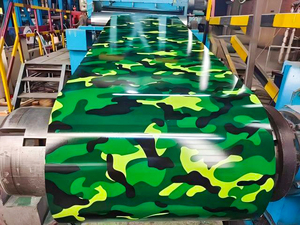
Full hard grade G550 (HRB ≥ 85) substrate with Z120–Z275 zinc mass. Engineered for automated roll forming with precision slit and shear options.
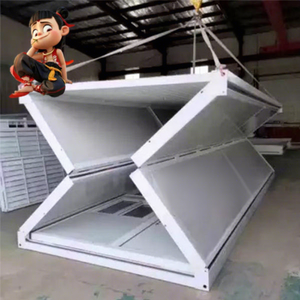
Rapid-deploy structural cold-formed perimeter columns with ISO twist-lock corner fittings and composite thermal walls for field crews.
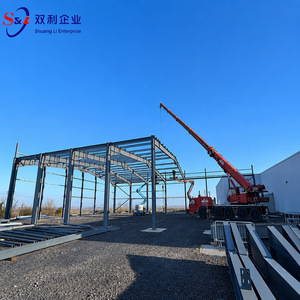
Heavy clear-span portal frame engineering designed for heavy crane rail gantries, mezzanines, and high-velocity wind zones.
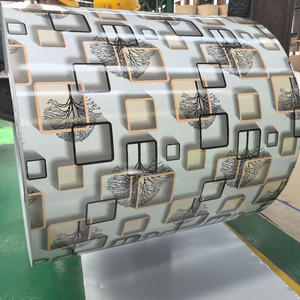
Multi-layer PVDF/SMP resin coatings on Aluzinc and galvanized steel. Superior UV chalking resistance for exterior architectural wall and roof systems.
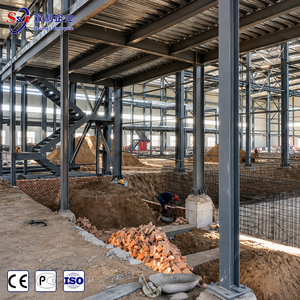
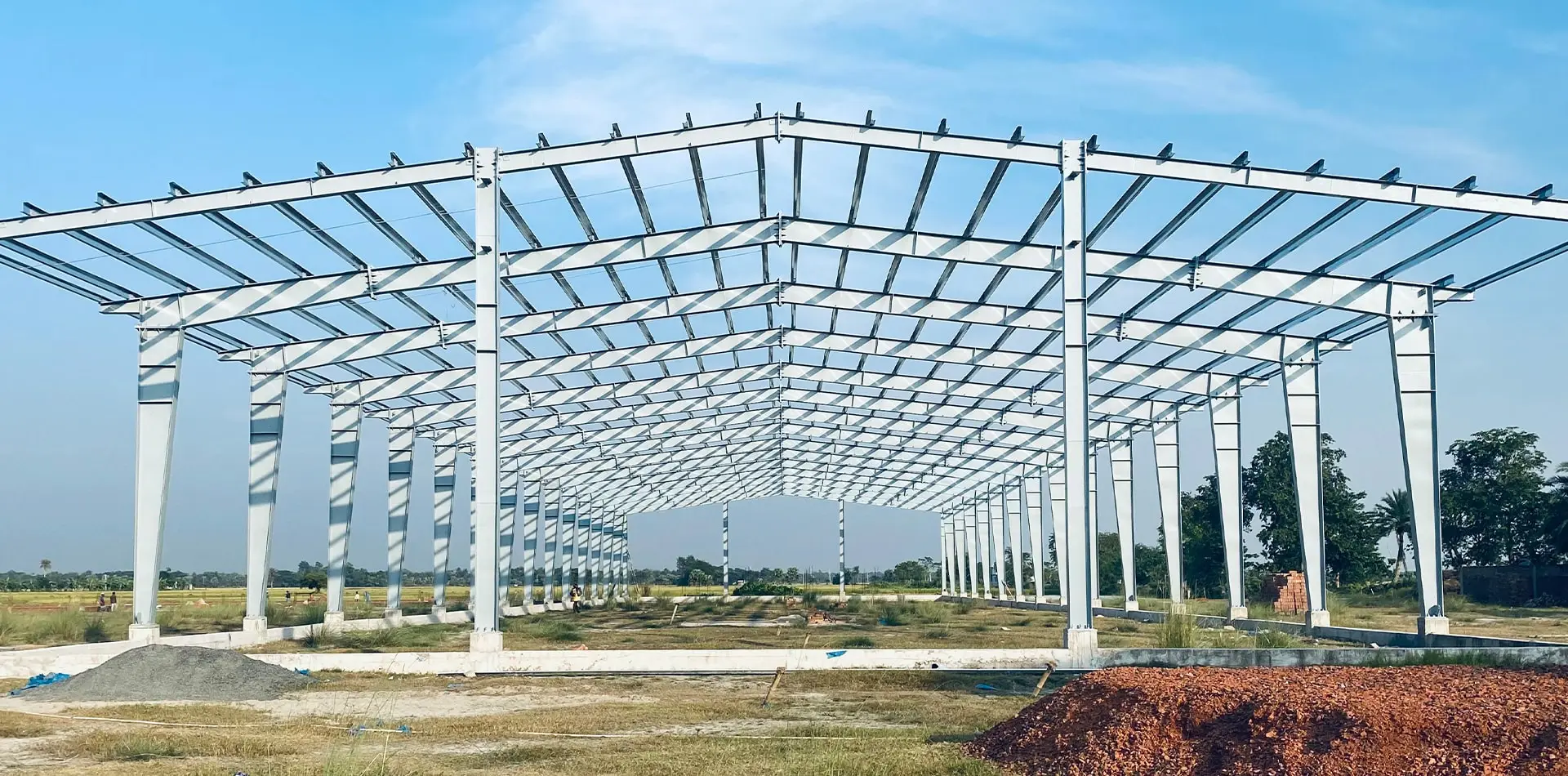
Optimized tapered H-section portal geometry delivering economical cost per square meter, rapid bolt-up assembly, and zero on-site hot work.
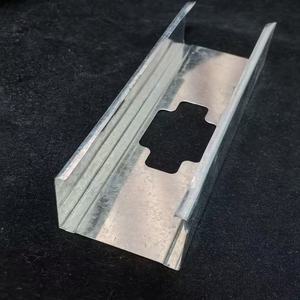
Cold-formed C-stud and U-track framing profiles with prepunched service runs, service flanging, and zinc coatings exceeding ASTM C645 criteria.
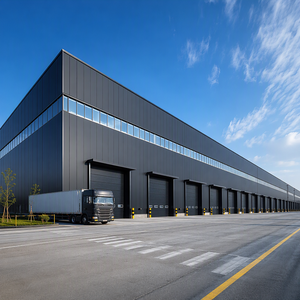
High-bay distribution building with integrated PU/PIR thermal insulated sandwich panels, continuous ridge ventilators, and dock leveling bays.
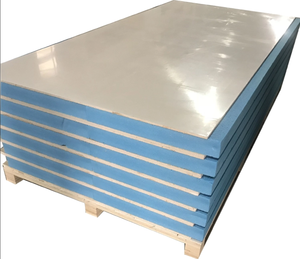
Class A1 non-combustible magnesium oxide composite sandwich panels. Zero flame propagation, superior impact strength, and moisture impermeability.
Established in 2010 in Dhaka, Bangladesh, Joint Star Steel Structure Ltd. has developed into a premier multi-disciplinary manufacturer and global exporter of heavy pre-engineered buildings (PEB), cold-formed light-gauge steel framing (LGSF), and insulated composite sandwich envelope systems. Guided by our founding principle “Your Future in Your Home,” our engineering infrastructure bridges architectural conceptualization, computational structural mechanics, automated shop fabrication, and turnkey international delivery.
Where conventional framing suppliers merely function as steel brokers, Joint Star Steel maintains complete ownership of the industrial value chain. Operating in accordance with American Welding Society (AWS D1.1) procedures, European standards (EN 1090-2 Execution Class 3), and ASTM metallurgical baselines, our fully equipped facilities execute submerged arc welding, computerized precision slitting, continuous polyurethane/EPS panel extrusion, and automated cold-roll forming. By centralizing steel fabrication and envelope manufacturing under a single quality management system, we eradicate interface mismatches, minimize material waste, and guarantee dimensional accuracy across every shipment.
Eliminating friction between structural frame fabricators, civil contractors, and cladding installers with unified engineering oversight.
100% radiographic, ultrasonic, and magnetic particle weld testing combined with digital coating thickness (DFT) verification.
Full capability in bored piling, anchor cage placement, reinforced concrete floors, and heavy equipment foundation integration.
Component-coded color tagging, corrosion-inhibitor ocean wraps, and containerized nested packing ensuring zero field-sorting delays.
Completed Projects
Industrial Clients
Engineers & Technicians
Years in Service (Since 2010)
As procurement directors, EPC contractors, and commercial developers navigate shifting trade policies, carbon mandates, and compressed construction schedules, international supply chains are evolving toward automated off-site pre-assembly and life-cycle traceability.
The procurement paradigm has shifted decisively from purchasing disconnected raw steel commodities to contracting integrated Design for Manufacture and Assembly (DfMA) packages. Modern buyers now require fully reconciled 3D Building Information Modeling (BIM) files (Tekla Structures, Revit) with zero fabrication-stage discrepancy. Direct CAD-to-CAM link protocols feed computerized roll-forming lines, automated plasma tables, and pre-punching machines. This level of computational prefabrication guarantees sub-millimeter tolerances across bolt patterns, purlin clips, and bracing junctions, virtually eliminating on-site cutting, field reaming, and welding delays.
With the phased implementation of the European Union’s Carbon Border Adjustment Mechanism (CBAM) and expanding ESG metrics in North America, procurement directors are prioritizing verified Environmental Product Declarations (EPD). Steel framing manufacturers that utilize scrap-based Electric Arc Furnace (EAF) production lines and optimize member tonnage via tapered-web engineering provide immediate carbon-offset advantages over blast-furnace producers. Sourcing decisions now actively weigh kilograms of CO₂ equivalent per metric ton of fabricated framing, driving investment into thinner, high-tensile alloys (G550 yield strengths) that cut overall raw steel consumption by up to 22%.
The standard G90/Z275 hot-dip galvanizing benchmark is rapidly ceding market share in aggressive coastal and industrial microclimates to ternary alloy coatings, notably Zinc-Aluminum-Magnesium (ZAM / ZM) and high-performance 55% Al-Zn Galvalume substrates. Incorporating 1.5% to 3% magnesium into the molten zinc bath creates an impervious, self-healing protective layer that migrates over exposed slit edges and drilled screw holes. International logistics hubs and food processing facilities located in coastal maritime environments (ISO 12944 Corrosivity Categories C4 and C5-M) now mandate these chemistries to avoid periodic structural repainting cycles.
An engineering breakdown of how cold-formed thin-walled steel profiles, automated roll forming, and composite thermal boundaries are replacing legacy heavy concrete construction.
Historically, multi-story commercial and industrial framing relied predominantly on heavy hot-rolled structural steel shapes (UB, UC, W-beams) or poured-in-place reinforced cement concrete (RCC). While structural portal frames remain the gold standard for massive clear spans exceeding 30 meters, the advent of continuous roll-forming mills has propelled Light Gauge Cold-Formed Steel (CFS / LGSF) into mainstream structural engineering.
By utilizing high-yield structural sheet steel meeting ASTM A1003 or EN 10346 with yield strengths from 350 MPa to 550 MPa (G550), cold-formed C-studs, U-tracks, and continuous sigma purlins achieve remarkable strength-to-weight ratios. The structural dead load of a cold-formed steel floor and wall system is approximately one-seventh that of an equivalent masonry and concrete structure. This drastic reduction in dead weight lowers foundation depth requirements, slashes concrete piling costs, and dampens seismic inertial forces—a decisive factor in seismic risk zones governed by ASCE 7 and Eurocode 8.
Because steel exhibits high thermal conductivity ($k \approx 50 \text{ W/m}\cdot\text{K}$ compared to $0.15 \text{ W/m}\cdot\text{K}$ for timber or $1.0 \text{ W/m}\cdot\text{K}$ for lightweight concrete), structural steel framing requires an unbroken exterior insulation envelope to prevent severe thermal bridging. Uncontrolled thermal bridging causes localized condensation, interstitial moisture buildup, mold proliferation, and massive HVAC heat transfer losses.
Modern OEM/ODM engineering resolves this by combining cold-formed skeletal framing with continuous insulated composite sandwich panels (PU/PIR or high-density Rockwool) or exterior Structural Insulated Panels (MGO SIP). By fastening the continuous insulation directly to the exterior flange of the steel framing members via thermal-break isolation gaskets and concealed fasteners, the steel core remains completely within the building's thermal envelope. This architectural detail stabilizes interior temperatures, satisfies ASHRAE 90.1 energy baselines, and ensures fire barriers remain uncompromised across high-occupancy industrial spaces.
Direct comparative benchmarks evaluating span performance, dead weight, wind uplift resistance, and optimal industrial deployment.
| Framing System Classification | Structural Substrate | Yield Strength ($F_y$) | Max Clear Span | Seismic & Wind Performance | Optimal Deployment |
|---|---|---|---|---|---|
| Heavy Pre-Engineered Portal Frames | ASTM A572 Gr. 50 / Q355B Tapered Plate | 345 - 355 MPa | Up to 60m+ clear span | Exceptional lateral ductance (R=3.22 to 4.0) | Logistics distribution centers, manufacturing plants with bridge cranes |
| Light Gauge Steel Framing (LGSF) | ASTM A653 / A1003 Galvanized Strip | 350 - 550 MPa | Up to 12m joists / 4-story loadbearing | Ultra-low seismic mass inertia; high wind resilience | Multi-story commercial, worker accommodation, rooftop extensions |
| Modular Flat-Pack Steel Units | Cold-Rolled Welded Tubular / Formed Ch. | 275 - 350 MPa | 6m × 3m volumetric bays | Corner casting load path; stacks 3 units high | Mining basecamps, emergency field offices, offshore accommodation |
| Hybrid Steel Skeleton + SIP/PIR | Built-up Columns + PIR / MGO Enclosure | 345 MPa frame + Composite Panel | Custom structural grid spacing | A1 Non-combustible, zero envelope thermal breach | Pharma cold stores, food processing plants, high-containment hubs |
| Cold-Formed Open Web Joists & Trusses | High-Tensile Cold-Drawn Galv. Steel | 350 - 550 MPa | Up to 24m roof trusses | High stiffness-to-weight; minimal deflection | Commercial retail roofs, sports arenas, agricultural storage |
Comprehensive engineering responses addressing mill certifications, international code compliance, logistics protection, and turnkey integration.
Yes. Since our incorporation in 2010, Joint Star Steel Structure Ltd. has operated as both an established domestic fabricator and a verified international exporter. Our export division manages comprehensive OEM/ODM contracts worldwide. Every exported steel structure is accompanied by detailed structural erection drawings, anchor bolt setting plans, mill test certificates (EN 10204 Type 3.1), and individually piece-marked members corresponding directly with 3D assembly models. This ensures local general contractors and erection crews on overseas project sites can assemble frames swiftly and accurately without fabrication re-work.
Every steel plate, coil, and structural angle entering our production line carries full heat-number traceability matching manufacturer Mill Test Certificates (MTCs). Substrates undergo chemical spectrometry and mechanical tensile/yield verification prior to cutting. Our structural welding processes are qualified under AWS D1.1 (Structural Welding Code - Steel) and EN ISO 15614-1 protocols. Weld seams undergo rigorous non-destructive examination (NDE)—including Visual Inspection (VT), Magnetic Particle Testing (MT), and Ultrasonic Testing (UT) on full-penetration flange-to-web welded joints. Buyers receive full Quality Dossiers including third-party inspection sign-offs from agencies like SGS, Bureau Veritas, or TÜV if specified.
Selection hinges strictly on fire-resistance mandates, thermodynamic thermal conductivity, and budget parameters:
To execute a value-engineered structural calculation and cost optimization, our structural team requires:
Yes. A distinct competitive strength of Joint Star Steel Structure Ltd. is our integrated civil construction and reinforced cement concrete (RCC) execution division. In standard industry procurement, split contracting between the civil contractor (responsible for foundations, stub columns, and floor slabs) and the structural steel fabricator often creates finger-pointing when anchor bolts deviate from centerlines. By contracting the complete package with us, our in-house civil engineering crews set anchor bolt templates, pour heavy foundation pads, and execute laser-screeded industrial concrete floor slabs with direct structural coordination, eliminating alignment liabilities.
Surface preparation is performed via automated centrifugal wheel blasting to ISO 8501-1 Sa 2.5 standard, creating a uniform anchor profile (40–75 microns) free from mill scale and oxidation. For primary framing members, coating systems typically comprise an inorganic zinc-rich epoxy primer (75 microns DFT), an intermediate polyamide epoxy barrier coat (100 microns DFT), and a finish polyurethane topcoat (50 microns DFT) engineered for C4/C5 environments. For light-gauge cold-formed members, we utilize continuous hot-dip galvanized steel with zinc weights up to Z275 (275 g/m²) or high-aluminum ZAM coatings. All maritime export components are wrapped with heavy VCI (Vapor Corrosion Inhibitor) plastic barrier liners and strapped with cushioned dunnage.
While raw material steel purchasing may reflect market commodity fluctuations, the Total Cost of Ownership (TCO) of pre-engineered steel framing routinely delivers 20% to 35% total project savings compared to site-cast concrete:
Our logistics department executes computer-modeled container stuffing plans using specialized 40ft High Cube (HC) and Open Top (OT) shipping containers. Secondary framing members (purlins and girts) are nested in compact bundles with steel banding and edge protectors. Large tapered rafters and built-up columns are loaded with non-abrasive soft slings, custom timber saddles, and corner guards to prevent paint abrading during ocean voyages. Fasteners, connection plates, and high-strength bolts (ASTM A325 / ISO 8.8) are crated in water-sealed wooden cases, with clear component labeling that matches the digital erection index.