
Manufactured on fully continuous double-crawler production lines under stringent quality assurance protocols, satisfying ASTM, JIS, and EN structural parameters for high-velocity wind loads, severe thermal barriers, and non-combustibility.
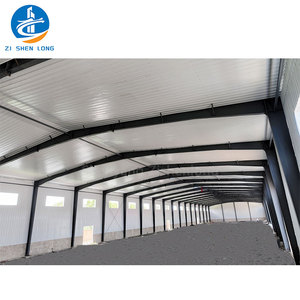
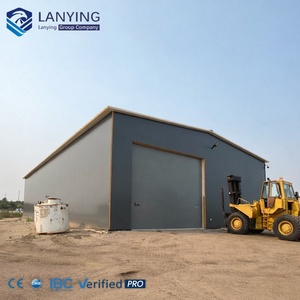
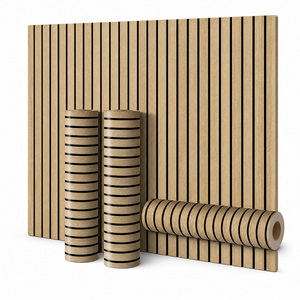
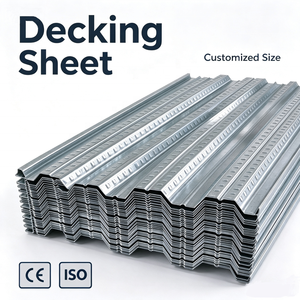
In modern building envelope engineering, Insulated Metal Panels (IMPs) serve as an advanced composite building envelope solution that unifies exterior weather barriers, thermal insulation, vapor retarders, and interior structural facings into a single factory-controlled composite element. As industrial facilities transition toward aggressive net-zero operating energy requirements, specification parameters for cladding are no longer limited to simple gauge thickness or raw material cost. They now demand comprehensive analysis of thermal transmittance ($U$-value), composite flexural shear strength, hydrophobic closed-cell chemistry, and certified non-combustibility under global building codes including EN 14509, ASTM C578, and FM 4880/4881 standards.
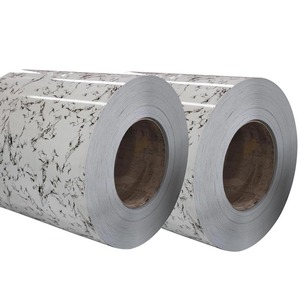
As an established China wholesale insulated metal panels manufacturer and direct-export fabrication factory operating continuously since 2010, our engineering divisions maintain fully automated, continuous high-pressure injection lines running high-index Polyisocyanurate (PIR), structural high-density Lamella Rock Wool (Mineral Wool), and closed-cell Expanded Polystyrene (EPS) cores. These cores are chemically bonded under sustained thermo-compression to prepainted galvanized steel (PPGI) or 55% aluminum-zinc coated Galvalume (PPGL) facings.
| Core Formulation | Density Range | Thermal Conductivity ($\lambda$) | Fire Reaction Class | Compressive Strength | Structural Domain Application |
|---|---|---|---|---|---|
| PIR (Polyisocyanurate) | 38 – 45 kg/m³ | 0.019 – 0.022 W/(m·K) | B-s1, d0 (EN 13501) / Class 1 (FM) | ≥ 140 kPa | Cold chain logistics, pharmaceutical warehouses, sub-zero cleanrooms |
| PUR (Polyurethane) | 36 – 40 kg/m³ | 0.022 – 0.024 W/(m·K) | B2 / B3 Normal Flammability | ≥ 120 kPa | Standard temperature-controlled storage, agricultural sheds |
| Structural Rock Wool | 100 – 140 kg/m³ | 0.038 – 0.044 W/(m·K) | A1 / A2-s1, d0 (Fully Non-Combustible) | ≥ 100 kPa | High-hazard chemical processing, fire separation walls, power facilities |
| Modified EPS Core | 16 – 22 kg/m³ | 0.033 – 0.037 W/(m·K) | B1 Flame Retardant Grade | ≥ 80 kPa | Fast-track modular offices, dry warehousing, low-budget partitions |
Discontinuous batch-pressed panels frequently suffer from uneven density distribution, trapped micro-voids, and delamination risks under elevated thermal cycle stress. In contrast, our manufacturing floor relies on continuous dual-belt caterpillars (36 to 42 meters in effective curing length). The liquid polyol/polyisocyanate reaction mixture is injected via a high-pressure multi-port oscillating nozzle system at controlled reaction temperatures (55°C – 65°C), expanding uniformly between moving hot-dip galvanized steel skins.
This guarantees a closed-cell content exceeding 94%, eliminating condensation channels and preventing water vapor transmission over decade-long duty cycles. For rock wool panels, automated mechanical cutters slice mineral wool slabs into vertical lamellas, rotating them 90 degrees so the fibers stand perpendicular to the steel skins. This structural orientation multiplies transverse tensile strength and compressive load resistance by a factor of 4.5 compared to flat-laid batting.
Founded in 2010 under the mission of delivering engineered structural envelopes with end-to-end accountability, our group has evolved from a specialist panel laminator into a global contractor-partner. Having delivered over 352 heavy industrial and commercial projects across Southeast Asia, the Middle East, Central Asia, and Africa, we resolve the common issue where structural steel subcontractors and wall cladding fabricators blame each other for interface misalignments.
Every industrial project is detailed in Tekla Structures and Revit at LOD 400. Frame deflections, secondary purlin spacings, panel expansion joints, and concealed fastener flashing systems are mathematically coordinated before coil profiling begins, eliminating on-site cutting errors.
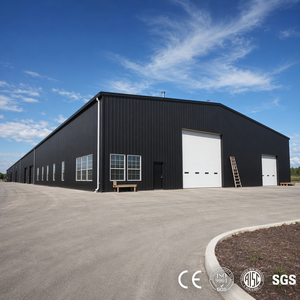
Heavy primary steel portal frames, box columns, and crane beams are fabricated with automated submerged arc welding (SAW) and CNC multi-axis plasma plate beveling. Ultrasonic non-destructive testing (NDT) ensures internal integrity across all critical moment joints.
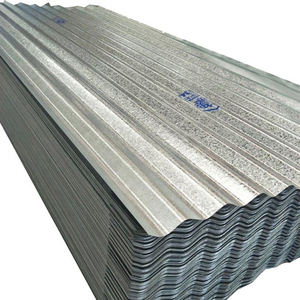
We apply genuine Z275 hot-dipped galvanized (275 g/m² total zinc) and AZ150 Galvalume (55% Al, 43.4% Zn, 1.6% Si) coated coil stocks. Finished with ultra-durable PVDF (polyvinylidene fluoride) or HDP (High Durable Polyester) 25-micron paint systems, our panels resist corrosion even in C4 and C5-M marine/industrial environments.
From pressure-compensating relief valves and heavy industrial hermetic slide doors to food-grade concealed antibacterial PVC coving and continuous ceiling suspension anchors, our export orders arrive as a unified, erection-ready system.
Global supply chains for industrial envelopes are undergoing a profound transformation driven by operational decarbonization, tighter commercial insurance terms, and digitalized field logistics. Engineering procurement teams must align their multi-year strategies with several shifts occurring across Chinese manufacturing ecosystems:
Procurement teams are shifting away from traditional Blast Furnace (BF-BOF) coil stocks toward Electric Arc Furnace (EAF) substrates melted with scrap inputs and renewable energy. Verified Third-Party Environmental Product Declarations (Type III EPDs) are rapidly becoming a mandatory gateway for international BREEAM and LEED v4.1 certifications.
Major corporate underwriters now mandate building envelopes with FM Global 4880 (Unlimited Height Class 1 Fire Rating) and FM 4881 (External Wall Systems Under Severe Natural Hazards). Wholesalers who rely on rudimentary B2-grade foam panels face severe project rejection and prohibitive insurance surcharges.
The rapid expansion of global biopharma, deep-freeze distribution centers, and automated cold-storage facilities is accelerating demand for 150mm to 200mm ultra-thick PIR panel profiles. These systems feature specialized triple-labyrinth interlocking joints and secondary non-conductive thermal break gasket lines.
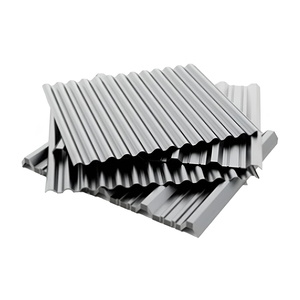
Industrial facades are transitioning away from purely functional corrugated sheets toward architecturally refined exterior envelopes. Today's commercial developments regularly specify flat shadow-line profiles, micro-ribbed finishes, and concealed-fastener interlocking joints that create crisp, monolithic appearances without exposed screw heads.
Simultaneously, coating technologies are advancing from basic polyesters toward self-cleaning nano-composite fluoropolymers (FEVE / PVDF). These high-grade coatings break down airborne particulates through photo-catalytic reaction, ensuring facades retain their design color balance and reflectance over 25- to 30-year design cycles without costly pressure-washing.
Direct engineering answers addressing critical design choices, structural calculations, container logistics, and quality assurance when procuring insulated metal panels from China.
While both polyurethane (PUR) and polyisocyanurate (PIR) are produced using polymeric MDI and specialized polyols, PIR uses a significantly higher isocyanate index (often exceeding 250–350%) reacted under precise catalytic conditions to synthesize isocyanurate ring structures. These trimer ring matrices exhibit far higher covalent bond strength than the standard urethane links in PUR, resulting in superior thermal stability. In fire situations, PIR develops a cohesive, insulating surface carbon char that resists flame spread and limits smoke development (achieving EN 13501-1 B-s1, d0), whereas PUR exhibits lower decomposition temperatures and higher flammability.
Panel span design is determined by calculating the composite section modulus under positive and negative pressures based on ASCE 7-22 or EN 1991-1-4 wind load codes. For exterior walls, serviceability deflection criteria typically range between L/180 and L/240, while high-end architectural flat panels are designed to L/300 to prevent visible oil canning. Roof IMPs subject to dead load, live maintenance load, and wind uplift must satisfy L/200 to L/250. Our structural design team provides customized span load tables that calculate purlin spacing, gauge thicknesses (0.5mm/0.5mm to 0.7mm/0.7mm), and screw pull-out capacities for each project's wind exposure zone.
Eliminating thermal bridges requires continuous joint continuity and mechanical separation. Our insulated metal panels feature deep multi-labyrinth tongue-and-groove side joints lined with pre-installed factory butyl sealant tapes and expandable EPDM gaskets. The concealed fixing design isolates the through-fastener inside a recessed pocket capped with continuous thermal break profiles. Where panel perimeters contact base concrete channels, eaves, or structural portal columns, closed-cell PVC or PE foam insulation isolation tapes (minimum 5mm thick) are placed to prevent metal-to-metal contact and stop cold bridging.
Each panel is laminated with a self-adhesive, UV-resistant protective PE film that shields prepainted surfaces during handling and installation. Bundles are stacked face-to-face with high-density EPS cushions, shrink-wrapped with waterproof industrial polyethylene, and banded onto heavy-duty OSB timber runners. Bundles are custom-cut to 5.8m (for 20ft containers) or 11.8m (for 40ft HQ containers), loaded via mechanical container ramps, and secured with heavy-duty ratchet straps and corner protectors to prevent edge damage from sea vessel rolling.
Yes. For high-end distribution hubs and commercial headquarters, we produce preformed mitered and structural insulated corner panels (90° right angles and custom architectural chamfers). The panel's interior steel skin and foam core are precision-routed via 5-axis CNC cutters, folded along the axis, injected with structural polyurethane adhesive, and cured under vacuum pressure. This provides a clean corner transition without bulky external flashing corners, boosting both architectural appeal and air-tightness.
For applications from +4°C cold processing down to -40°C blast freezers, high-density PIR or closed-cell polyurethane cores provide dependable service due to water vapor permeability near zero ($WVP \le 0.05\text{ g}/(\text{m}^2\cdot\text{h})$). For meat processing and wet facilities, interior skins are specified with 304/316 stainless steel or food-grade 120-micron thick PVC Plastisol coatings, paired with concealed cam-lock joints and continuous food-safe silicones to prevent moisture ingress, bacterial growth, and delamination from aggressive cleaning cycles.
Every commercial production batch undergoes strict quality control. Clients receive comprehensive documentation packages, including: Mill Test Certificates (EN 10204 3.1) verifying steel yield strength and zinc coating mass; Core Density & Cell Content Lab Reports; Transverse Bond Shear Strength Test Results; Flame Retardant & Smoke Density Fire Classifications; and full Factory Packing Lists with piece-marked member tags coordinated directly with project shop drawings.
Planning a temperature-controlled facility, heavy equipment manufacturing plant, or large-span logistics center? Our structural engineers and technical estimators will assess your drawings, optimize panel spans, and provide a competitive wholesale supply-and-fabrication package tailored to your local building codes.