Choosing the right EPS Sandwich Panels is not simply a matter of comparing prices. Panel thickness, core density, facing material, joint design, and installation quality all affect real performance. A panel that looks strong in a showroom may still struggle with condensation, impact, or poor edge sealing. Small details matter.
Building-science expert Dr. John Straube has emphasized, “A building is a system, not a collection of products.” This principle fits EPS Sandwich Panels well. Their insulation value depends on more than the foam core. Gaps, thermal bridges, fasteners, and moisture exposure can change the result on site. The ten tips in this guide examine these practical risks before purchase. They cover thermal performance, fire classification, structural needs, weather resistance, supplier documentation, and long-term maintenance.
Start with the building’s actual conditions. Is it a cold store, workshop, warehouse, or clean production area? Each space creates different demands. Check the local climate, expected humidity, wind loads, and cleaning methods. Do not trust a single brochure number. Ask for test reports, declared thermal values, and installation guidance. Verify whether the supplier can provide replacement panels later.
Some choices are easy to overlook. Panel joints may leak air. Cut edges may absorb moisture. Thin facings may dent during transport. These issues are not always visible on delivery day. Honest evaluation also means accepting uncertainty. Product data may vary between laboratories and job sites. Careful selection reduces that gap, but it cannot remove every risk.
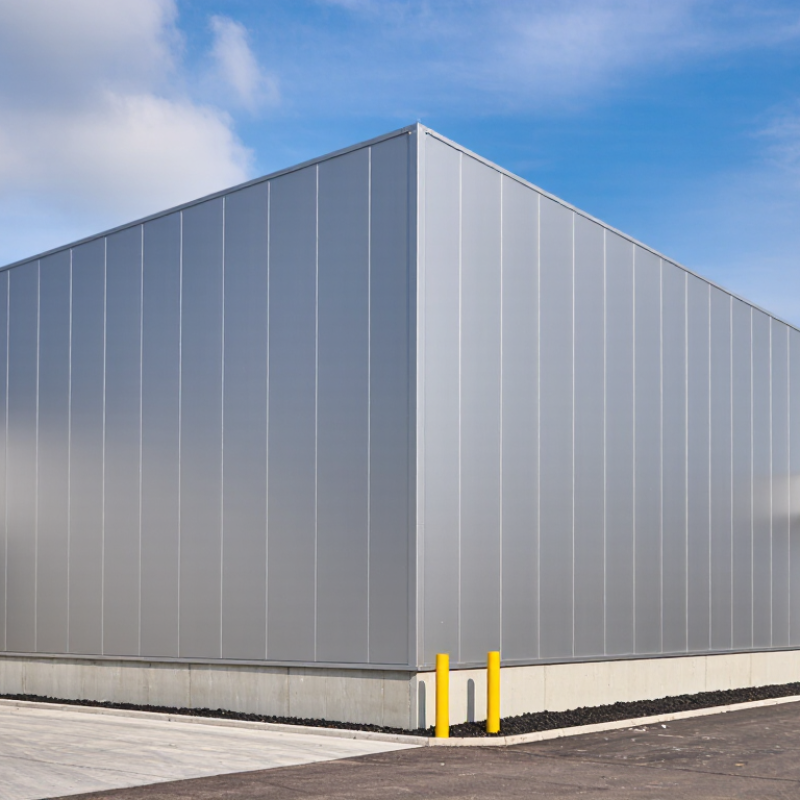
Understand EPS Sandwich Panel Structure and Intended Use
EPS sandwich panels combine two protective facings with an expanded polystyrene core. The core provides insulation, while the facings resist impact, weather, and limited structural loads. A typical EPS core has thermal conductivity near 0.035–0.040 W/m·K, depending on density and testing conditions. This matters because the IEA’s Energy Efficiency 2023 report estimates that buildings consume about 30% of global energy. Small thermal weaknesses can become expensive over time.
Understand the intended use before comparing prices. Cold rooms need continuous joints, reliable vapor control, and carefully sealed penetrations. Agricultural buildings face moisture, dust, and cleaning demands. Internal partitions may need less insulation but better surface durability.
Roof applications require suitable spans, fasteners, drainage, and resistance to wind uplift. EPS is combustible. Select a complete, tested assembly based on local fire requirements, not the core alone.
Check declared thickness, density, facing material, U-value, joint design, and test evidence. Do not judge by appearance.
On site, a poorly aligned joint can create a cold stripe across an otherwise thick panel. That mistake is easy to miss. UNEP’s 2023 Global Status Report for Buildings and Construction links the sector to 37% of global energy and process-related carbon dioxide emissions. Better envelopes therefore have practical value.
Still, thicker is not always better. A panel may perform poorly when installers crush edges, leave gaps, or pierce vapor barriers. My earlier assumption that thickness solved every problem was wrong. The structure and intended use must be assessed together.
Choose Suitable Core Density, Thickness, Size, and Joint Design
Choosing EPS sandwich panels requires more than comparing prices. Core density affects compressive strength, insulation, and handling. For cold rooms, confirm thermal performance at the expected operating temperature. A denser core may resist dents better, but it can increase weight and cost. Ask for test data, not vague claims. Check density tolerance on the technical sheet. Small differences can matter during installation.
Panel thickness should match heat flow, span, climate, and fire design. Do not select a thick panel simply because it feels safer. Have a qualified designer verify the U-value and structural loads. Measure wall and roof grids carefully. Oversized panels create awkward joints and more cutting waste. Short panels may require extra seams. That gets expensive.
Joint design controls air leakage, water entry, and thermal bridging. Inspect the tongue-and-groove fit, sealant channel, fastener position, and flashing detail. Dry-fit a sample panel before full installation. It exposes alignment problems early. On one project, a rushed corner detail caused condensation near the floor. We corrected the seal, but the lesson remains: drawings need site review. Request installation guidance, batch records, and independent test reports where possible. Verify local building codes and fire requirements. Real conditions are less tidy than catalogs.
Evaluate Facings, Coatings, Durability, and Environmental Resistance
Choosing EPS sandwich panels starts with the facings, not the brochure price.
Inspect galvanized steel, aluminum, or coated sheets for thickness and uniformity. Thin facings may dent during transport and installation. Request coating data, including film thickness, adhesion, and corrosion-test results. A glossy finish can hide poor surface preparation. Check the edges closely. Look for exposed core, pinholes, scratches, and uneven seams.
Durability depends on moisture, sunlight, temperature changes, chemicals, and daily impact.
For humid areas, specify corrosion-resistant facings and carefully sealed joints. Coastal projects need stronger protection against salt-laden air. High-UV locations require coatings tested for color and gloss retention. Cold environments also need attention to repeated expansion and contraction. Do not assume one coating suits every building. The surroundings decide.
Ask for independent test reports, installation guidance, and clear maintenance requirements.
Verify thermal performance under realistic joint conditions, not only laboratory figures. Inspect panel flatness before installation. Confirm that fasteners and sealants are compatible with the coating. Field teams often find small gaps after fitting. They matter. I once saw a panel system appear excellent at handover, yet poor edge sealing caused early staining. That mistake was preventable, but not obvious from the product sample. Review the supplier’s quality records, check local weather exposure, and allow experienced installers to examine details before ordering.
Verify Standards, Installation Support, Supplier Reliability, and Total Cost
Choosing EPS sandwich panels requires more than comparing thickness and price. Verify compliance with EN 14509 for factory-made insulated panels, or the relevant local standard. Check EPS density, thermal conductivity, fire classification, and declared U-value. Test certificates should match the exact panel specification. The 2023 UNEP Global Status Report for Buildings and Construction states that buildings used about 34% of global energy in 2022. Good envelope performance matters. It is easy to overlook joints, fasteners, and thermal bridges.
Tip 1: Request independent test reports and batch traceability. Tip 2: Confirm installation details before signing the order. Reliable technical support should provide drawings, fixing guidance, cutting advice, and moisture-control instructions. Ask whether trained installers or site supervision are available. A panel can perform poorly when the joint seal is uneven or the protective film remains too long. That happens. Installation quality deserves the same attention as the core material.
Tip 3: Assess supplier reliability through delivery records, references, warranty terms, and replacement procedures. Tip 4: Calculate total cost, not only purchase price. Include transport, lifting equipment, labor, trimming waste, maintenance, energy use, and possible downtime. ISO 15686-5 provides a recognized framework for life-cycle costing. A cheaper panel may require more repairs or installation time. Ask for a written cost model. Then challenge your own assumptions. Some savings look convincing only because future costs are missing.
Conclusion
Choosing the right EPS Sandwich Panels starts with understanding their structure and intended application. Consider how the panel’s core, facings, and joint system will perform in walls, roofs, partitions, or other building areas. Establish clear requirements for thermal insulation, fire behavior, sound reduction, load-bearing capacity, and long-term service conditions. Core density and thickness should match the project’s climate and structural needs, while panel dimensions and joint design should support efficient installation and reliable sealing.
Attention should also be given to facing materials, protective coatings, moisture resistance, corrosion resistance, ultraviolet exposure, and overall durability. Before purchasing, verify that the panels meet relevant standards and that the supplier can provide accurate technical documentation, installation guidance, and after-sales support. A dependable supplier should demonstrate consistent quality, production capability, delivery reliability, and transparent communication. Finally, compare total cost rather than only the initial price, including transportation, installation, maintenance, energy performance, and expected service life. This balanced approach helps ensure safe, efficient, and cost-effective panel selection.