
0%

Choosing Pre-Engineered Steel Buildings in 2026 requires more than comparing advertised prices. Buyers must examine design quality, supplier experience, material traceability, and long-term performance. A building may look efficient on a screen, yet its real value appears during transport, assembly, heavy rain, and daily use.

This guide explains the decisions that deserve careful attention. It considers building purpose, site conditions, wind and snow exposure, insulation needs, corrosion protection, fire safety, and future expansion. A warehouse near a humid coastline needs different protection than a workshop in a dry inland region. Local building codes also matter. A qualified structural engineer should review the design before fabrication begins.

Supplier history provides useful evidence. Ask for completed project examples, realistic delivery schedules, warranty terms, and clear structural calculations. Request details about steel grades, coating systems, fasteners, connections, and quality inspections. Small omissions can become expensive problems later.

Price alone misleads.

The cheapest quotation may exclude foundations, drainage, insulation, or installation support. A detailed comparison should separate included work from optional upgrades. It should also consider maintenance costs over twenty or thirty years, not only the first invoice. Digital design tools can improve accuracy, but they do not replace experienced judgment on a challenging site. No checklist is flawless. I have seen practical details, such as door clearance and forklift movement, receive less attention than attractive exterior images. This guide leaves room for that uncomfortable question: what might the current plan still be missing?
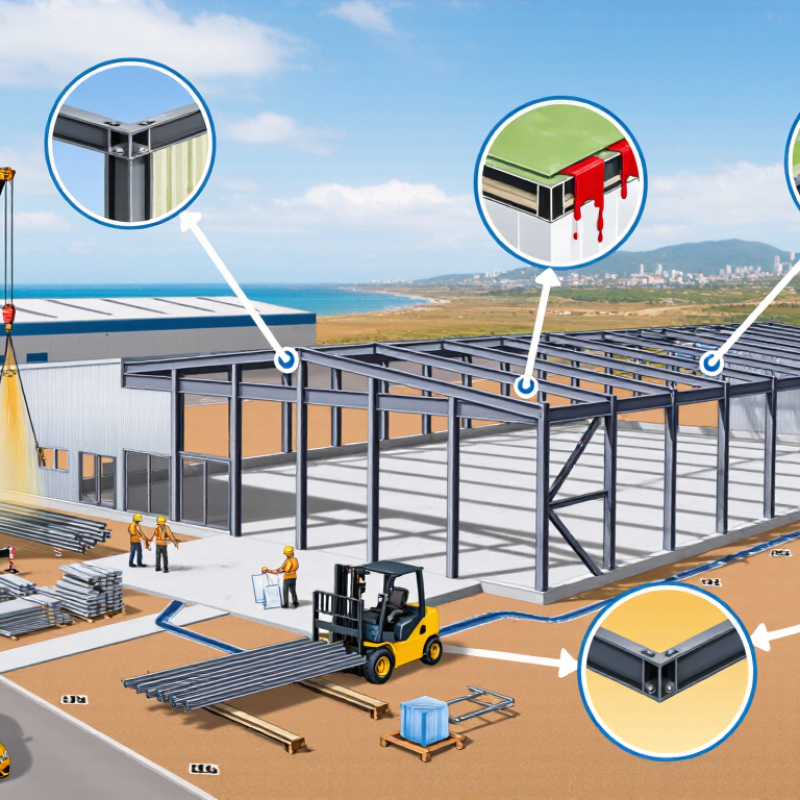
How to Choose Pre Engineered Steel Buildings in 2026?

Define Loads with 2024 IBC and ASCE/SEI 7-22 Risk Categories

Choosing a pre-engineered steel building in 2026 starts with accurate load definition. The 2024 International Building Code references ASCE/SEI 7-22 for minimum design loads and associated criteria. Local adoption still matters. A state may amend the code.

Identify the building’s occupancy before selecting framing sizes. ASCE/SEI 7-22 assigns Risk Categories I through IV according to potential human and community consequences. A small storage shed may fall into Category I. An emergency facility usually requires Category IV design. That difference changes importance factors, drift limits, and reliability expectations. Do not guess the category.

List dead, live, roof live, snow, wind, seismic, rain, flood, and thermal loads. FEMA’s 2023 National Risk Index evaluates 18 natural hazards, including hurricanes, floods, and tornadoes. Its county-level data can expose risks that a basic site visit misses. Check the exact parcel, not only the city name. Wind exposure, ground elevation, soil conditions, and nearby terrain can alter the design.

Ask the engineer to document load combinations and connection reactions. A clear calculation package supports procurement and future modifications. It also reveals weak assumptions. Sometimes, the early model is wrong. That is useful. Revising it before fabrication costs less than reinforcing a finished building.

How to Choose Pre-Engineered Steel Buildings in 2026?

Defining Loads with the 2024 IBC and ASCE/SEI 7-22 Risk Categories

The chart compares representative ASCE/SEI 7-22 importance factors for wind and earthquake design across Risk Categories I–IV. Risk Category is assigned according to building occupancy and life-safety consequences under the 2024 IBC; it does not replace site-specific wind speed, seismic parameters, snow loads, flood loads, soil conditions, or local amendments. Confirm final values with the project jurisdiction and a licensed structural engineer.

Compare MBMA Systems Using 30–50% Faster Erection Benchmarks

How to Choose Pre Engineered Steel Buildings in 2026?

A 30–50% faster erection benchmark can guide a serious comparison of MBMA systems. It should not become a sales promise. McKinsey’s report, Modular Construction: From Projects to Products, identifies potential schedule reductions of up to 50% for suitable projects. The result depends on design repetition, factory coordination, site access, and foundation readiness.

MBMA’s Metal Building Systems Manual emphasizes coordinated design, standardized components, and proper erection procedures. These features can reduce field cutting and repeated measurements. A practical comparison should record the number of frames installed daily, crew size, crane hours, and weather delays.

For example, a 60,000-square-foot warehouse may reach the 30% benchmark when anchor bolts, slabs, and deliveries are ready together. A congested site may achieve far less.

Do not compare erection speed alone. Review engineering seals, connection details, corrosion protection, insulation performance, and documented load calculations. The 2024 International Energy Conservation Code also makes envelope performance more important during selection. A faster frame with weak thermal detailing can increase operating costs later. That is an uncomfortable trade-off.

Ask contractors for completed project records, not estimates. Request daily erection logs and change-order histories.

One missed anchor group can erase several days of planned savings. The benchmark remains useful, but disciplined preparation matters more than a headline percentage.

Verify Steel Grades, Coatings, and AISC 360-22 Compliance

How to Choose Pre Engineered Steel Buildings in 2026?

When evaluating a pre engineered steel building, verify the steel grade before comparing prices. Ask for mill certificates showing yield strength, tensile strength, and heat numbers. These records connect delivered members to tested material. On site, check stamped identification against the shipping list. A missing certificate should pause approval, even when the frame looks excellent. I have seen small documentation gaps create expensive delays.

Coatings require equal attention. Match the coating system to humidity, salt exposure, chemicals, and interior condensation. Galvanizing may suit exposed components, while a properly prepared painted system may fit protected steel. Confirm surface preparation, dry-film thickness, repair procedures, and inspection readings. Do not accept “weather resistant” as a technical specification. It sounds reassuring, but it proves very little.

Tips: Request the design criteria, connection calculations, and engineering documents demonstrating AISC 360-22 compliance. Confirm whether the package addresses strength, serviceability, stability, welding, bolting, and seismic requirements. Ask a qualified structural engineer to review assumptions, especially wind uplift and local soil conditions. Check that welders, inspectors, and testing methods match the project specification. Photograph coating damage before erection and record every repair. A rushed review can miss a simple issue, such as incompatible touch-up paint. That mistake is avoidable.

Calculate Life-Cycle Costs with 100% Recyclable Structural Steel

How to Choose Pre Engineered Steel Buildings in 2026?

Calculate Life-Cycle Costs with 100% Recyclable Structural Steel

Choosing a pre engineered steel building in 2026 requires more than comparing purchase prices. Calculate the full life-cycle cost from design through dismantling. Include structural steel, foundations, transport, erection, insulation, coatings, inspections, repairs, energy use, and future removal. Structural steel is 100% recyclable, but recovery depends on careful disassembly, local facilities, and material separation. Ask for documented recycled content and environmental product data.

A practical estimate might compare two warehouses over 40 years. One may cost less initially but require repainting after fifteen years. Another may use a stronger corrosion protection system and reduce maintenance visits. Record every assumption. A qualified engineer should check loads, connections, fire protection, drainage, and local building requirements. Small design changes can affect both embodied carbon and operating costs.

My first spreadsheet once ignored crane access during removal. That mistake made recycling look cheaper than it was. A spreadsheet can still lie. Include labor, temporary equipment, transport distance, and the possible value of recovered steel. Consider roof insulation, daylighting, ventilation, and solar readiness, because operational energy can exceed the original frame cost. Review supplier documentation, warranty terms, inspection records, and end-of-life plans before approval. Choose the option that remains financially and technically credible after uncertain costs are tested.

Audit Suppliers Through MBMA, AISC, ASTM, and ISO 9001 Records

How to Choose Pre Engineered Steel Buildings in 2026?

A reliable supplier should provide more than attractive drawings and a low quotation. Ask for current MBMA and AISC records, then verify their scope, validity, and issuing organization. These documents can reveal whether the supplier understands structural design, fabrication, and quality control. Do not accept scanned certificates without checking dates, facility addresses, and covered activities.

ASTM compliance should appear in material certificates, inspection reports, and purchase records. Check steel grades, coating thickness, bolt specifications, and heat numbers against the project requirements. ISO 9001 records can show whether procedures are controlled, but certification alone does not prove excellent workmanship. Request sample inspection plans, welding qualifications, nonconformance reports, and corrective-action records. Details matter.

Tips: Compare records with the actual factory. Look for labeled steel bundles, calibrated gauges, welding logs, and traceable inspection stamps. I once trusted a certificate too quickly. The document was valid, but its scope excluded the production site. That mistake changed my audit process. Ask who inspected the work, when it happened, and what happened after a failure. A supplier that answers clearly is useful. A supplier that avoids basic evidence deserves caution. Allow room for doubt. That is not weakness; it is practical procurement.

How to Choose Pre Engineered Steel Buildings in 2026? - Audit Suppliers Through MBMA, AISC, ASTM, and ISO 9001 Records
Audit Dimension Reference Framework Record or Data to Request Verification Criteria Key Risk Detected Suggested Weight Audit Status
Industry Compliance Framework MBMA guidance and publications Current technical references used for metal building systems, design responsibilities, construction practices, and quality procedures. Confirm that the supplier identifies the applicable MBMA guidance and explains how it is incorporated into design, fabrication, erection, and inspection procedures. Incomplete design responsibility, inconsistent project controls, or unsupported claims of industry compliance. 10% Pending review
AISC Certification Claim AISC Certification Program Valid certificate, certification category, approved scope, facility address, expiration date, and documented quality-control responsibilities. Check that the certificate is current, the certified scope matches the proposed work, and the facility named on the record is the facility performing fabrication. Expired certification, scope mismatch, or use of a certificate belonging to another facility. 12% Pending review
Quality Management System ISO 9001:2015 Certificate number, certification body, covered locations, scope of certification, issue date, expiry date, and surveillance status. Verify the certificate with the issuing certification body and confirm that engineering, procurement, fabrication, inspection, and corrective action are within scope. Certificate outside scope, suspended certification, uncontrolled subcontracting, or weak corrective-action processes. 12% Pending review
Structural Design Basis Applicable building code and project specifications Design criteria, governing building code, risk category, importance factor, load combinations, design wind speed, snow load, seismic parameters, and exposure category. Confirm that the design basis is project-specific and includes dead, live, wind, snow, seismic, collateral, temperature, and applicable crane or equipment loads. Under-designed frames, omitted load cases, or incorrect site assumptions. 15% Pending review
Primary Steel Material Traceability ASTM A370; material specification stated in the contract Mill test reports, heat numbers, material certificates, receiving inspection records, and traceability logs for primary framing members. Match heat numbers and grade information from mill certificates to purchase orders, cut lists, fabricated members, and shipment records. Unknown steel grade, mixed heats, missing certificates, or inability to trace material to a finished member. 10% Pending review
Coated Sheet and Panel Material ASTM A653/A653M for zinc-coated sheet; ASTM A792/A792M for aluminum-zinc-coated sheet, where specified Coating designation, base-metal thickness, yield strength, tensile strength, bend-test information where applicable, and coil or batch traceability. Confirm that coating type, coating mass or designation, thickness, and mechanical properties match the approved submittal and project environment. Premature corrosion, incorrect coating system, insufficient thickness, or nonconforming panels. 10% Pending review
Mechanical Test Documentation ASTM E8/E8M and ASTM A370, when referenced by the material specification Tensile-test results, yield strength, ultimate tensile strength, elongation, specimen information, test laboratory, and report date. Check that test methods are identified, results meet the specified grade, and reports are linked to the relevant heat or production batch. Unverified strength values, unsuitable steel grade, or laboratory records that cannot be linked to delivered material. 7% Pending review
Welding Quality Control AWS welding requirements and project specification Welding procedures, welder qualifications, inspection reports, weld maps, nonconformance reports, and repair records. Confirm that procedures are approved, welders are qualified for the process and position, inspections are recorded, and repairs are documented and re-inspected. Cracked welds, incomplete fusion, unqualified welders, or undocumented repairs. 10% Pending review
Bolted Connection Control Project structural-steel bolting specification Bolt manufacturer certificates, lot records, installation method, torque or tension records, calibrated tools, and inspection checklists. Verify bolt grade, lot traceability, installation method, inspection frequency, and calibration status of torque or tension equipment. Loose or over-tightened connections, incorrect bolt grade, mixed lots, or unreliable installation records. 7% Pending review
Dimensional and Fit-Up Inspection Approved fabrication drawings and project tolerances Inspection plans, member measurements, hole-location checks, squareness records, panel fit-up records, and final release inspections. Confirm that inspection instruments are calibrated and that recorded dimensions remain within approved fabrication and erection tolerances. Field modifications, misaligned holes, installation delays, excessive gaps, or poor weather-tightness. 7% Pending review
Corrosion Protection Specified coating system and project exposure conditions Coating data sheets, surface-preparation records, dry-film-thickness readings, repair procedures, and environmental exposure assessment. Confirm compatibility between the coating system and the site environment, and verify that inspection results meet the approved coating specification. Early coating failure, galvanic incompatibility, under-film corrosion, or unprotected cut edges. 7% Pending review
Fire and Performance Documentation Applicable building code, tested assembly listing, and project specification Fire-resistance documentation, tested assembly details, insulation data, roof and wall system performance information, and applicable laboratory reports. Confirm that the tested or approved assembly matches the proposed roof, wall, insulation, liner, openings, and support conditions. Unapproved substitutions, loss of fire rating, or noncompliant thermal and envelope performance. 5% Pending review
Subcontractor and Supplier Control ISO 9001:2015 documented control of externally provided processes Approved supplier list, subcontractor evaluations, purchase specifications, incoming inspection records, and supplier corrective actions. Confirm that critical outsourced activities are defined, technically specified, monitored, and included in the supplier's quality records. Uncontrolled outsourcing, inconsistent material quality, or missing accountability for critical processes. 3% Pending review
Nonconformance and Corrective Action ISO 9001:2015 improvement and corrective-action requirements Nonconformance reports, root-cause analyses, corrective-action logs, closure evidence, recurrence tracking, and management-review records. Look for documented root causes, assigned responsibility, target dates, objective closure evidence, and measurable reduction of repeated defects. Recurring defects, concealed rework, delayed project completion, or ineffective quality management. 5% Pending review
Delivery and Erection Readiness Approved erection drawings, method statement, and project logistics plan Packing lists, piece marks, shipping inspection records, erection sequence, temporary bracing plan, lifting plan, and site safety documentation. Confirm that shipped members are identifiable, protected from damage, sequenced for erection, and supported by safe installation procedures. Missing components, unsafe temporary conditions, handling damage, or avoidable site delays. 5% Pending review
Scoring rule: Require documentary evidence for every applicable row. Treat an expired certificate, scope mismatch, untraceable material, or unresolved critical nonconformance as a hold point until independently verified and closed.

FAQS

What documents should I request before approving a pre-engineered steel building?

Request design criteria, engineering calculations, connection details, and material certificates. These records should identify yield strength, tensile strength, and heat numbers. Pause approval if certificates are missing. A strong-looking frame is not enough.

How can I verify the delivered steel grade?

Compare stamped member identification with the shipping list. Match each member to its mill certificate and tested material data. Photograph unclear markings during site inspection. Small documentation gaps can create expensive delays.

How should I choose a protective coating system?

Match the coating to humidity, salt exposure, chemicals, and condensation. Exposed components may need galvanizing or another durable system. Protected steel may suit a properly prepared painted system. “Weather resistant” is not a technical specification.

What coating details require inspection?

Confirm surface preparation, dry-film thickness, repair procedures, and inspection readings. Photograph scratches or coating damage before erection. Record every repair clearly. Check touch-up paint compatibility. That simple detail is easy to miss.

How can I confirm structural design compliance?

Ask for documents addressing strength, serviceability, stability, welding, bolting, and seismic requirements. A qualified structural engineer should review the assumptions. Pay special attention to wind uplift and local soil conditions. The package may look complete, yet still contain weak assumptions.

Which costs belong in a life-cycle estimate?

Include design, steel, foundations, transport, erection, insulation, coatings, and inspections. Also include repairs, energy use, dismantling, and future removal. Compare costs across the building’s planned service period. The cheapest purchase price may not remain cheapest.

What should I consider when evaluating recyclability?

Structural steel can be recycled, but recovery depends on careful disassembly. Include local recycling facilities, material separation, labor, equipment, and transport distance. Request recycled-content records and environmental product information. Recovered value should appear in the estimate. Not always predictable.

How can operating energy affect the final building choice?

Review roof insulation, daylighting, ventilation, and solar readiness. Operating energy may exceed the original frame cost over time. Test uncertain assumptions instead of hiding them. My spreadsheet once ignored crane access during removal. It looked accurate. It was not.

Conclusion

Choosing Pre-Engineered Steel Buildings in 2026 requires a structured evaluation of safety, performance, cost, and supplier reliability. Begin by defining site-specific loads according to the 2024 International Building Code and ASCE/SEI 7-22 risk categories, including wind, snow, seismic, and occupancy conditions. Compare suitable MBMA systems not only by initial price but also by design flexibility, fabrication quality, and erection efficiency, using the potential 30–50% faster installation benchmark as a planning reference rather than a guarantee.

Next, verify the specified steel grades, protective coatings, connection details, and compliance with AISC 360-22. A complete life-cycle cost analysis should include transportation, installation, maintenance, energy performance, future adaptability, and the value of 100% recyclable structural steel. Finally, audit suppliers through documented MBMA, AISC, ASTM, and ISO 9001 records, checking quality procedures, testing reports, engineering capabilities, and project references. This process helps buyers select a durable, code-compliant, and financially responsible building solution.

Nathaniel

Nathaniel

Nathaniel is a dedicated marketing professional who combines strategic insight, clear communication, and extensive product knowledge to support the company’s growth. With a strong understanding of customer needs, industry trends, and digital marketing practices, he regularly contributes expert blog......